Our book club has read two books by William Kent Krueger, Lightning Strike, a prequel to his Cork O’Connor mystery series, and Ordinary Grace. The River We Remember is similar to both of these, in their small-town Minnesota setting, time period (1958-1963), and coming of age themes. From our previous two discussions, William Kent Krueger’s books have been well-liked, reliably-engaging, comfort reads.
I chose The River We Remember because our meeting fell on Veterans Day, which is in the middle of Native American Heritage Month. Veterans’ Day is one of the few holidays that sticks to one date, November 11th, in honor of Armistice Day, 1918. I hoped this story about a Native-American veteran accused of killing a wealthy landowner would heighten the connections we build through our shared-reading experience while also honoring our veterans and Native Americans.
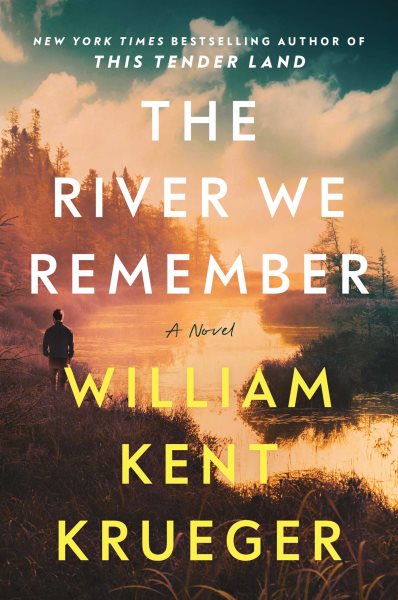
The book was well written, the mystery and storylines woven together believably and fairly. I read choppily, at the end of long days, but I was able to keep up without re-reading. The themes and characters weren’t exactly stock, but they were familiar and poignant. The stoic Native American working the land. The Battle of Wounded Knee in 1890. Betrayal. John Wayne. “The Purple People Eater.” The Naked and the Dead by Norman Mailer. The Catcher in the Rye by J.D. Salinger. Tortilla Flat by John Steinbeck. For me, the most important theme of The River We Remember is the danger of keeping secrets. The most poignant is when the author reminds us, “it’s always boys who go to war.” The youth who are now our veterans.
Krueger’s descriptions pleased me and painted images of people and concepts in new ways that I appreciate. Summer as a season “that breathed promise.” The sky “was beginning to salt with stars.” A gesture that “nailed hate to his heart.” “When the world throws at you nothing but stones, maybe to survive you simply become stone yourself.” While he was serving in Vietnam, my uncle wrote a poem he titled, “Eyes of Stone.” How could this not resonate with me? I can’t help but wonder, though, what the response of twenty-somethings might be.
Why do we read? To escape, to learn, to simply pass the time? Someone recently told me that to hope is not just to wish, but to expect. Since I was unable to attend the meeting this month, I am missing the most important part of the experience! I hope you’ll share your thoughts about the book and the meeting.
 WhitneyBookBistro