
Digging to America is the second book by Anne Tyler that our Whitney Book Bistro has discussed. Anne Tyler has published 22 novels, been nominated for a Pulitzer Prize three times and won for Breathing Lessons (1989). She is also the author of the book The Accidental Tourist, which was made into a popular movie in 1988, starring William Hurt, Kathleen Turner, and Geena Davis. I had not been overly impressed by her novel, Beginner’s Goodbye, discussed in March of 2013, but the members at that meeting had shown such reverence and sincerity that I have wanted to read another book by her. Favorite authors, directors, and actors often bring authority that allows us to view their work more favorably. Or perhaps we identify with themes and viewpoints that keep us coming back for more.
We didn’t discuss any of this at our meeting, but we had stories to share that kept our 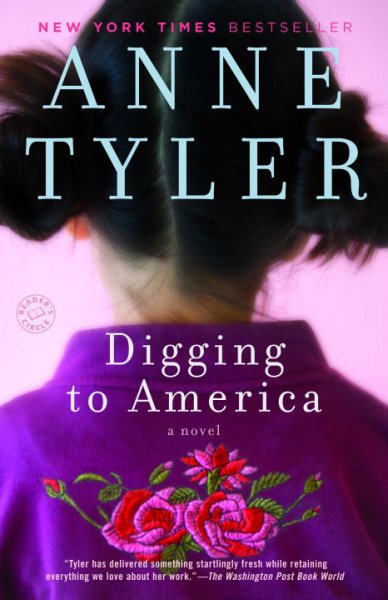 discussion flowing, even if we didn’t all find the book entirely engaging. Our first responder likes a wide variety of books and often appreciates our book selections. She really liked Digging to America – finding it easy to read, straightforward, pleasant. Another member had liked the book the first time she read it in 2006 and liked it still. Two others found it to be just okay, with too many stereotypes; and it didn’t go anywhere.
That’s all it took and we were off—thoughtfully—more like the tortoise than the hare. Some of us liked Bitsy but found her parenting atrocious and her meddling obnoxious. We discussed how easy it is as parents to become immersed in our children. Some of us found the binky-balloon scene hilarious, others were appalled and bored, but many of us agreed that pacifiers were a big deal for us when we raised our own children. We liked the fight scene between Brad and Sami, as well as Sami’s performance piece making fun of Americans. One of us thought Maryam needed therapy. Perhaps her aloofness was part of her wealthy upbringing. Perhaps it was simply introversion. Maybe both.
We discussed traditions and their meanings. One of us felt that America has no traditions, only celebrations. We are too divided and separated from our religion. A new member felt that we don’t share our stories enough to appreciate our heritage as Americans. One of us had been raised to say that she was second-generation American of Polish descent. Another remembered how his father wanted his son to be American and wouldn’t speak his native Italian. We talked about created traditions and one of us shared how she had once given her candy-deprived children a box of candy wrapped as a gift, including a warning that she didn’t want them to get anorexia. Next thing she knew, the “anorexia” gift became a tradition!
We discussed names and the difficulty of assimilation. Was Bitsy right in trying to help her daughter hold on to her Korean heritage—especially since her daughter seemed to reject it? Isn’t this what children do? Dave makes a great point when talking to Maryam about Susan’s disappointment at Christmas – part of being American is to be disappointed at Christmas! One of us mentioned the film Losing Isaiah and how the birth mother challenged the adoptive parents’ omission of black heritage. Is this less important for international adoptions? We talked about how immigrant communities stay together for security and one of us had for a while attended meetings of The Daughters of the British Empire, calling it a “scary group!”
As always, the discussion was more full and detailed than I can possibly capture. In this world of technical wonders, sometimes it’s all too easy to stay hidden, like Maryam in her house at the end of Digging to America. It reminds me of a story from All I Really Need To Know I Learned In Kindergarten. Children in a neighborhood are playing hide-n-seek. One of them hides so well that everyone is about to move on without him. Finally, all author Robert Fulghum can do is yell: “GET FOUND KID!” Thank you to all of you who found us and made our discussion so much more than a virtual reality.
- Other works discussed:
- All I Really Need To Know I Learned In Kindergarten (1988) by Robert Fulghum
- The Big Sick (2017) Film
- Fiddler on the Roof (1964) musical
- Ladder of Years (1995) by Anne Tyler
- Losing Isaiah (1995) Film
- My Ántonia (1918) by Willa Cather
- The Namesake (2003) by Jhumpa Lahiri
- West Side Story (1957) musical
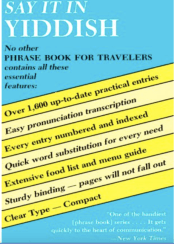
 immigrants to settle in Alaska, starting in 1940. The latter book’s alternate-history premise was based on a failed proposal, The Problem of Alaskan Development, that was produced by the United States Department of the Interior under Secretary Harold L. Ickes.
 Ghosts”) Harper’s Magazine. Oct97, Vol. 295 Issue 1769, p32. 2p. 1 Color Photograph.
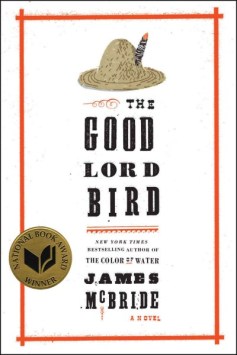


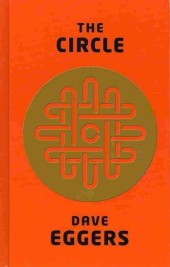 month’s discussion. I felt a distinct need for privacy and anonymity. One of the elements that fascinates me about the book is how it combines philosophies for collectivism and individualism. I found myself reading essays by Ayn Rand (skimming them really), enjoying the chance to wax philosophical, horrified by the application of real-world technology, yet confident that it will never happen—after all, we are reading the book, like we read 1984, Brave New World, The Handmaid’s Tale and many others.
