Unknown's avatar

About Kristine

I am the current moderator of the Whitney Library Book Club

Unlikely Pilgrimage of Harold Fry Discussion Journal August 13, 2013

To most of the book club members, the pilgrimage of Harold Fry seemed unlikely indeed – but believable. With a mix of incredulity and inspiration, we discuTheUnlikelyPilgrimageCoverssed the impetus that could motivate someone, after years of stagnation, to pass one mailbox after another and start on a journey of 87 days, over 627 miles and a lifetime of memories.

We discussed the meaning of extraordinary and the perspectives, negative and positive, that make the difference between extra and ordinary. In this story, we know so little about Queenie; but we know that she had an extraordinary impact on Harold and Maureen.  Did she know it? With reflection, both Harold and his wife realize that their memories have been compromised by pain and loss. How many of us have mistaken our own lives for ordinary, or worse? What will inspire us to look back, and forward, finally unburdened?

One member noted how often spouses separate after the loss of a child. Others commented on the importance of strong communication and devotion. Why didn’t Harold and Maureen divorce? Sometimes stagnation is easier than action. What exactly are yachting shoes and why would Harold insist on keeping them despite blisters and injury – symbolism or penance? We decided on both. Several members commented that Harold and Maureen would not need counseling because they had created their own.  Maureen’s action in placing each one of her outfits together with one of Harold’s, his coat sleeve in her pocket or over her shoulder, was touching and incredible therapy.

What about the joiners? Our group dismissed them with distaste. This was Harold’s journey and although we could see the reality and relevance in that part of the story, only the dog seemed worthy of our notice. Many of us mourned Harold’s loss of the dog and one member voiced how sad it was that Harold had not allowed his son to get a dog.

The hour discussion flew by. We discussed much more than covered here and less than we could have.  We had a great turn out (11), including two new members, and I hope everyone enjoyed the book and the discussion as much as I did!

  •  Other works discussed:
  • Zen and the Art of Motorcycle Maintenance  (1974) by Robert M. Pirsig
  • The Way ( 2010)  Emilio Estevez, director, and Martin Sheen (DVD)

Still Life Discussion Journal – July 2013

It’s summer, the desert, and hot. Record-breaking hot. The kind of heat that keeps the car from ever cooling down and has fueled fires for weeks now. And yet five members came out for our discussion last week!

StillLifeBookCoverWe read a lighter book in June, the first in Louise Penny’s popular Inspector Gamache series, Still Life.  Published in 2005, the book received starred reviews from Publishers’ Weekly and Booklist, won several mystery awards, and has been adapted into a television movie still to be released this year (Canadian). Nearly a year ago, the Las Vegas Review Journal’s Jane Ann Morrison even wrote about her trip to Canada and interview with Louise Penny.

The discussion was straightforward. We laughed a lot. No one at the meeting seemed interested in reading more in the series, but we were all intrigued by the description of Jane’s art and gave credit to the author for Ruth Zardo’s poetry. One member considered the book too preachy and another didn’t find the mystery and solution believable. I found the writing awkward and wonder if this is a language difference. At the end of the meeting, we listened to an on-line French pronunciation guide provided by the author on her website. We all agreed that we would love to go to Canada! And several members shared their experiences.      

Still Life is a first novel and the author had the daunting task of setting up a cozy town, Three Pines, as well as characters who could grow over more mysteries. Part of the appeal of a cozy mystery is attachment to the setting and characters. Sometimes, I worry about the need to have something significant to discuss in a book or movie. But our meetings remind me that what’s significant is the shared experience: the recommendation, the condemnation, perhaps the horror, and definitely the laughter.

  • Other works mentioned:
  • W. H. Auden
  • Agatha Christie
  • Lord Peter Wimsey series by Dorothy L. Sayers

In One Person Discussion Journal June 2013

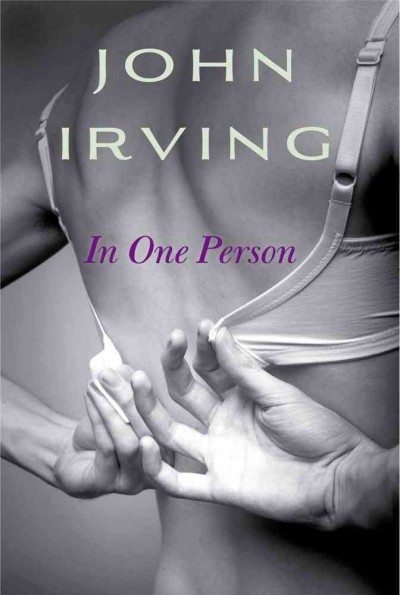
When I first started thinking about In One Person for our book club, I was actively trying to find a book about homosexuality or gay rights. It is a subject often in the neInOnePersonws, in our legislatures, and in our neighborhoods, if not in our minds. I have found John Irving’s A Prayer for Owen Meany on several must-read lists, and the movies I have seen based on his books are sensitive, insightful, and entertaining. I read several reviews, and even the bad reviews focused primarily on how the book did not live up to expectations, or how so many eccentric people could live in one place. I was still uncertain about my ability to moderate a discussion about such a potentially volatile subject, but when I asked the book club about my considerations and concerns, one member was strongly outspoken about the importance of dealing with the discomfort!

So last month, we read In One Person by John Irving. The narrator is a man nearing 70 who is recalling his life and experiences as a bisexual growing up and onward in a small New England town, from the 1940s, through the AIDS epidemic in the 1980s, into the new century. Six of us attended the meeting, and the discussion was not only manageable, it was inspiring. We agreed that the book was repetitious and long. As one member remarked, how many times do we need to hear that the narrator liked small breasts? Several members were moved by the author’s descriptions of the AIDS hospital scenes. Who would have thought that people could not be left alone with a body in the hospital because some would take a syringe of blood from an infected loved one and inject themselves? One member was impressed by how well the author captured the teen angst of a young man confused by the world around him.

We remembered how confused we were when young, about secrets kept by our families, about the world we were growing into. One member shared how a family member’s coming out as homosexual had affected her family. We mentioned the case of a prison inmate suing to have the government pay for his sex change operation or the parents of a young, biologically-male child, suing to allow her to use the girl’s bathroom. We tried to understand homophobia and one member was particularly incredulous about why people need to make laws to control homosexuality. Which of course leads back to previous meetings and our incredulity about the Japanese-American internment, slavery, and whatever may still be to come.

Two of us had not finished the book. I had stopped reading about a third of the way through because I was overwhelmed by the repetitive sexual detail – I had hoped for a bit more subtlety. Reading on a kindle makes skimming particularly difficult because you can easily move forward too fast and never find your way back!  I tried reading backwards, which allowed me to understand much of the plot, but makes me an unreliable reviewer. After our discussion, though, I would like to try reading the book again. I don’t think that anyone in our group really liked In One Person as a whole, but we are all glad to have read and discussed it.

For those of you who missed the meeting, or to add some details I missed – and I am sure there are many – please comment or send me an email.

  • Other works discussed:
  • Middlesex by Jeffrey Eugenides
  • Fifty Shades of Grey by E.L. James
  • Brokeback Mountain by Annie Proulx
  • Many classics mentioned by the narrator in the book

The Buddha in the Attic May 2013 Discussion Journal

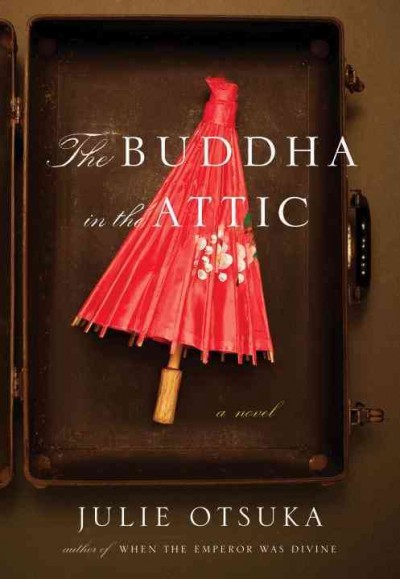
BuddhaInTheAtticBookCoverAs I read The Buddha in the Attic, by Julie Otsuka, I was awed by the first person plural narrative voice. I thought about how, when I write these notes on our meetings, I often use the collective We to share our experience. Even though individuals make the statements, the group absorbs them, refutes them, nods, smiles, scowls, laughs, even remembers. It is really very powerful, which is why I am drawn to record the meetings. For future members. For the Us.  But to continue that voice for 138 pages . . .

Most of us agreed that the book was repetitious. Some of us skimmed as we moved along in a chapter. One of us didn’t feel as connected to the characters as individuals and was not as moved by it as she might have been if it had shared the detail of an individual experience. Another felt as if he were reading a non-fiction book. Which of course can be dangerous if the book is not well researched and accurate.  Is that my statement or the group’s? It’s tricky!

We discussed the book in snippets, much like it’s written. We looked up the reference to the laughing Buddha, hidden in the attic when the Japanese leave for the internment camps, hidden away like they were during the war. We read the discussion questions and realized that we didn’t remember specific enough details to answer many of them. “Women are weak but mothers are strong.” Some of the Japanese women were mothers before they came to America. Are the Americans the most savage tribe?  One member pointed out that the buying up of the Japanese-Americans’ goods was reminiscent of the Jewish holocaust. And the “I am Chinese” buttons similar to the Jewish armband. Is this human? American? Considering Muslims and our fears today, have we learned anything from these experiences?

One member said that she hadn’t liked the collective We voice at first, but when she got to the end, she realized how powerful it was that the We disappeared and was eventually forgotten by the We left behind. Which of course brings up stories from those of us left behind. Some of us admitted knowing nothing about the internment until hearing about it in school. Many had known only of the fear — fear of war, fear of the Japanese.  One of us had worked for a Japanese woman whose property had been held for her by an “Irish” friend. Another member remembered Snow Falling on Cedars, by David Guterson, in which a son refused to honor his father’s promise to a Japanese family.

The Buddha in the Attic seemed sometimes like a long poem, with anaphora and alliteration a choice not just repetition. The We is more common in poems. Some of us found the beauty and the story enough, as if the details of experience were carried by the feelings evoked, with some individual facts and images impressed on our consciousness. Others still would have liked more detail, which is also important, if it keeps us searching for answers and ever learning.

At the end of the meeting, we discussed whether authors really intend all we find and discuss in a book.  Who writes these discussion questions? How important are they? I believe that our discussions are exercises for the brain, and sometimes, when I am searching really hard for an answer, I am convinced that I can feel my brain hurt with the strain, just as if I am exercising any other muscle. Many of the members agreed. Though not every one.

Other Works discussed:

  • “A Rose for Emily” by William Faulkner (famous for its first person plural narrative)
  • Anthem by Ayn Rand (first person plural narrative representing collectivism)
  • Snow Falling on Cedars by David Guterson
  • Tallgrass by Sandra Dallas (our November 2012 selection)
  • “1917” by Mary Swan (acknowledged by Julie Otsuka as inspiring her first chapter — the story is written in a very similar style)

Beautiful Ruins April 2013 Discussion Journal

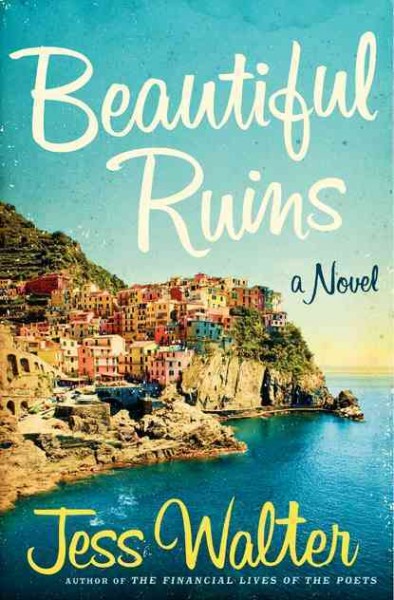
BeautifulRuinsBookCoverAt the start of each meeting, I usually ask if people want to share their responses to the book — did they like it, love it, hate it, or any number of possible first reactions to a book.  This can be risky, like a leap of faith, asking people to share what might turn out to be a minority view. Often, many of us can appreciate the book much more after the discussion, looking at it through others’ eyes, discovering meanings missed, and, like laughter, enthusiasm can be contagious.  But that immediate response may be the truest, because it reflects the likely impact of the book — undiscussed, perhaps cast aside in favor of another book, or cherished and passed on among family and friends. 

This month, we discussed Beautiful Ruins by Jess Walter, and the first responder said she had trouble getting into the book and wondered if anyone had been unable to finish it. Several of us did find the book to be slow to start, and the changing characters and times were frustrating at first. One patron found it repetitious and another wondered about its relevancy, especially since so much concerned the making of the movie Cleopatra in 1962. Who is the audience? Would younger readers even care?

In general, most members seemed to like the book. Characters we dislike at the beginning become more interesting by the end and the last chapter recap of what happened to all of the characters, even minor ones, was mentioned by several of us. Two members had listened to the audio version and said that the reader was excellent.

The discussion questions I had printed from litlovers.com were especially helpful this month, although I forgot to distribute them with the books, so we hadn’t all been able to think about them ahead of time. The intersection of art and life brought up several images–from Pasquale’s vision of the tennis court, the bunker art, reality shows, the movie version of Lydia’s play about Pat, and more.   Many of us remembered the furor surrounding the Elizabeth Taylor – Richard Burton love affair and one member had seen Cleopatra because of the publicity — just like in the book! Art intersecting with the book club!

We continued to jump about among the questions, discussing the theme of love that ran throughout. I hadn’t actually thought of the book as filled with humor, and the question made the group think a moment, but as we discussed it, we found bits of humor, words and images, that made us smile — the battle of insults between Pasquale and his friend, the absurdity of the reality shows. We skipped over many questions that I think would have been great to discuss.  Although meeting for only an hour keeps us on task, it can leave a great many things unsaid; but I like to think of it as jump-starting our brain.

We were left with several questions, about how much of this fiction book might really be true. (according to imdb.com, Richard Burton died in 1984 and had three children, one with Elizabeth Taylor). Could you really bake lye into a loaf of bread and would it kill you? And who, in 1962, would have nausea, miss a menstrual cycle, and believe cancer over pregnancy? Sometimes, truth is stranger than fiction, so we get back to that art intersecting life question.

Beautiful Ruins is a book that spans 50 years and has at least eight main characters and their perspectives. One member’s first reaction to the book was that the main point is that “we want what we want.” Every character and every reader comes back to that reality. In  the book, Alvis Bender tells Dee, “All we have is the story we tell. Everything we do, every decision we make, our strength, weakness, motivation, history, and character—what we believe—none of it is real; it’s all part of the story we tell. But here’s the thing: it’s our  . . . story!”  (pg 266 )  Another member highlighted Pasquale’s mother: “ ‘Sometimes,’ she said,’ what we want to do and what we must do are not the same.’ She put a hand on his shoulder. ‘Pasqo, the smaller the space between your desire and what is right, the happier you will be.’ “ (pg. 304) I certainly want life to continue intersecting art in the Whitney Book Bistro!

Other works discussed:

  • The Stranger by Albert Camus
  • Unbearable Lightness of Being by Milan Kundera (movie recommendation)
  • Beginners Goodbye by Ann Tyler (March selection)
  • Juliet Naked by Nick Hornby (June 2012 selection)
  • Age of Innocence by Edith Wharton (March Movie Club selection)

The Beginner’s Goodbye Discussion Journal

On Tuesday, the Whitney Book Bistro discussed The Beginner’s Goodbye. I had chosen BeginnersGoodbyeCoverthe book because Anne Tyler is a remarkable and well-liked writer. The book is a 2012 Booklist Editor’s Choice selection, was given a starred review in Publisher’s Weekly, and Library Journal called it “essential reading.” Every book we read has some detractors, and Beginner’s Goodbye was no exception. The Kirkus reviewer called it “an uncharacteristically slight work by a major novelist.”

Although one member didn’t like the book and another found it to be an easy read but wondered at the end why he had read it, we found plenty to discuss – almost as if we were discussing friends and neighbors. One member found the first part of the book slow and said she would not have finished if it hadn’t been a book club book. But by the end, she liked it.

I wondered at the end of last month’s journal how our expectations would inform our reading, and I definitely sensed a fondness for Anne Tyler that superseded this particular work. One member felt the author wrote a male narrator convincingly, another remarked that it was no wonder since Tyler was the older sister of three brothers!

Nothing really extraordinary happens in the book, and that is perhaps its strength. We can so easily identify with the ordinariness. Even the narrator’s visits with his deceased wife are not the spectacular hauntings of a ghost but the subtle insistence of memory. Perhaps. One member wished that there was a companion book, telling the story from the wife’s viewpoint, and most of us seemed to agree.  We even joked that we should contact Anne Tyler to make the suggestion.

The Beginner’s Goodbye is a book about loss and regret, and I was moved by the members who were willing to share their own losses with the group – parents, children, spouses. When I choose a book for the group to read, looking at award winners, popular authors, well-regarded authors, diverse topics, I often worry about wasting our time or missing something great. The Beginner’s Goodbye made me think about missed opportunities, and I’m glad the book club isn’t one of them.

Other books mentioned:

  •             A Spot of Bother by Mark Haddon (2011 book club selection)
  •             Netherland by Jospeh O’neill (Sept. 2012 book club selection)
  •             The Dovekeepers by Alice Hoffman
  •             Author Wally Lamb
  •             Destiny of the Republic by Candice Millard
  •             Orphan Master’s Son by Adam Johnson
  •             Language of Flowers by Vanessa Diffenbaugh

When the Killing’s Done Discussion Journal

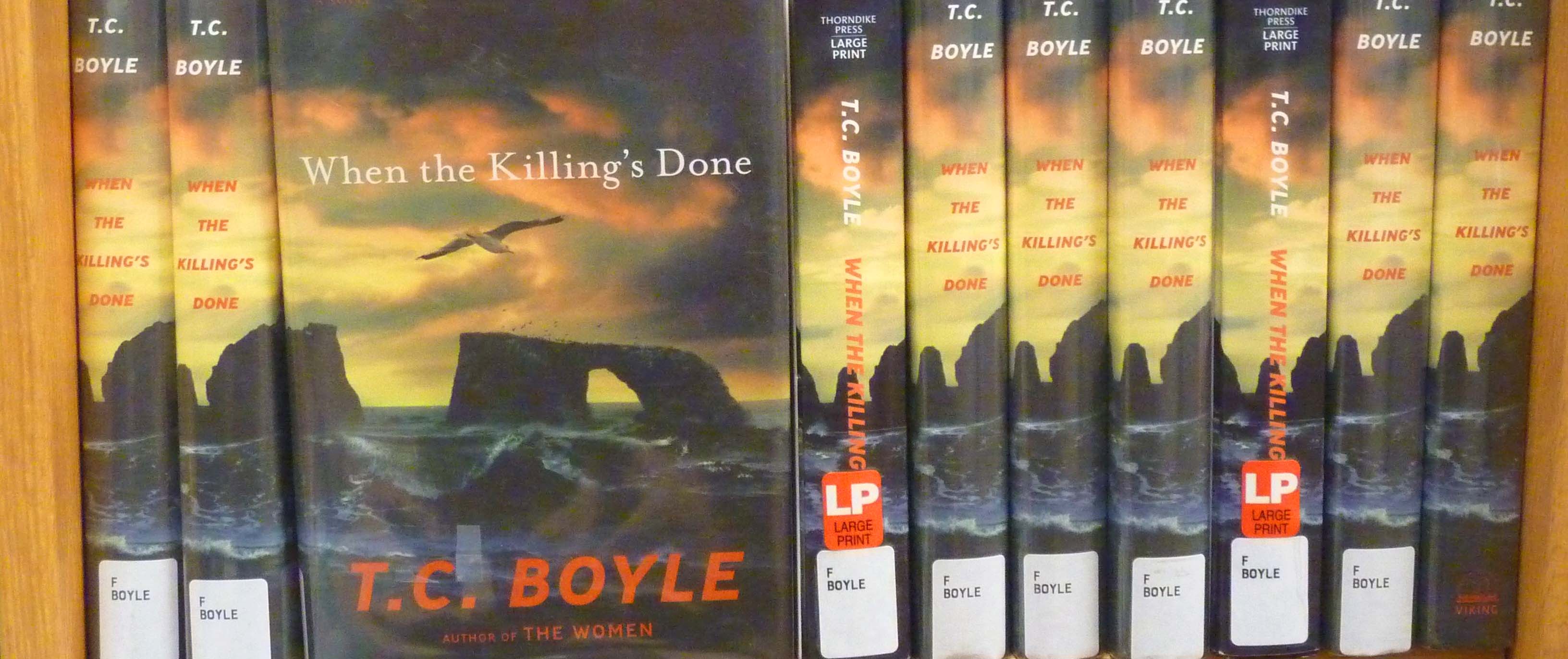
WhenTheKillingsDone3During our discussion of When the Killing’s Done by T.C. Boyle, the words most often used were — too much detail; and the majority of those present didn’t seem to care for the book. One member mentioned that in other book clubs, members have rated the books they read, and that on a scale of 1 to 4, she would have rated it a two. Another member wished she had researched a little more about the islands, so we watched a short National Parks Service video about bringing the island of Santa Cruz back into balance, which we all agreed was exactly the kind of video that the antagonist in the story would have called propaganda! At least one member really liked the book, though, especially because of the great detail. Even as we discussed how unlikable the environmentalist Dave LaJoy was, one member felt that he was the character that kept the book interesting. A necessary plot device.

We nostalgically discussed farms, animal rights, and meat. Do animals who have never known the outdoors and freedom know the difference? The unknown dangers of chemicals, from DDT to penicillin tooth paste, cigarettes to the next wonder drug. One member brought in a recent article from the Las Vegas Review Journal about the over abundance of Ravens and the damage they cause, which directly relates to the ravenous scavengers in the book. The story certainly has topical appeal. We all agreed that the significance of the title, When the Killing’s Done, is that the killing is never done.

I was interested in the beauty of the language Boyle used, which often stood out to me almost as strikingly as that used by Daniel Woodrell in Winter’s Bone; and one member agreed that you could open the book up to most any page and find a beautifully descriptive passage. But even as the group raved about the descriptions in Winter’s Bone, Boyle’s language barely registered in our discussion. One member described reading the book as simply laborious. Perhaps, the language gets lost in the detail.

Other books mentioned during our discussion:  Flight Behavior by Barbara Kingsolver and Ape House by Sara Gruen.  So many books, so little time! Our March discussion will be Beginner’s Goodbye by Anne Tyler. The group seemed excited by the choice. I wonder how our expectations will inform our reading? Check back next month.

Miracle at St. Anna Discussion Journal

MiracleAtStAnnaCoverThis past Tuesday, the Whitney Book Bistro discussed Miracle at St. Anna by James McBride. The discussion brought forth stories from our members—stories about segregation and race, about war, politics, and remembrance.  The immediate reaction from the group was that the story was just too sad. And many found it confusing, difficult to keep the characters straight and filled with an odd depiction of miracles/spiritualism. Yet the discussion was full and varied; and we only referred to one question from the discussion prompts.

Everyone seemed to find Miracle at St. Anna educational and worthwhile, but not all of us would have chosen to read it. I chose the book because, although I don’t generally read war novels, or violent crime novels, I had been impressed by McBride’s bestselling memoir, The Color of Water.  I was equally impressed by his first novel, Miracle at St. Anna. I found it beautiful and uplifting—from the simplicity of Train, who thinks rubbing a statue head can make him invisible, to the decency of a German soldier amidst inhuman cruelty, through the continuing miracle of life and love through the ages. Of course, in between is some ugly fighting, deception, and politics.

Our views of the things we read are so often tempered by our moods and experiences. We may love a book on a first read and despise it on a second! One of the great things about discussing and sharing books is that it can bring new understanding to the books and in many ways, to the world around us.

At the meeting, one member remarked that perhaps we should discuss the books before we read them. Discussion makes a difference.