
This month’s discussion of The Wager: A Tale of Shipwreck, Mutiny and Murder was remarkably agreeable. Our first responder was concerned to be first because she didn’t really like the book; it was depressing and she kept thinking, “give up already!” But she had finished it, appreciated the depth of research, and was glad to have read it. She wasn’t alone. Many of us found the hardships depressing and much of the nautical details and number of characters overwhelming. Despite this, we easily filled the hour discussing particulars with only minor asides for personal anecdotes.
Our next responder said she “almost liked it” and called out the first third of the book as a textbook. She felt that this story from the eighteenth century highlights how society and politics have not changed. She was particularly impressed with the common phrases that originated in shipping, reading off “cut and run; learn the ropes; under the weather; pipe down; piping hot; scuttle butt; three sheets to the wind; and turn a blind eye.”
One of us was amazed at how many men it takes to staff the ship and how vulnerable they were. He questioned why, after the wreck, the majority would even consider going back so far rather than forward. He felt that this entire book was about war. Another member was outraged by the British imperialism, arrogance, and condescension revealed in this story. Everyone agreed, bringing up politics, Charles Dickens, and how “human life was cheap.” Still, we were amazed at the sailors’ ingenuity in building another ship from the wreckage. We were also impressed by the Kawésqar people, who were so well adapted to their environment and could have been more help if only the shipwrecked sailors had been better behaved. One member, as a minister, was particularly moved that the sailors were concerned about decent funerals. And another of us thought that the title of the book should have been “Screwed.”
A new member had joined us because he particularly likes nautical fiction, which is usually more heroic and adventurous. However risky and uncomfortable life on the seas seemed, people’s lives are sometimes worse at home and the desire for adventure and discovery continues even today. Just this last month, on June 5th, the Boeing Starliner successfully completed its first crewed launch to the International Space Station. And Elon Musk’s Space X is still striving for Mars. None of us could see ourselves hurtling into space.
I asked if we believed this nonfiction book was “truer” than the historical fiction we read – especially since we discussed Crow Mary last month, which was also well researched but fiction. Can anything that is being remembered in hindsight, even in journals, be reliable? One of us even wondered how, with all the loss of supplies, the journal writers had ink? Most of us seem to agree that the journals and the dry details make The Wager more real, especially since there are multiple written, first-hand accounts to compare and draw forth the likely truth, pictures, maps, and endnotes.
Other comments during the discussion: In this story, as in current events, how do people keep surviving under such unimaginable hardships, bombings and destruction? Our problems seem minor compared to the hardships of war. We noted that people near death can have an amazing burst of energy just before the end or hang on until a holiday. The memoir of The Wager wreck written by the chaplain notably had no mention of God, which brought to mind that one book of the bible, Esther, also has no mention of God. It is interesting that charcoal keeps away rats and cockroaches. Did the sailors realize at the time that the wild celery kept away scurvy? Probably not.
We watched some images from the film Master and Commander, which shows sailors climbing up the ropes and bailing out water. The film takes place in 1805, but an absent member wrote me that she found the film “so similar to The Wager descriptions.” I also showed part of a YouTube video that gives a nice layer by layer description of “How an Eighteenth Century Sailing Warship Works” – using an Animagraff 3D model created by Jake O’Neal: https://www.youtube.com/watch?v=4Nr1AgIfajI.
Please add to the discussion – things I have forgotten or new things to share. Check the comments, too!
Other works discussed:
• Cinnamon and Gunpower (2013) by Eli Brown
• Lord of the Flies (1954) by William Golding
• The Devil and Sherlock Holmes: Tales of Murder, Madness, and Obsession (2010) by David Grann
• Killers of the Flower Moon (2017) by David Grann
• The Wager (pre-production) film directed by Martin Scorsese
• Billy Budd (1924) Herman Melville
• Master and Commander (1969) by Patrick O’Brian
• Master and Commander: the Farside of the World (2003) Film based on Patrick O’Brian novel
• Unknown Shore (1959) by Patrick O’Brian
• Amistad (1997) film by Steven Spielberg
• Mutiny on the Bounty (1962) film starring Marlon Brando
• Wreck of the Batavia (author/title uncertain)
• Wreck of the Whale Ship Essex: The Extraordinary and Distressing Memoir That Inspired Herman Melville’s Moby-Dick (various versions) by Owen Chase
•Author Charles Dickens
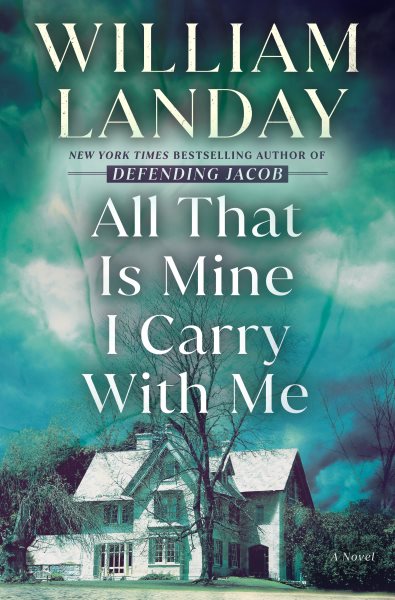 been used to describe Jane’s ghost perspective. She was disturbed by the idea that the daughter wrote the details of rape and her father’s fondling of his girlfriend’s daughter. She also wanted Dan to suffer. If proof of his murder was to be found, it should have happened before he got dementia so that Miranda could punish him by putting him in the senior home against his will. This would have given many of us a more satisfying ending.

 being the title story, “The Angel of Rome.” “To the Corner” was mentioned next frequently, and a couple of us called out “Mr. Voice.” Our first responder was impressed by how well the author captured the feeling of just coming out as gay and found his female voices also seemed authentic. One of us enjoyed reading the stories but felt they didn’t quite end, which can be more common in literary fiction. Another member felt that one of the unifying themes is the twist at the end of every story in which the characters are revealed to be more than we first assume.

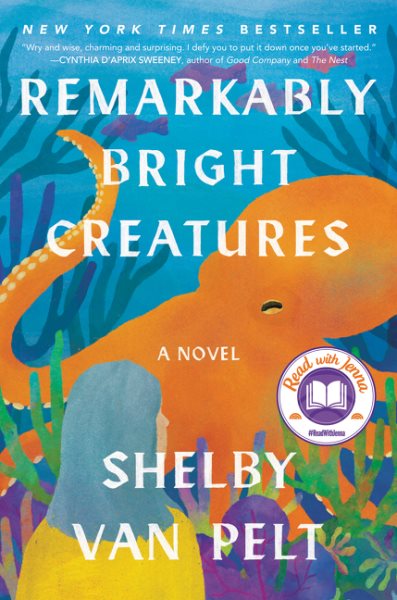
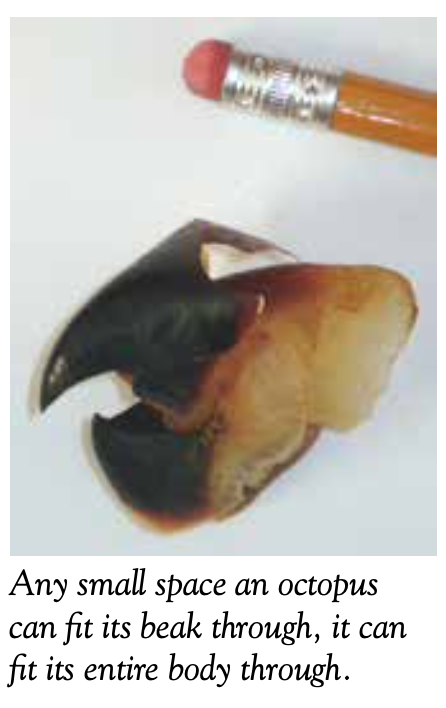 Giant Pacific Octopus information and beak size image from a great fact sheet ©2007. I will print one for you if you would like to have it. Web accessed 9-01-2023.
 WhitneyBookBistro