The Double Bind Discussion Journal

Homelessness, mental illness, hunger, unreliable narrators, The Great Gatsby, and author cheating permeated our discussion of The Double Bind by Chris Bohjalian. After a friendly session of chatting, we turned low-key and thoughtful. We were divided about the book, but in agreement about the seriousness of its subject.

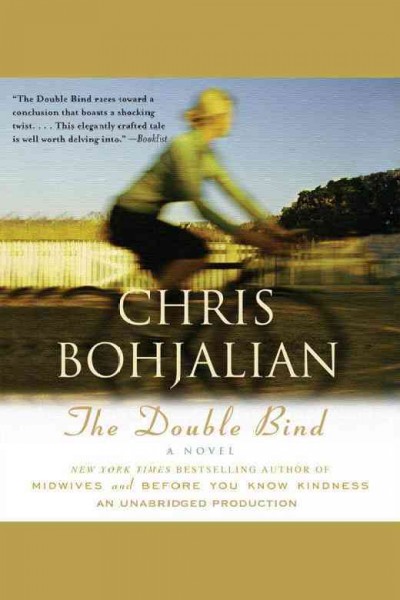
DoubleBindCoverOur first responder spoke for his wife, who found reading The Double Bind tedious.  Several members agreed.  Others of us found it unengaging, until the second half, when we became curious about its resolution. One noted that the novel lacked the humor, passion, or warmth that have driven other selections.  Most were completely surprised by the twist at the end and one member said she re-read the last chapter, thinking that she must have fallen asleep and missed something! One member actually felt punched; another was angered, feeling that the author had not given enough clues, writing as if from the perspective of real characters who turned out to be entirely imagined.

Yet still, we know that the imagined is completely real to the person with mental illness, which is how the story felt to us as well. One member shared that he had spent some time “hoboing” and that resources are available; yet how do you solve the problem of homelessness, especially when mental illness makes a person unable to fit into the rules and regulations of communal life? We discussed the need for asylums and the abuse that abolished them.  Shelters, food pantries, military veterans, PTSD: people walk, even in our Las Vegas heat, miles and miles. One member mentioned his high regard for the Las Vegas Rescue Mission as we discussed how hard it is to make a difference in the midst of so much need and so much fraud.

We all agreed that the imagined Great Gatsby connection was fascinating and well done. One of us had read The Great Gatsby just before The Double Bind and another had been a nurse in a psychiatric facility and had been fascinated by the accuracy. One member noted that both were stories of broken people trying to reinvent themselves.

As we closed the discussion, we considered the meaning of the title, The Double Bind, and wondered if the author intended to suggest bad parenting as a part of the narrator’s problem. Many of us laughed as someone suggested that the book should have been called Catch 22.

I was especially impressed that the author commented on our Whitney Library Facebook page when we advertised our meeting and book choice:  “Why thank you so much. Best part of the novel? Bob Campbell’s remarkable photographs.”

It’s truly a small world, imagined or not. It’s never too late to join the discussion!

  • Other Works Discussed:
  • A Beautiful Mind (Book 1998 and Movie)  Sylvia Nash
  • Shelter (2016 Movie)
  • The Great Gatsby (1925) F. Scott Fitzgerald
  • The Yellow Birds (2012) Kevin Powers
  • The Language of Flowers (2011) Vanessa Diffenbaugh (not mentioned but related)
  • Play Dead (2007) David Rosenfelt

A Tale for the Time Being Discussion Journal

A Tale for the Time Being, by Ruth Ozeki, had been on my reading list for quite a while. Our book club members enjoy being entertained, but they also want to be challenged and to experience new perspectives, and A Tale for the Time Being offered both:   it concerned a teenager in Japan, her Buddhist grandmother, and a writer in Canada. TaleForTheTimeBeingCoverimage

The topics covered in A Tale for the Time Being are definitely challenging – bullying, suicide, prostitution, environmental decay, and even quantum physics! However, I was still surprised to find that the majority at the meeting did not like the book, and a couple of members had been unable to get past the first 30 or 40 pages.

The ending was confusing and perhaps too easy–solved by a dream. Some readers found the writing tedious. The bullying in the story was disturbing to everyone and a few found it hard to believe.  We had a good discussion about bullying in stories throughout history, and one member mentioned the classic example of Lord of the Flies.

We also discussed suicide and the different role that culture and religion – Christianity vs. Buddhism – plays in the higher than average suicide rate in Japan. We would need to know more to be able to answer this question. The father was actually fined for the cost of his attempted suicide. And as life meets art, one member told us how the attempted suicide on our local freeway a few days ago had impacted thousands. Another noted that the decision to commit suicide led Nao and her uncle both to appreciate life more fully.

We discussed how the “supapawa” concept was similar to the belief in the power of a positive attitude or the law of attraction. But somehow the idea of developing a superpower was so much more empowering to me. It wasn’t just attitude, it was imagination.

As often is the case, we noted the biographical similarities between the story and the author, who lives in British Columbia and New York, has a Japanese mother, and is a Soto Zen priest. Does this make the story any more believable, accessible, authoritative? Our concern for the characters, especially Nao, makes it important to some of us.

We only referred to one question from the official discussion questions.  Did we think the narrative opening of Nao writing to an unknown reader was successful? Although we disagreed here, one member noted how she felt that she was listening, even if her answers weren’t heard. Another felt that the journal writing was to fill a need to communicate, as if to a friend. We spoke of many things, all relevant. The book is filled with so much and I wonder if we had followed more of the questions if we might have delved deeper, almost as if into Pandora’s box! The meeting seemed to fly by – time is relative, even in English.

We ate Japanese rice cakes, Hello Kitty chocolate marshmallow candies, and drank Blue Mountain Blend coffee as we discussed. It’s exciting to me to find choices tied to the readings. I always hope that the new tastes will help us solidify the memory.

I opened the meeting by reflecting on the various languages in the book. Japanese is a culture steeped in metaphor and I mentioned one researcher who specifically noted how different languages can change cognitive abilities and even understanding of time.[i] I also showcased some of the books and movies that can perhaps be more accessible in helping to understand some of the concepts covered in the book. In the end, I asked if anyone else had found the book uplifting.  Smiles and some nodding heads. Language. Communication takes many forms.

  • Other works discussed:
  • Bully (2011) Documentary DVD
  • Shall We Dance (1996) DVD English subtitled
  • The Wind Rises (2013) Sprited Away (2001) DVD Miyazaki
  • Whisper of the Heart (2006) DVD Studio Ghibli
  • The Ocean at the end of the Lane by Neil Gaiman
  • The Buddha in the Attic by Julie Otsuka

[i] Moxley, Mitch. “Can Language Influence Our Perception of Reality?   .” Slate Magazine. Graham Holdings Company, June 2014. Web. 10 Feb. 2016.  http://www.slate.com/articles/news_and_politics/uc/2014/06/can_language_influence_our_perception_of_reality.html


The Tragedy of Pudd’nhead Wilson Discussion

I first read The Tragedy of Pudd’nhead Wilson  over thirty five years ago in an high school English class on Mystery Fiction.  I remember only two works, Pudd’nhead Wilson by Mark Twain and a short story, A Nine Mile Walk, by Harry Kemelman (1947). Classic fiction is always particularly inspiring to me because it is often a snapshot from a time and place and attitude, rather than historical—and the test of time tends to weed out insubstantial works.  This does not mean that everyone will like it or find value, and PuddnheadWilsonCoverour discussion was exemplary!

Our first responder found the sentences in the book to be extraordinarily long! Another found the writing to seem more modern than he had expected, and still others found the vocabulary antiquated.  We had a lot of discussion about how confusing and unbelievable the story line was, almost as if Mark Twain had just thrown it together – which fit with his own afterword explaining that he had wanted to write a farce about Siamese twins but was forced to throw out the farce in favor of the tragedy! Many of us felt that the story still depended on the Siamese twins, others finally proved that the author had taken “those twins apart and made two separate men of them.”[i]

We discussed issues of race and Mark Twain’s intention, as well as some of his other works. One member felt that the racial issues and local attitudes were similar to Harper Lee’s Go Set A Watchman. Several members had read that book and we discussed it a bit more than we would usually stray. I think we may need to read and discuss Go Set a Watchman on its own this year!

Despite many of the negative comments, the majority of the group seemed to like the book or were at least glad to have read it.  One member referred to the discussion question about what had been happening in 1894. She had researched it and gave us a great picture of the time period – depression, bank failures, and the obvious failure of reconstruction after the Civil War.

The novel, and our discussion, has given me a lot to think about over the last few days. Which is as it should be. What connections will we make or see in the days and years ahead? Nature versus nurture? What prejudices are we harboring that will seem so obvious in hindsight? The discussion never really ends.

  • Other Works Discussed:
  • Go Set A Watchman by Harper Lee
  • Nature Girl by Carl Hiaasen
  • Striptease by Carl Hiaasen (film and novel)
  • To Kill A Mockingbird by Harper Lee
  • Wench by Dolen Perkins-Valdez
  • Authors:
  • Nathaniel Hawthorne
  • Herman Melville

[i] Twain, Mark.  The Tragedy of Pudd’nhead Wilson. Author’s note to Those Extraordinary Twins. Signet Classic Edition 2007.

We Are Called To Rise Discussion Journal

Despite the holiday season and its many competing activities, we had a great turn out for the Nevada Reads discussion of We Are Called to Rise by Laura McBride. We started at six to make sure we had some fun and socializing—with cookies, fruit, nuts, and holiday punch—and most everyone arrived for the early start! The room was filled with chatter and even during the discussion, we at times had competing discussions across the four tables!

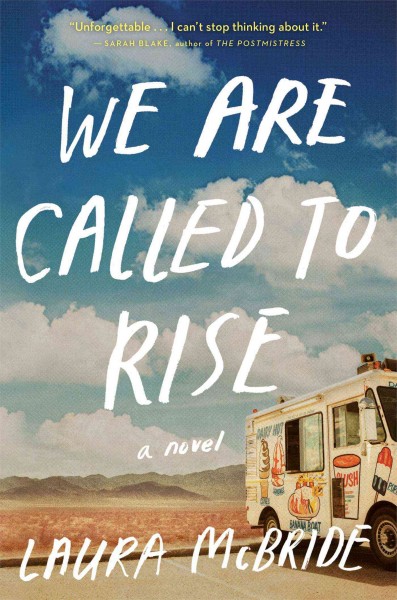
Everyone seemed to like the book, even those who couldn’t attend; when we discussed WeAreCalledToRiseCoverImagehow the conclusion was contrived and unlikely, the consensus seemed to be that the Hallmark ending was deserved, necessary. Sometimes we don’t want realistic; we want possibilities.  This, of course, led to a discussion of the title, We Are Called to Rise, which was taken from an Emily Dickinson poem quoted at the beginning of the book. The narrators of the book were called to rise and they did!

This is an interesting concept for this particular book, because the core is based on an incident that really did occur in Henderson in 2008. Even though I know that most fiction is based on truth – people and experiences known by the author – changing this recognizable event seemed dangerous, unfair to the actual participants.

Yet for our group, the familiarity is the greatest strength of the novel. It is relatable; locations are recognizable; unlike CSI Las Vegas, street names are not changed. One member considers this the most honest story about Las Vegas she has ever read. Another believes the four narrators’ perspectives give it depth.

Beyond this core, we had some great observations. The broken marriage, lingerie drawer, and gun hooked us from the beginning. One patron brought to our attention how the healing power of touch runs throughout the story. We argued about whether Avis is weak or in denial about her abusive son. One member shared a story about her experience on a police ride-along to a territorial fight between ice cream trucks, including a gun, a knife, and the successful intervention of a young bystander.  We discussed police abuse of power, including domestic violence; the effects of the loss of a child, still impacting Avis after 30 years and the impact it had on her son’s behavior—competing with a ghost; the isolation of immigrants; modern and former wars; children writing to soldiers.

We realized that we shouldn’t generalize, but our group is diverse and offers experience from years as parents, health care workers, educators, lawyers, and more. I hope all felt able to share their view. With such a large group, sometimes I wonder.  If you have more to share, or would like to include something I missed, please join the discussion!

  • Other works discussed:
  • The Dinner by Herman Koch
  • The Language of Flowers by Vanessa Diffenbaugh
  • The Namesake by Jhumpa Lahiri
  • Unbroken by Laura Hillenbrand
  • The Yellow Birds by Kevin Powers

Play Dead Discussion Journal

I opened the meeting a little early, discussing changes in libraries, e-books, and more. Meetings like our book club enable us to get out and socialize, exercise our brains, and are fairly well accepted as a traditional library function. But things change. We have movie showings and discussions, music performances, and pretty soon we will be offering a Brain Power Club and Painting Parties for Adults – activities geared to showcase the resources available at our library. Although I didn’t start this discussion, I was happy to have a chance to emphasize that libraries have changed and will probably keep changing – we hope for the better, but we appreciate and need input from our patrons.

We seemed to agree that Play Dead by David Rosenfelt was light-weight –  easy to read, PlayDeadCoverImagefunny, with an interesting, complex plot. This book is the sixth in a series and one member read books one through five first – in just the last month! She felt that Play Dead was the weakest she had read and that much of the character development came throughout the book series and couldn’t be appreciated in just one book. Another member recommended the audio book because the reader spoke with intonation that brought out the humor more fully. She also felt that the self-deprecating remarks and frivolity served to misdirect the reader and keep the mystery and plot development interesting. The title Play Dead should have been a dead give away to the solution, but most of us were still surprised.

We liked the details of lawyering, even though the author is not a former lawyer, and the idea of going to the shelter to look for clients made us laugh out loud. Could plastic surgery really make a beautiful woman unrecognizable? Who identified the dead body? What about Marcus? It’s really the type of book where you have to suspend your disbelief, or perhaps just go with the flow. We discussed the importance of a distracting, easy read, and even if we started to question some of the details, isn’t that part of the distraction? Nothing too gory, too bleak, or too crude.

Our discussion included mention of a lot of other books. We didn’t have any prepared questions for review. We bantered back and forth, talking about authors we liked and a lot of us seem to like mysteries, especially funny and non-violent ones.

  • Other works discussed:
  • Robert Parker’s Spenser series
  • Janet Evanovich
  • J.A. Jance
  • Spencer Quinn’s Dog Detective stories
  • Harlen Coben
  • Anthony Horowitz
  • Dashiell Hammett (Classic)
  • Edgar Allen Poe
  • Wilkie Collins
  • Mark Twain

The Husband’s Secret Discussion Journal

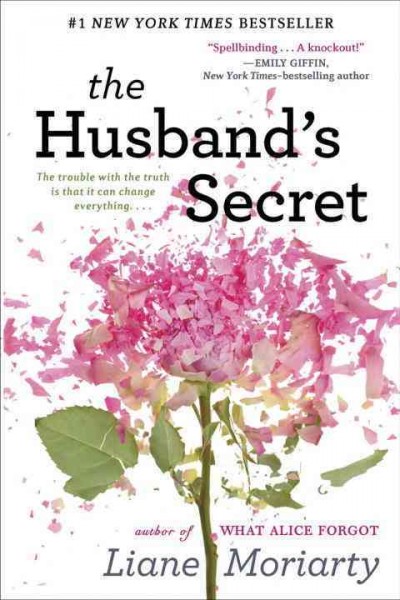
Our meeting was lively, filled with chatter and energy. Before the meeting, as we gathered our snacks, we discussed Australian food, science experiments, and our next book. There was a lull as I asked who wanted to be the first responder; the silence was palpable, oddly wary. But then one member said that he hadn’t liked The Husband’s Secret at first. He found it hard to follow and it seemed to him that they were just talking in the book because they’re women! Sixteen women and three men all laughed – and we were off!HusbandsSecretSept

In the end, he really did like the book, and despite any flaws we later discussed, everyone seemed to agree. It was crafted, interlocking storylines like a picture puzzle. One member thought at first that it was a collection of short stories. Several of us had trouble following the characters, though by the end we’d figured it out. The author seemed like a psychologist. It was a character study with a weak plot. Was anyone else annoyed that Tess went back to her husband? The importance of and love for children was the most notable element of the novel. Rachel’s accident seemed contrived. How could John-Paul possibly misplace such a letter? Why would he write it? Why didn’t he address it to Rachel? Maybe he wanted to be caught! He was just a teenager. A teenager is old enough to know what he does. We didn’t forgive him.

We all found something that resonated – the love for our grandchildren, children, and parents; regrets for our failures. We of course discussed secrets. The secrets in the book seemed self-indulgent. Even as we all chatted, sometimes with shushing going around as well, we had long moments of reflection. The writing was easy to read, and one member found it particularly striking in comparison to last month’s Sherlock Holmes novel. No one found the writing particularly beautiful, but themes were memorable, such as “ignorance is bliss.”

When I read the book, I found it interesting enough to keep me reading, but I found it shallow, like every random thought in my own head was being put down on paper without any answers. The popularity of the book (16,136 reviews on Amazon with an average rating of 4.5 out of 5 stars!) astounded me and I was a little concerned about how the discussion would go. After the discussion, however, I feel a fondness for the book, for the enthusiasm and chatter it aroused. Each book has its place, its value. And each of us, too!

  • Other works discussed:
  • Big Little Lies by Liane Moriarty
  • Crash (2005) DVD
  • Defending Jacob by William Landay
  • Gone Girl by Gillian Flynn
  • Ordinary Grace by William Kent Krueger
  • The Namesake by Jhumpa Lahiri
  • Sacred Clowns by Tony Hillerman

The House Of Silk Discussion Journal

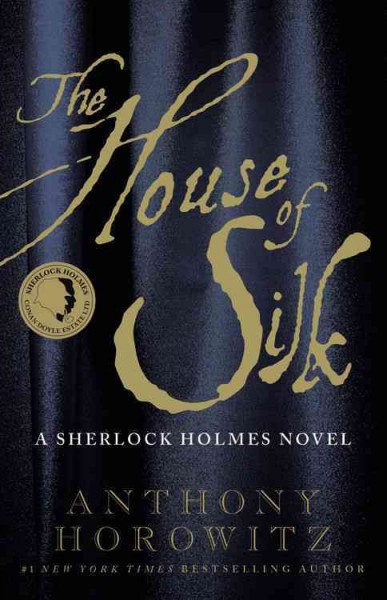
We met on August 11th to discuss The House of Silk by Anthony Horowitz. According to the publisher, “for the first time in its one-hundred-and-twenty-five-year history, the Arthur Conan Doyle Estate has authorized a new Sherlock Holmes novel.”[1] Although I have readHouseOfSilkCover some challenges to this statement, the book had come to my notice and the enduring character created by Doyle seemed a worthwhile catalyst for discussion. In addition, Anthony Horowitz has created some popular series on his own, including Alex Rider — a young-adult James Bond, and a television series, Foyle’s War.

Sherlock Holmes has inspired many movies, stories, and spin-offs. Most recently, a movie was released starring Ian McKellan as an aged, memory-impaired Holmes. Robert Downey Jr. has portrayed Holmes in a blockbuster movie series, Benedict Cumberbatch is a modern Holmes in a BBC television series, and Johnny Lee Miller is a modern, detecting-in-America Holmes. Laurie R. King has a continuing book series that started with The Bee-Keeper’s Apprentice.

With such a history, many of us are familiar with Sherlock Holmes from the adaptations more than from the original stories. Most of us felt that The House of Silk seemed to be a faithful addition and we didn’t have much to say about comparisons — although many of us found Holmes to be more likeable this time around. We could pick apart the believability of the mystery and Holmes’ incredible powers of observation, but is that really necessary? Most of us liked The House of Silk, but we agreed that the Sherlock Holmes formula works better in short stories than in a full-length novel.

The group was primarily moved by the subject of exploited children. One member read from page 52: “Childhood, after all, is the first precious coin that poverty steals from a child.” We came back to the children time and again – sometimes discussing that it was too horrible to be possible and at others reminding ourselves that we see it in the news even now.

We used discussion questions posted by the New York Public Library Reader’s Den. One member recommended the first season of Foyle’s War, particularly for the author interview included in that set. Our discussion bounced back and forth and was, as usual, full and varied.

To fully appreciate it, please join us — here or in person at our next meeting!

  • Other Works Discussed:
  • Conan Doyle detective: true crimes investigated by the creator of Sherlock Holmes
  • (2006) Peter Costello
  • The Lost World (1912) Sir Arthur Conan Doyle
  • In the company of Sherlock Holmes: stories inspired by the Holmes canon (2014) edited by Laurie R. King and Leslie S. Klinger
  • Silent witnesses: the often gruesome but always fascinating history of forensic science (2014) by Nigel McCrery
  • The Scarlett Pimpernel (1905) Baroness Orczy
  •  Albert Nobbs (DVD) based on the short story “The Singular Life of Albert Nobbs” (1918) by George Moore
  • The Rivals of Sherlock Holmes (DVD) 1971 Television Series

[1] Web accessed from lvccld.org 8-21-2015: http://contentcafe2.btol.com/ContentCafeClient/Summary.aspx

The Namesake Discussion Journal

NamesakeCoverImageThe Namesake by Jhumpa Lahiri brought out a nice crowd for our meeting. The room seemed smaller than usual, the atmosphere both relaxed and animated. Although we had a few observers, almost everyone contributed and I was impressed by how naturally and respectfully members disagreed, expounded, and added to the discussion.

Our first responders enthusiastically liked the book. One member had seen the movie, considered it a close adaptation, and had been so impressed by the acting and imagery that she was still moved just thinking about it. Most reviews I have read about this book considered the son, Gogol, to be the main character, but many of our group seemed most impressed by the parents. Gogol seemed distant, passive, unambitious, compared to his father. We discussed whether or not this was common to second-generation immigrants. Many of us identified with the story, not as immigrants, but as humans. And some of us did consider him the main character, the namesake, the representative of the journey.

One member had been struck by the symbolism of the train, used throughout, as a sign of self-discovery. Gogol’s father is nearly killed in a train; his mother loses and then abandons her gifts to her father on a train; Gogol meets his first girlfriend and then loses his wife on a train. Certainly there are more. I had been struck by the incongruity of Gogol’s Indian relatives not having indoor hot water and other “conveniences” while still having servants. Other members shared stories – from the Philippines, where not dropping trash on the ground could be considered depriving someone of a job, to a not-so-distant past when people in the United States would take in family, friends, and immigrants in exchange for services.

Although everyone seemed to agree that the novel was easy to read, some of us found the story to be more detailed than necessary regarding everyday experiences while not describing Indian clothing, food and experiences in enough detail. We differed in how immersed we felt in the story, in the language, in the culture. Understanding references and symbolism can make a big difference in our appreciation of any novel, but particularly when we are trying to learn about a different culture. This particularly highlighted the benefit of e-readers in allowing instant definitions of unusual words. Looking things up continually can interfere with the flow of the language, though, even with an e-reader.

We had the longest discussion about names, which is appropriate given the novel’s title! Two members had been given different names at school because of how common their names were. Another identified with Gogol because she had hated her first name. One man asked how the women in the group felt about changing their names for marriage, and we had several interesting stories, including that in Sweden a man may choose to take his wife’s last name.

We covered many more things. In retrospect, it seems impossible that we discussed so much in just an hour.

Our snack for the evening was Jhal Muri, adapted from the book with help from Ally Johnson in “Reading, and cooking, with The Namesake”:

  • 2-3 cups Rice Krispy Cereal
  • 1 cup diced red onion
  • ½ cup dry roasted peanuts
  • ½ can mild, diced green chiles
  • ½ tsp garam masala (spice)
  • Juice squeezed from one small lemon over the top and then stirred—not so much to make it soggy. Just enough to hear it “snap, crackle, and pop!”

Other works discussed:

  • Chef [2014] (film)
  • Chocolat [2000] (film)
  • Dead Souls by Nikolai Gogol [1842]      The overcoat, and other tales of good and evil by Nikolai V. Gogol [1842]
  • Eat, pray, love : one woman’s search for everything across Italy, India and Indonesia by Elizabeth Gilbert 2006 (also 2010 film version)
  • The hundred-foot journey : a novel by Richard C. Morais [2011] (also 2014 film)
  • Interpreter of Maladies by Jhumpa Lahiri (Pulitzer Prize Winner 2000)
  • Life of Pi : a novel by Yann Martel [2001] (also 2013 film version)
  • Like water for chocolate : a novel in monthly installments, with recipes, romances, and home remedies by Laura Esquivel [1992] (also 2000 Spanish-language film version)
  • The Lunchbox [2013] (Hindi-language film)
  • The No. 1 Ladies’ Detective Agency by Alexander McCall-Smith [1998]
  • Tortilla Soup [2001] (film)
  • This Is How You Lose Her by Junot Diaz [2012]

The Ocean at the End of the Lane Discussion Journal

At the end of our discussion of Neil Gaiman’s The Ocean at the End of the Lane, we all laughed as one member asked if we ever thought an author was just pulling random ideas and images out of the air. We had discussed meaning and mythology, repressed OceanAtTheEndmemories, reality and more. The group’s review of the book was mixed – some found it hard to understand, depressing, even purposeless; others found it better than they had expected – but no one seemed particularly impressed.

One member asked why I had chosen it. This was a difficult question because I considered many factors – genre, gender, diversity, subject, awards. Neil Gaiman has crossed my radar for years. According to UXL Graphic Novelist database, “many consider Neil Gaiman to be one of the greatest writers in the field of comics and graphic novels, and he is certainly one of the comic industry’s biggest stars . . . His works American Gods and Coraline dominated the New York Times best-seller list, and both were honored with the Bram Stoker Award and Hugo Award.”[1] I had actually expected The Ocean at the End of the Lane to be harder to read, more like Wicked, and at only 181 pages, I considered it a good choice to challenge ourselves.

One member had researched the mythology of the Maiden, the Mother, and the Crone. She gave us some good information regarding symbolism and the author’s Sandman series. Another had researched the name Hempstock and although she hadn’t found anything definitive, she couldn’t help but wonder if by using the prefix hemp, the author was referring to a drug-induced dream. Many of us remained unclear about whether anything in the story was real. Several members noted how incongruent the father’s constantly serving burned toast seemed, especially once he admitted hating it.

Two members talked about vultures. One had been disturbed by the image of black birds tearing apart Ursula. Another offered her own memory of seeing vultures standing, orderly, like perfect gentlemen, carefully taking their portion of road kill. It is amazing what memories are triggered from our readings and meetings.

I was impressed by the imagery and kept picturing surrealist art – but art can be constantly viewed and considered, as I pass it in a hall or visit a gallery. I would have to keep reading and re-reading to pick up all the subtleties! I actually found The Ocean at the End of the Lane quite uplifting. I am fascinated by how the human mind might perceive and explain the horrors and wonders of the world.

Stories can entertain us, educate us, and make us think. We discussed how, no matter what the author intended, our reception is what matters. If it confuses us, if we miss the point, is it the same as if there never had been a point?

[1] “Gaiman, Neil.” UXL Graphic Novelists. Tom Pendergast and Sara Pendergast. Ed. Sarah Hermsen. Vol. 1. Detroit: UXL, 2007. 127-135. Gale Virtual Reference Library. Web. 10 June 2015.

  • Other works discussed:
  • Author Amy Tan
  • Author C.S. Lewis (Chronicles of Narnia)
  • Wicked by Gregory Maguire
  • Life of Pi by Yan Martel
  • Neverwas (DVD) 2005 Aaron Eckhart/Ian McKellen
  • Grimm’s Fairy Tales
  • Red Riding Hood origin stories
  • Greek Mythology

Where’d You Go Bernadette Discussion Journal

Our discussion of Where’d You Go Bernadette was shorter than usual. Several people had been initially turned off by the epistolary format, but many had been hooked by the laugh-out-loud scene descriptions. Without looking at the discussion questions, we naturally covered many of them. It seemed for most to be an enjoyable read with some sharp WheredYouGoBernadetteCoverinsights into character and a fascinating description of Bernadette’s art – the Twenty Mile House.

But what was the point? I was most taken by that question. A couple of members drew a comparison with Carl Hiaasen. But is this book satire? Caricature? Realism? Bernadette was over the top in general, but we all agreed that she had been severely depressed since her loss of the Twenty Mile House, untreated, and self-absorbed. We agreed that she had a close relationship with Bee, but we were divided on her relationship with Elgin. Was it salvageable? How much of everything that happened is simply a plot device?

We discussed the different characters and agreed that the story was being told by Bee because she was the most likeable and steady. We laughed at various scenes and looked for parallels in other books. We all liked the virtual assistant – even if it was a member of the Russian Mafia! And to my surprise, no one seemed interested in Antarctica!

A pleasant read and a pleasant discussion! Our next book will be Ocean at the End of the Lane by Neil Gaiman. I read aloud an excerpt from a lecture he gave in 2013 about the importance of libraries and the value of Science Fiction in opening doors to possibilities. His story may be different than those we’ve read before. We’ll meet next month and know.

  • Other works discussed:
  • Nature Girl by Carl Hiaasen
  • Quiet: the power of introverts in a world that can’t stop talking by Susan Cain
  • The Rosie Project by Graeme Simsion