The Guncle Discussion Journal

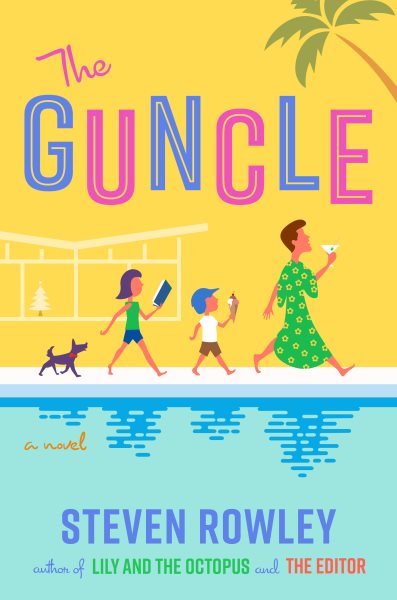
I read The Guncle by Steven Rowley prior to selecting it for our book club. I laughed out loud so often that my husband couldn’t read his own book. Book club picks, even when uplifting or darkly humorous, are seldom funny to an entire group. This is true of The Guncle, but based on our discussion, the humor and wit paired with the sensitive approach to diversity and grief makes it a winner.

Although our discussions are always interesting and filled with insight, each member seemed to capture something different and important. I could almost see wheels turning and thoughts seemed wonder-full. 

Usually, I combine the meeting responses into concepts and formal paragraphs, but even though I have certainly missed some details and complexity, the beauty of our members thoughts as the discussion flowed seems captured best with just these notes:

  • Absolutely loved everything about the book. Laughed, cried, and found it authentic. He cried through chapters 19 and 20. His favorite zinger: “Would you like a martini?” “I’m six.” “Is that a yes?”
  • Loved that they have a birthday party for Sarah and Patrick gave them each a wish.
  • Loved the descriptions and similes.
  • Could not suspend his disbelief that the children could have been better off with a man they do not know who knows nothing about children, far away from home and familiarity. Yeah, it was funny and worked out okay, but . . .
  • Laughed so loud while reading on her porch that she worried people would think she was crazy. She liked the addition of Grant’s stutter and believed that the children taught their guncle a lot about love.
  • Although the story seemed over the top and took him a while to get into it, he found it more interesting by the second half. He felt the story showed how to deal with change. He kept wondering how the author might have set it up to make it more interesting and relevant from the start.
  • She liked the humor but primarily found it poignant. She appreciated how Patrick helped Maisie when she didn’t want to go into the pool and the Christmas in July gift of framed pictures of their mother.
  • Being from San Bernadino, he really appreciated the inclusion of the Cabazon Dinosaurs[i].
  • He once blessed the marriage of a triad (what a throuple used to be called) and they recently celebrated their 25th anniversary. What did we think of JED, the throuple?
  • She felt a little bit of angst when Patrick got together with Emory – it seemed a risky thing to do with young children in the house.
  • An adventure. Patrick had the money and that helped. A lot of sensitive stuff, but it worked.
  • She liked how Patrick put so much thought into how to help the kids with their grief.
  • Patrick told stories of their mother that they wanted/needed to hear. That is what is needed when people are grieving.
  • Patrick gave them the structure that children need.
  • The kids asked good questions.
  • We liked Patrick’s answers to questions!
  • One of us adored Emory.
  • No one wakes up at twelve and decides to be gay. It’s inborn.
  • It’s when you realize you’re crushing on all the dudes.
  • What is Guncle Rule #14? She kept track but couldn’t find that one. (I said we could certainly find it if we asked Google – but no! It’s a mystery).
  • Favorite Guncle rule:  “Live life to the fullest.”
  • Watch Auntie Mame with Rosalind Russell.
  • No, Lucille Ball!
  • She really liked the author’s writing. She could see the setting and envision the characters so clearly.
  • In a book like this, you just have to suspend disbelief and enjoy it.
  • Laughter is the best medicine.

I wish you all much laughter and love in this new year. Join the discussion. It makes a difference.

  • WORDS:
  • Pergola – an arbor formed of horizontal trelliswork supported on columns or posts, over which vines or other plants are trained.
  • Pastiche – an incongruous combination of materials, forms, motifs, etc., taken from different sources; hodgepodge.
  • Frosé – Frozen Rosé
  • OTHER WORKS DISCUSSED:
  • The Guncle Abroad (2024) Steven Rowley
  • Little Birds (1940s) Anaïs Nin – feminist erotica first published 1979
  • Auntie Mame (1958) starring Rosalind Russell
  • Mame (1974) starring Lucille Ball
  • The Brady Bunch (1969-1974) Television Show
  • Mother Knows Best – I don’t know if we were referring to a real show or if this was just a take off of Father Knows Best.

[i] “The Cabazon Dinosaurs have long been regarded as one of the most iconic roadside attractions. Featured in cult classics such as Pee Wee Herman’s Big Adventure and The Wizard, the dinosaurs have staked their place in pop culture.”    https://www.cabazondinosaurs.com

The First Ladies Discussion Journal

The Whitney Book Bistro met last week to discuss The First Ladies by Marie Benedict and Victoria Christopher Murray. Our discussion seemed understated – much like the book.  We liked it, learned a bit, were particularly impressed by the less widely-known Dr. Mary McLeod Bethune, and found connections to our current time. Some of us considered it slow going, even didactic. We ended our discussion with the importance of making a difference where you are. In between, we revealed how reading touches us in spots. 

Our first responder shared how the day after he started reading the book, he received in change an Eleanor Roosevelt quarter.  Fate, fortune, coincidence, awareness? He was particularly moved by how Mary McLeod Bethune had to force white people to respect her and her accomplishments by making them use her title and last name. He has decided to make an effort to recognize and acknowledge a man in his church who is also ordained, even though his church’s current practice is more informal. 

Another member loved the book. When we discussed the word “corbeled”[i], she mentioned having lived in Washington D.C. and said the buildings reminded her of brownstones in New York. She loved Mary McLeod Bethune: how she had learned the lesson of patience, how she impressed people. Bethune was so brazen! Later in the discussion, as some of us questioned whether or not Roosevelt’s and Bethune’s chapters were too similar, this member felt that it emphasized how similar the two women were, that they were “two peas in a pod.” When we questioned the closeness of the friendship between the two first ladies, she felt that they spoke from the heart and shared secrets that signified true friendship.

That, of course, is the novel. One member who at first seemed to be most impressed by the book was also the one who challenged the book’s accuracy. How can we be confident in what we learn, reading historical fiction as truth, especially when it is evident that timelines, characters, and events have been changed? Nonfiction can be so dry and inaccessible – is it even any more reliable? He had pages of notes, compelled to independent research. 

Early on, one of us called out how hard it was to read about the lynchings and how people could attend them en masse; how Roosevelt could not pass the anti-lynching bill. One of us mentioned that he thought the last lynching in the United States was in the 1950s. I researched this for this journal and found from America’s Black Holocaust Museum  that “8 suspected lynchings have taken place in Mississippi since 2000.”[ii]Someone asked if the Klu Klux Klan still existed. One member mentioned that she lived in North Carolina in the late 1970s and the Klu Klux Klan was active enough to run a black doctor out of the community. Racism, violence, and hate seem endemic to humanity.

Thoughts voiced during the meeting: Every vote counts; Turning Lincoln’s picture to the wall is a great image; What would Eleanor have done if she hadn’t been married to FDR?; Mary Bethune divorced her unfaithful husband. Why didn’t Eleanor?; Did Roosevelt really die while with his mistress?(He was in a room with several people, including his mistress.)[iii]; White passenger train cars were cleaned multiple times a day while the black passenger train cars were never cleaned; Separate but NOT equal; Most people are bystanders; Hierarchy of needs; None of us fit one ethnic group.

So many topics are discussed at our meetings. I don’t list names for both privacy and accuracy. Mine is just one perspective of what stands out, what I can record, and what I actually hear. What do you remember? What impacted you the most? During the meeting I circulated pictures of the two images from the 1934 Anti-lynching Exhibit[iv] referenced in the book. Sometimes a picture, a comment, a memory is worth a thousand words.

WORDS:

  • perambulation: stroll. As one of us defined – “deliberate, slow, everybody look at me walk.”
  • corbeled: see first note below

OTHER WORKS DISCUSSED:

  • The Personal Librarian (2021) by Marie Benedict and Victoria Christopher Murray. Book Club Selection, 2022.
  • Hyde Park on the Hudson (2012 Film) starring Bill Murray and Laura Linney
  • Conclave (2024 Film) starring Ralph Fiennes, Stanley Tucci, and John Lithgow


[i] “Historically, cornices were an integral part of architectural design, adding character and detail to the building’s exterior while also serving practical functions aimed at long term preservation. . . In the context of cornices, corbelled bricks are strategically arranged to form a projecting edge. This not only adds visual interest but also strengthens the structure by distributing the load more gradually.  The corbelled design serves to support the overhanging portion of the cornice.” From an article by Infinity Design Solutions:  https://www.ids-dmv.com/masonry/architectural-details-in-masonry-facades-corbelled-brick-cornices/

[ii] https://www.abhmuseum.org/8-suspected-lynchings-have-taken-place-in-mississippi-since-2000/

[iii] https://www.thetimes.com/article/the-last-betrayal-how-fdr-died-with-his-lover-p2rrrtt225h

[iv]  Maryland Institute Black Archives: “Artworks: A Commentary on Lynching, 1935”

Tom Lake Discussion Journal

The weather in Las Vegas has been beautiful of late. The day of our meeting a light breeze stirred the air, which made it cooler but warm enough to make basking in the sun seem a worthy pastime rather than a route to skin cancer. Such a dichotomy, the beautiful and ugly, residing together, dependent on our experiences and perspectives. In Tom Lake, Ann Patchett, tells a story through the perspective of a single narrator, a mother revealing memories of her own youth to her adult daughters while gaining and giving new insight into the present.

I started the meeting by showcasing a little about our author, Ann Patchett, and the setting of Tom Lake in and around Traverse City in Northern Michigan – primarily to acknowledge the lack of diversity.[I][ii] This seemed particularly important after last month’s book, Yellowface, highlighted the lack of diversity in the publishing industry. I also mentioned the connection that our September book was set just across Lake Michigan in Milwaukee, also during the Pandemic, and that book’s author also owns a book store.  Although diversity was not mentioned in an interview between the author Ann Patchett and The Glen Arbor Sun, I couldn’t help but feel that the author wanted to address it when she answered a question about how hard it is to write literature of hope when “news headlines are dire and bleak? . . . I write books about the sort of people I actually know. There’s nothing wrong with that.”[iii] Interesting fact from the interview:  Tom Lake was written entirely on a treadmill desk.

Our first responder listened to the audiobook narrated by Merryl Streep when the book first came out. She still loved the book after reading a print version to discuss with us. She particularly appreciated the dialog between mother and daughters. Another member disagreed, because the girls all blended together for him. Yet another one of us really liked the interactions between the mom and the daughters, finding each quite distinct. She thought it was fun – to think of the girls coming home to help the family. It reminded her of her own extended family. And another of us loved the competition between the brothers. He comes from a family of many brothers and identified with Duke and Sebastian, the love they shared and how supportive they were of each other. One member said she would really like to meet Joe (the father), so easy going. Another agreed that he wanted more of Joe’s story. We wanted more of Duke’s story, too.

I am organizing our comments by ideas here. They actually came interspersed, connected, the way thoughts are, but I hope the import is not lost in translation. One of us commented that the story was slow, that there was no big climax. This was a comment, not a criticism. Another agreed that the novel was slow, but . . . nice. He said it in a way that tells a story itself. He felt that the writing makes the difference. As an example, he mentioned that he really liked our last book, Yellowface, but did not like Crow Mary. All because of the writing style. 

One of us said that “we are city folk.” Lara and her family were often working picking cherries as Lara reminisced. The daughter training to be a vet was asked to kill a neighbor’s kittens, something that we’ve heard about on family farms. What about sterilization? One of us remembered his uncle neutering pigs and the pigs’ high-pitched squeals. Celebrations in his childhood included cooked pigs displayed whole, a farm to table reality many of us don’t think about any more. Another mentioned that we are so far away, 100 – 200 years, from what we had to do just to get through to next week.  We wondered why Joe and Lara would decide to give up careers for hard work and what was described as a struggling, unsuccessful farm. Someone reminded us that the work is hard but the pace is slow, earthy, exemplified by their lying on the ground and watching films displayed on a sheet outdoors.

And speaking of screens, and films, one of us liked the character development. It was cinematic. Just picture the scene in Lara’s room when the Hollywood hunk meets the starlet, the “Ingenue.” This member usually listens to audiobooks, which often put him to sleep, but this time he read it and found it wonderful to get lost in the reading.

Why did the author include the reference to abortion and the visit to the rehabilitation facility? Was this an afterthought? Just to make a point? One of us was incredibly bothered by the lack of emotion in the telling of this momentous event and decision. Which brought up mental illness and the life of Peter Duke. Is that why he didn’t want to procreate? Did he commit suicide? What did the Pandemic do to people like Peter Duke who thrived with an audience? One member recalled how he worked two jobs and so often looked forward to just sitting and reading. Then society shut down. Be careful what you wish for.

Only one formal book club question came up: “What are the implications of Lara’s ‘simple truth about life: you will forget much of it?’” We all agreed with the “simple truth about life.” But implication? We laughed when someone said, “Don’t take yourself too seriously.” The hour flew by and we were done discussing. I have missed some asides about Summer Stock Theater and Hemmingway writing not from imagination but rather experience. And more. We didn’t discuss much about the parallel with Our Town, but it was there. Perhaps the simple truth is that we will forget much of it. Do you remember which statements you made if you were here? Maybe you didn’t make the statement, but you could have. Or you disagreed and the discussion moved in a different direction.

We appreciated learning about cherries – tart and sweet. Just think of the shaking of the trees. Tart cherries not needing to be beautiful. One of us picked up a food box just this week and it included a two-pound box of tart cherries. Oh, what a coincidence. Do we see it because of the book or is it more meaningful? It wasn’t until the meeting that I realized how I felt about Tom Lake. I didn’t like the first half of the book; I was focusing on details. By the end, the story had become a tapestry. I could finally see the completed piece, with the details, important and necessary, creating a new whole and a work in progress.

  • Words:
  • Verisimilitude (pg. 196)
  • Cormorant (pg. 148)
  • Other Works Discussed:
  • All About Eve (1950) film starring Bette Davis and Anne Baxter with a small role by Marilyn The Cherry Orchard (1904) by Anton Chekhov Monroe
  • The Feud (2017) Season 1 television series starring Jessica Lange and Susan Sarandon as Joan Crawford and Bette Davis
  • Fools for Love (1983) by Sam Shepard
  • Our Town (1938) Play by Thornton Wilder
  • Our Town (1940) Film adaptation

[i] Census.gov – population estimates for Traverse City, MI, in 2023. Ninety two percent of its population registered as White and 1.4 percent Black or African American.

[ii] Data USA, based on the Census Bureau ACS 5-year Estimate. The population of Detroit, 250 miles South, is 77.4 percent Black or African American. https://datausa.io/profile/geo/detroit-mi/#:~:text=Population%20%26%20Diversity&text=In%202022%2C%20there%20were%207.68,third%20most%20common%20ethnic%20groups.

[iii] Full quote: “There is so much goodness. When I turn away from headlines and talk to my neighbors, talk to the people who come to the bookstore and work in the bookstore, talk to my family and friends, pretty much all I see is kindness. There are plenty of brilliant books that represent the current state of hopelessness and despair. I write books about the sort of people I actually know.” https://glenarborsun.com/novelist-ann-patchett-visits-nws-new-novel-set-in-northern-michigan/#:~:text=Novelist%20Ann%20Patchett%20visits%20NWS—new%20novel%20set%20in%20Northern%20Michigan,-Upcoming%20Event&text=Just%20about%20every%20big%2Dname,cherry%20farm%20in%20Traverse%20City.

Yellowface Discussion Journal

Our combined meeting to discuss Yellowface by R.F. Kuang was large and low-key, with the Social Justice Book Club moderator, Faith, leading. As the discussion bounced about the table, or perhaps actually rolled at crisscross angles, we started with cultural appropriation and one of us even mentioned the old saying that “the victor writes the history.”[i] What is culture? One of us believes that culture as we know it probably won’t exist in 50 or 100 years. Things constantly change. We also asked, when is it okay to write another person’s story? 

Many of us, who are white and older, don’t see a problem with writing outside our cultural background, but we didn’t discuss any of this in enough detail, because we agreed that it is a complex issue. A Social Justice Book Club member said that she did think the race of the author matters and she seeks out books by people of color both to support their efforts but also because their stories better reflect her reality and interests. She mentioned Octavia Butler[ii] and how few black writers succeed in publishing science fiction. I handed out an article about “What’s Wrong with Cultural Appropriation,”[iii] just to help us have a common understanding of the issue from a different racial/cultural perspective.

One of us believed the main character and narrator, Juniper, was insecure and that her problems stemmed from her mother’s favoritism for the more traditional sister Rory. Faith asked if June’s goal to be a writer was to write or to become a famous writer. We agreed that she didn’t seem to do much actual writing. We were horrified by the internet trolling. Many of us were surprised that Yellowface was published, given that it skewered the publishing industry. We wondered about how what we read is controlled by what is published, and even by what the library makes available. We noted, however, how much more prevalent self-publishing is now. Will that help? Then one of us said that he found this book to be just very sad and depressing. I can’t say that anyone disagreed. 

No one seemed to like June, why did the author choose her as the narrator? One of us (visiting from South Carolina!) had researched and found that the story just sprang from R.F. Kuang’s head like Athena from Zeus, fully formed. I found an interview between the author, R.F. Kuang and Zakiya Dalila Harris, author of The Other Black Girl. The authors talk about writing and race and expectations. If you are interested, I recommend it. In that interview, R.F. Kuang said, “The reason why it was so easy to write from June’s perspective was because I know June . . . she’s all the white paranoias, and suspicions, and jealousies, and arrogance that I’ve dealt with.”[iv]

Several people stopped by the desk at the library, considering Yellowface for checkout but ultimately being disappointed that it wasn’t about Asian culture and people. Is it? What does that even mean? Although it is always exciting to see so many of us coming together for a shared experience through a book, it is difficult to hear and make sure everyone has a say, especially in an hour – but it is a start. I also discussed this with the Whitney Recreation Senior Center book club. In that meeting, we asked why publishers shouldn’t focus on the books the buying public wants? If it’s working, why take the risk? We also touched on the reality of the Chinese Labour Corps: the forgotten of the forgotten. What else have we forgotten? Who will write those stories? Who will read them?

  • OTHER WORKS DISCUSSED:
  • American Dirt (2020) by Jeanine Cummins
  • Kindred (1979) by Octavia Butler
  • The Last Story of Mina Lee(2020) by Nancy Jooyoun Kim
  • Recitataf (1980/2022) the only short story by Toni Morrison
  • Take a look and consider some of our previous selections

  • OUR WORD CATCHER SELECTIONS:
  • Pandan extract – “It’s fragrant and herbal, like you’re taking a big breath of the forest.” Athena choking on neon-glow green pancakes. (page 17)
  • Bougie –  “Sometimes Disparaging. relating to or characteristic of a person who indulges in some of the luxuries and comforts of a fancy lifestyle.” (page 1 *)
  • Epistemological – “a branch of philosophy that investigates the origin, nature, methods, and limits of human knowledge” (page 104 *)
  • Hegemony – “leadership or predominant influence exercised by one nation over others, as in a confederation.” (page 145 *)

*definition from dictionary.com, which is based on the Random House Dictionary.


[i] When I started to research this saying, I was surprised to find how controversial it is. I saw reference to it as a tired-old saying, and I think we could have an entire discussion on this topic alone! In previous discussions, we have noted how time, the minute you move past an experience, alters your memory of it. This could definitely have applied to the narrator of Yellowface! 

[ii] Octavia Butler (1947 – 2006) “In 1995, Butler was the first science fiction author awarded a prestigious MacArthur “Genius” Fellowship, cementing her contributions to the literary world. . . Today, Butler is considered the ‘mother of Afrofuturism,’ and her vision remains relevant and critical in conversations about racial equity and social justice. Her work continues to inspire new generations of creators to explore the intersections of race, identity, and science fiction. In a 1999 journal entry, Butler reflected on her literary journey, saying, ‘I never bought into my invisibility or non-existence as a Black person. As a female and as an African American, I wrote myself into the world. I wrote myself into the present, the future, and the past.’” 

Remembering Afrofuturist Octavia Butler. National Museum of African American History and Culture. (2023, March 30). https://nmaahc.si.edu/explore/stories/remembering-afrofuturist-octavia-butler

[iii] Johnson, M. Z. (2020, August 14). What’s wrong with cultural appropriation? these 9 answers reveal its harm. Everyday Feminism.  https://everydayfeminism.com/2015/06/cultural-appropriation-wrong/

[iv] Harris, Z. D. (2023, May 2). R.F. Kuang on White Paranoia and the pitfalls of Identity Politics. Interview Magazine. https://www.interviewmagazine.com/literature/r-f-kuang-on-plagiarism-and-the-pitfalls-of-identity-politics

Diversity in reading and publishing – Discussing R.F. Kuang’s Yellowface

The Whitney Book Bistro will be joining with our Social Justice Book Club on October 8th to discuss R.F. Kuang’s Yellowface. On the second Monday of each month, Whitney’s Social Justice Book Club meets to discuss books “written by and reflecting people from historically marginalized groups. Books focus on issues such as racial and gender justice, income inequality and poverty, criminal justice reform and more.” The Whitney Book Bistro group meets on the second Tuesday of each month to discuss a book in a variety of genres and subjects. Whether the selected books are well-loved, uplifting, offensive, educational, or simply entertaining, we read and discuss books as an exercise for the brain as well as to socialize and create a community with shared experiences through books. Book Bistro members often comment that they appreciate the opportunity to read things they might not otherwise even consider. Social justice can often be an unsurprising element of our discussions as we note stock characterizations, lack of diversity, economics, and our own limited perspectives. 

The Book Bistro discussions generally start with our first impressions – whether we loved or hated a book, what impressed or impacted us the most. Often, many of the standard discussion points on a book will be covered quite organically. We only refer to prepared questions if the discussion stalls or when we have time and want to delve deeper. Something seemingly simple, such as “Why the title?”, can bring out nuances we might otherwise miss. During our discussion of Lincoln Highway by Amor Towles, a couple of readers were disappointed in the book because they had happily expected to read and learn about an adventure along the Lincoln Highway. Violence, sex, drugs, identity: expectations of a book make a difference. How will discussing a book entirely through a social justice lens change the reading and discussing experience?

In a New York Times review by Alexandra Alter, author R.F. Kuang is quoted as saying, “I hate the feeling of being read just because somebody’s trying to tick off a diversity check box.”[i] As the moderator of a library book club, I have a diversity check box. I am required to make sure we read at least four DEIA (Diversity, Equity, Inclusion, and Accessibility) selections each year. I have never needed such a requirement, but finding books of substance in a variety of genres, with a lot of copies in large print and audio, by diverse authors from marginalized groups, is not always easy. In addition, reading can be quite traumatic, not only triggering for some but off-putting. If you want to educate, you do need the selected audience to be able to stay the course – otherwise you are preaching only to the choir. You need to know your audience and your purpose. As book club members have made it clear, they like to be educated and entertained. Perhaps in a perfect world, we would not know the race of the author of a book; but in a perfect world, would we be concerned with social justice? 

As Yellowface showcases, popular, best-seller books are made by the publishing industry and, I guess, gullible readers. As a white reader, how do I know if a book has been white-washed by an editor? Perhaps even worse, what if I never read and learn about something important and impactful because I couldn’t palate it. What if, because of my subconscious bias and racism, I use phrases that will prejudice people against me?  Reading the books makes it possible for us to learn and grow and change. Discussing the book with others makes us vulnerable. I admire everyone for coming out to our book clubs, for challenging themselves and others to think, and look, and feel a little differently, to share opinions in a safe environment. That, I believe, will lead to more social justice.

So what did I think about Yellowface? When I read a book, I am always concerned about authority and believability, even with fantasy. I have been told by a member who is an author that she was totally engaged by the accuracy of the publishing and social media experience depicted in Yellowface. How many of us understand that big publishers actually buy the spaces that showcase their books on bookstore shelves, let alone buy reviews, interviews, and popup ads? I found the book to be easy to read but the narrator was so unreliable and unlikeable that reading became an exercise in finding social-justice keywords and phrases. We all think and feel things that are politically incorrect, so I couldn’t help but worry about the vulnerability of discussing this with people you don’t know. I was reminded of the buzz at the library in 2022 when James Patterson was lambasted for claiming that older white men were facing a form of racism. [ii] I was driven to look up some of R.F. Kuang’s other works and interviews.[iii] In the end, I wished the story had been told through the eyes and experiences of a side character, Candice. I still don’t understand why the thieving author would have refused a sensitivity reader. That seemed contrived. I am looking forward to the discussion and all the new thoughts and understanding that will bring.


[i] https://www.nytimes.com/2023/05/12/books/yellowface-rf-kuang.html

[ii] “Gina Denny, an associate editor at the publisher TouchPoint Press, noted that when USA Today reported on Patterson’s comments, just nine authors on the newspaper’s list of 150 bestsellers were non-White writers. Three of Patterson’s titles made the list, while just five women of color and four men of color were on the bestseller list. The rest were made up of White men between the ages of 36 and 84, Denny said — and some of the White males on the list have long been dead.” https://www.washingtonpost.com/lifestyle/2022/06/14/james-patterson-white-male-writers-racism/

[iii] R.F. Kuang on White Paranoia and the Pitfalls of Identity Politics. An interview between R.F. Huang and  Zakiya Dalila Harris, author of The Other Black Girl. May 2, 2023. https://www.interviewmagazine.com/literature/r-f-kuang-on-plagiarism-and-the-pitfalls-of-identity-politics

The Sentence Discussion Journal

Only seven of us met to discuss Louise Erdrich’s The Sentence. We have previously discussed three of her books:  Round House, La Rose, and The Night Watchman. Her books are usually well-liked because, although they include difficult topics and realities, they are also sensitive, informative, accepting, and easy to read. From the first chapter, I could tell the book would be different. I wonder if our lower-than-usual turnout was due to the book, the presidential debate, or just the tides of life.SentenceCoverSept

Our first responder liked the book, but thought it was hard – hard to relive the trials of The Pandemic and George Floyd. He loved finding new words: “carceral,” “swales,” “Gadsden flag,” “arborvitae,” and at least one other I missed. Others chimed in about reading with a dictionary or moving on. One of us didn’t like the book at first, finding the sentences too disjointed and hard to follow. Eventually she started to care about the characters. She doesn’t believe in ghosts, so she had to consider that part of the book science fiction. She learned a lot more about the impact of the George Floyd murder. Another member said that the author was really good at bringing immediacy to the situation. That member appreciated the different styles – sardonic, almost comic, then serious. She loved the book and will read all of Erdrich’s books now. Still another was disappointed. Although he usually enjoys and recommends Erdrich’s books, he was not interested in George Floyd or the ghost. Louise Erdrich said in an interview[i] that this is the first book she has written that takes place in real time and it was very difficult to write.

We also wondered how much of the story is autobiographical.  The name of the bookstore is never mentioned in the book, although the author owns Birchbark books in Minneapolis, which looks in real life much as the bookstore in the novel is described. And the novel’s bookstore owner is named Louise. One of us wondered if Tookie’s former drug use had anything to do with her believing in Flora’s ghost. Another admitted to having used drugs in his youth but does not see ghosts; the ghost was, however, his favorite part of the story and he wanted more. Several of us felt that too many other people in the story also saw evidence of the ghost, making it most likely real. I wondered how much of the story is magic realism, describing and experiencing things in a way that explains how we feel about situations rather than meaning it to be absolute truth.[ii] Still, a couple of us took the ghost at face value – not as magic realism.

Tookie definitely changed during the course of the novel. She softened and became more self-aware, self-accepting. The baby was the turning point. Pollux obviously loved Tookie, but when the baby loved her, when Hetta loved her, Tookie could feel worthy. One of us noted that a baby in his church has transformed their worship service. Connections abound: Someone reminded us that the Democratic Vice-Presidential candidate was the governor of Minnesota during the George Floyd riots. Another of us remembered that Desert Springs Hospital also had cots in their garage during the COVID pandemic. In the Las Vegas Sun on our meeting day’s newspaper, an article discussed a probe of possible agent orange use as a cause of rampant illness and cancer plaguing a reservation in Nevada. [iii]

Except for one us, the book was not a favorite. I did not finish reading it this month. I had trouble staying engaged even as I appreciated the construction, the poetry, the possibilities. The Sentence is not a book to be skimmed. I hope I will have a chance to read it again. The novel’s main character takes language very seriously and even considers that it was a sentence that killed her most annoying customer. Before I read the first paragraph of this book, I would have defined the word sentence as a collection of words put together to communicate something more complex than an individual word can convey. However, the first definition in my 40+ years-old dictionary is “a decision or judgment, as of a court.” Why are these two meanings connected? We did not discuss this! As usual, though, the discussion can continue. Here. At the library. At home. With sentences.

  • OTHER WORKS DISCUSSED:
  • A Gentleman in Moscow (2024) Television miniseries (based on the book by last-month’s author Amor Towles).
  • Grimm (2011) Television series
  • Ceremony (1977)  by  Leslie Marmon Silko
  • House Made of Dawn (1968) by N. Scott Momaday
  • The Indian Lawyer (1990) by James Welch
  • Through the years we have read five books on Tookie’s list: There There by Tommy Orange, The Dutch House by Ann Patchett, Leave the World Behind by Rumaan Alam, Exhalation by Ted Chiang, The Lost City of the Monkey God by Douglas Preston,

[i]  PBS NewsHour: Louise Erdrich’s ‘The Sentence’ explores racial tensions in a divided Minneapolis

https://www.youtube.com/watch?v=El9r9wCmyss   Web-accessed 9/12/2024.

[ii] I am not sure I stated my meaning so clearly during the meeting! I also made a connection with the 2011 television series Grimm, which posits a world in which some people manifest animalistic behaviors as werepeople (think: werewolf), reflecting every fairytale and legend you can imagine! It is a pretty violent show, but my family has been watching and at least one of us has started to identify people in the real world as their were-counterpart.

[iii] This is the online link to the article: https://lasvegassun.com/news/2024/sep/10/a-remote-tribe-is-reeling-from-widespread-illness/

The Lincoln Highway Discussion Journal

Often when I read our book club selections, I find myself reading perhaps too critically – especially when a book is well-reviewed and popular. Lessons in Chemistry was such a disappointment because it seemed to trade in cliches and misandry. Our discussions, though, remind me that perspective is everything. As I listen to stories and comments, I sometimes feel like the Grinch whose heart is growing three times at once.

The Lincoln Highway by Amor Towles is now one of my favorite books; one of the best I have read in a long time. I found it easy and quick to read, without much skimming. All 600 pages. I felt drawn to every character. Reading the same scene explained through different perspectives had the power of our discussions. Emmet’s battle with the brother of the man he killed, described by Duchess like a great dramatic act, allowed me to see Emmet as a “man of substance” and classic hero, despite Emmet’s previous, matter-of-fact, third-person narrative. It was heartbreaking to see Duchess head down the path toward becoming Pastor John rather than Professor Abernathy. And Emmet’s sense that he didn’t want to be beholden to Sally, his desire for self-sufficiency, was so perfectly rebuked by Sally’s first-person narrative: “Saying please and thank you is plenty old-fashioned” and “For kindness begins where necessity ends.”

The author explicitly draws the connection to Homer’s The Odyssey and Ulysses, using LincolnHighwayCover“Professor Abacus Abernathe’s Compendium of Heroes, Adventurers, and Other Intrepid Travelers,” but it is Emmett and Billy’s journey, constantly sidelined by Duchess that seemed most poignant. Sometimes I still see various scenes in my mind’s eye, like the orphans gathered round the empty jars of preserve, Woolly’s perfect day, his visit to the train tracks, Mr. Abernathy’s sprint from bushes to join Ulysses hopping a train. All spear-headed by Billy’s innocence and determination. Even the ending, which left me wondering about Emmet’s choices and their future, seemed fitting – a modern-day grand adventure.

I was so disappointed to miss the discussion this month, but I was fortunate that one member sent me notes and a recording! Not everyone was so enamored with the book, and not for the same reasons; but the full discussion showed how the book impacted everyone. One of us struggled to get through and did not appreciate reliving the same moments. She enjoyed learning about the Lincoln Highway and another member liked visiting New York landmarks through the novel. He noted that the entire book covered only ten days and another member laughed and said that it took her longer than that to read it! Sally was a favorite character and many wished for more from her. Billy seemed to live a charmed life. He was the brains of the group. Was he on the autism spectrum? Was Woolly? What was the “medicine” that Woolly and his pregnant sister took? The title was misleading, disappointing one of us that the adventure didn’t actually take place on the Lincoln Highway.

One member was “all in” up until the end when she was ready to throw the book across the room! Everyone seemed to behave out of character and she wanted Emmet to follow up with Woolly’s sister – not just head off on a new adventure.  Another member wondered what purpose the husband “Dennis” played. Why was his name always written with quotation marks?

One of us considered “Dennis” as definitely a villain. This member loved the book. He appreciated the different perspectives and loved Sally, particularly because he has preached from the same bible passage that Sally quotes – and he agrees that somebody needed to help Martha[i]. It made him laugh out loud that it only took Billy three tries to open the safe. So many interesting characters. It reminded him of West with Giraffes and his own journey driving from Maine to Los Angeles.

Another found the ending just too sad. She wanted them to go find their mother. Others discussed that there were too many unfinished strings. The group discussed the author’s best-selling book, A Gentleman in Moscow, which is supposedly completely different and has been made into a movie. That book is only 496 pages!

These are just excerpts of comments. Throughout the discussion members delved deeper into the story: Emmet’s narrow moral code; Townsend’s and Emmet’s beatings; payback; old-fashioned violence; the importance of parental guidance, coin collecting; family gatherings like “Y’all come Thanksgiving”; and much more. During the meeting, one of us mentioned that he reads much more because of the book club. I already liked the book and still my heart grows three times just listening. Did I mention that everyone sang me Happy Birthday? What’s in a day, a month, a year? It’s what we make of it. Thanks for reading!

  • Other works discussed:
  • A Gentleman in Moscow (2016) Amor Towles
  • “Martha & Mary” (The Chosen  2024) Season 4 Episode 5
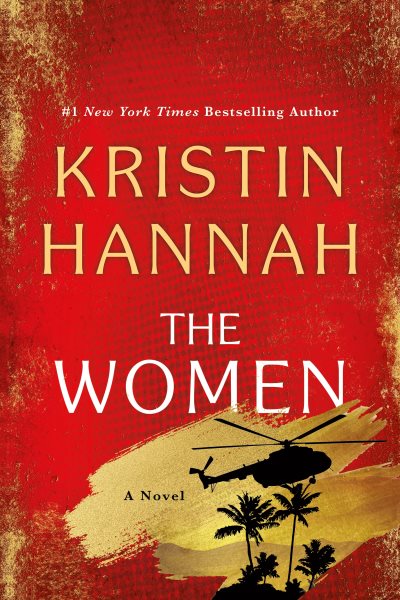
  • The Women (2024) by Kristin Hannah – Highly recommended possible future book club selection.

[i] Sally narrating, Chapter Nine, pages 101 – 102. Referring to Luke 10:38-42.

“Well, I’m sorry. But if ever you needed proof that the Bible was written by a man, there you have it.”

“But I am not willing to believe that Jesus Christ Our Savior—who at a drop of a hat would heal a leper or restore sight to the blind—would turn his back on a woman who was taking care of a household.”

West with Giraffes Discussion Journal

Many of the books we read in the Whitney Book Bistro have been well-reviewed and made lists of recommended books. West with Giraffes by Lynda Rutledge was recommended by a friend of a friend, who wanted her book club to read it.  Our library system didn’t have enough copies – but we ordered them! Truly word-of-mouth.WestWithGiraffesCover

Inspired by the true story of two giraffes who traveled from Africa by boat in 1938, through a hurricane, and then by truck from New York to San Diego, West with Giraffes is peppered with historical facts, memorable references, and fictionalized action. As our last responder noted, it isn’t anything you haven’t seen a million times, but it is a charming read – and she had already recommended the book to several others. An email responder said, “it was an easy, interesting, enjoyable read.” Another wrote, “I enjoyed the giraffe story but found some of it hard to believe. Not my favorite for sure.” Still another hadn’t yet finished it but said that what she read so far was “great fun.” I’ll post more email reviews in the comments. One non-member made a special effort to stop by and let me know how glad she was to have read it – she laughed, she cried, she cared.

During our meeting, we bounced around finding connections. Our first responder was reminded of his own travels – the Burma-Shave ads spaced along the highways in his youth, Stuckey’s roadside stops, the dust storms in Texas that continue past the Dust Bowl, and his own visit to the San Diego Zoo as an adult. Another member thought the novel started slowly, but he was hooked by the time Woody and the giraffes got to the Midwest. He was reminded of other stories that mention The Negro Motorist Green Book by Victor Green.[i]Many of us were surprised to learn that California had a police barrier outside Yuma, Arizona, to keep the poorest Americans from entering. One of us shared that his family was turned down the first time they tried to immigrate to the U.S. because his parents had six kids and officials did not think his father could support them all. We laughed as we discussed the roadside TP motels! One member believes that the interstate highway system ruined a lot of roadside attractions. We segued into suicide and the availability guns – without descending into controversy. We also asked how is our view of crime changed by circumstance, desperation, and empathy. One member thought the book was easy to read and the author worked hard to create a story given that there were no journals of the actual journey; the drive probably went through without so much adventure. He got tired of it.

We loved the giraffes. We could imagine that the sight of those giraffes uplifted depression-era Americans. We talked about how animals can be emotional support for humans. One of us finds joy/comfort when a hummingbird visits him when he is wearing a colorful shirt. “I am a flower!” Another member noted that the humans were bonding with the giraffes, but were the giraffes bonding with the humans? We talked about conservation and wondered when it goes too far. Should we be saving insects? The Nevada pupfish? The Mt. Charleston blue butterfly? We seemed mostly to agree that the conservation efforts of zoos make them worth it. We watched an interesting video about the Hurricane Giraffes from The History Guy, which details much of what is covered in the book, but with pictures of giraffes.[ii] Did you know that humans and giraffes have the same number of neck bones?[iii] Did you know that Henderson has a resident Giraffe that paints?

This month we travelled with giraffes along the Lee Highway in 1938. Next month, we will discuss a book titled The Lincoln Highway. The story takes place in 1954. A very different book but connections abound when we look for them – and sometimes even when we don’t. We have record-breaking heat outside yet adventures await. Keep reading and stay connected!

OTHER WORKS DISCUSSED:

  • The Green Book (2019) Film directed by Peter Farrelly
  • Grapes of Wrath (1939) by John Steinbeck
  • Lessons In Chemistry (2022) by Bonnie Garmus
  • My Life in a Man-Made Jungle (1940) by Belle J. Benchley
  • The Wager (2023) by David Grann


[i] https://www.loc.gov/item/2016298176/

“An annual guidebook for African-American roadtrippers founded and published by New York City mailman Victor Hugo Green from 1936 to 1967. From a New York-focused first edition published in 1936, Green expanded the work to cover much of North America. The Green Book became “the bible of black travel” during the era of Jim Crow laws, when open and often legally prescribed discrimination against African Americans and other non-whites was widespread. Green wrote this guide to identify services and places relatively friendly to African-Americans so they could find lodgings, businesses, and gas stations that would serve them along the road. It was little known outside the African-American community. Shortly after passage of the Civil Rights Act of 1964, which outlawed the types of racial discrimination that made The Green Book necessary, publication ceased and it fell into obscurity.” The Library of Congress online record.

[ii] https://thehistoryguy.com/videos/san-diegos-first-giraffes/

[iii] https://www.britannica.com/one-good-fact/how-are-the-necks-of-giraffes-and-mice-similar#:~:text=Virtually%20all%20mammals%20have%20the,%2Dtoed%20sloths%20(nine).

The Wager: A Tale of Shipwreck, Mutiny and Murder by David Grann

This month’s discussion of The Wager: A Tale of Shipwreck, Mutiny and Murder was remarkably agreeable. Our first responder was concerned to be first because she didn’t really like the book; it was depressing and she kept thinking, “give up already!” But she had finished it, appreciated the depth of research, and was glad to have read it. She wasn’t alone. Many of us found the hardships depressing and much of the nautical details and number of characters overwhelming. Despite this, we easily filled the hour discussing particulars with only minor asides for personal anecdotes.

Our next responder said she “almost liked it” and called out the first third of the book as a textbook. She felt that this story from the eighteenth century highlights how society and politics have not changed. She was particularly impressed with the common phrases that originated in shipping, reading off “cut and run; learn the ropes; under the weather; pipe down; piping hot; scuttle butt; three sheets to the wind; and turn a blind eye.”

One of us was amazed at how many men it takes to staff the ship and how vulnerable they were. He questioned why, after the wreck, the majority would even consider going back so far rather than forward. He felt that this entire book was about war. Another member was outraged by the British imperialism, arrogance, and condescension revealed in this story. Everyone agreed, bringing up politics, Charles Dickens, and how “human life was cheap.” Still, we were amazed at the sailors’ ingenuity in building another ship from the wreckage. We were also impressed by the Kawésqar people, who were so well adapted to their environment and could have been more help if only the shipwrecked sailors had been better behaved. One member, as a minister, was particularly moved that the sailors were concerned about decent funerals. And another of us thought that the title of the book should have been “Screwed.”

A new member had joined us because he particularly likes nautical fiction, which is usually more heroic and adventurous. However risky and uncomfortable life on the seas seemed, people’s lives are sometimes worse at home and the desire for adventure and discovery continues even today. Just this last month, on June 5th, the Boeing Starliner successfully completed its first crewed launch to the International Space Station. And Elon Musk’s Space X is still striving for Mars. None of us could see ourselves hurtling into space.

I asked if we believed this nonfiction book was “truer” than the historical fiction we read – especially since we discussed Crow Mary last month, which was also well researched but fiction. Can anything that is being remembered in hindsight, even in journals, be reliable? One of us even wondered how, with all the loss of supplies, the journal writers had ink? Most of us seem to agree that the journals and the dry details make The Wager more real, especially since there are multiple written, first-hand accounts to compare and draw forth the likely truth, pictures, maps, and endnotes.

Other comments during the discussion:  In this story, as in current events, how do people keep surviving under such unimaginable hardships, bombings and destruction? Our problems seem minor compared to the hardships of war. We noted that people near death can have an amazing burst of energy just before the end or hang on until a holiday. The memoir of The Wager wreck written by the chaplain notably had no mention of God, which brought to mind that one book of the bible, Esther, also has no mention of God. It is interesting that charcoal keeps away rats and cockroaches. Did the sailors realize at the time that the wild celery kept away scurvy? Probably not.

We watched some images from the film Master and Commander, which shows sailors climbing up the ropes and bailing out water. The film takes place in 1805, but an absent member wrote me that she found the film “so similar to The Wager descriptions.” I also showed part of a YouTube video that gives a nice layer by layer description of “How an Eighteenth Century Sailing Warship Works” – using an Animagraff 3D model created by Jake O’Neal: https://www.youtube.com/watch?v=4Nr1AgIfajI.

Please add to the discussion – things I have forgotten or new things to share. Check the comments, too!

Other works discussed:

Cinnamon and Gunpower (2013) by Eli Brown

Lord of the Flies (1954) by William Golding

The Devil and Sherlock Holmes: Tales of Murder, Madness, and Obsession (2010) by David Grann

Killers of the Flower Moon (2017) by David Grann

The Wager (pre-production) film directed by Martin Scorsese

Billy Budd (1924) Herman Melville

Master and Commander (1969) by Patrick O’Brian

Master and Commander: the Farside of the World (2003) Film based on Patrick O’Brian novel

Unknown Shore (1959) by Patrick O’Brian

Amistad (1997) film by Steven Spielberg

Mutiny on the Bounty (1962) film starring Marlon Brando

• Wreck of the Batavia (author/title uncertain)

Wreck of the Whale Ship Essex: The Extraordinary and Distressing Memoir That Inspired Herman Melville’s Moby-Dick (various versions) by Owen Chase

•Author Charles Dickens

Crow Mary Discussion Journal

Crow Mary by Kathleen Grissom is one of the most unexpectedly and universally appreciated books the Book Bistro has read in a long time. We didn’t gush or disagree. We had a pleasant discussion about a serious subject –  enjoying the romance and period details that introduced the topic and appreciating the sensitive handling of the brutal reality that caused one of our members to say that reading this book made her ashamed to be a white person. Several people mentioned before and after the meeting that they would not have chosen Crow Mary on their own, but they were glad they read it.

Like many of us, our first responder loved the first half of the novel but he is 37 years sober and struggled to read the second half because of the alcoholism. He was the first to mention that the one detail that seemed off was when Burt says, “out East they’re starting to say that alcoholism is a sickness – a disease.”(p.330) It seems unlikely they would be so aware.[1] The same member emphasized how much he enjoyed “fun” details, such as the rice pudding, the Native American belief in the connectedness of all things, the descriptive language describing age as “sixteen snows” and the months as “the moon of . . .” Others were drawn to cultural details, such as how annoyed Mary was that men kept doing what she thought was her responsibility and that the crow village had a female saddlemaker.

We wondered if such young boys could really have made the trip from the Pennsylvania boarding school on their own, which led to a discussion about how young women used to marry and historical expectations. We compared Mary’s pouring water down her baby’s nose to keep her from crying to our parents’ washing our mouths out with soap or baking soda. One of us was wistful about the unfulfilled romance and another particularly appreciated the good characterizations and obvious research into the time period. Since the author of Crow Mary is a white woman writing about an indigenous woman, cultural appropriation is a real concern. The author mentions in her author’s note that she had a “sensitivity reader . . . a Crow elder, patiently guiding me through the many subtleties and nuances of the Crow culture.”

We were particularly surprised by the use of strychnine in the Whiskey Trade and by wolfers who poisoned buffalo meat to kill wolves without leaving bullet holes in their pelts. One of us mentioned that lead bullets are also concerning because they poison the creatures that scavenge the carcasses.[2] Another shared that he has read that the killing of buffalo was intended to help destroy the natives who depended on the buffalo for survival. We also asked if buffalo are now extinct, which is complicated. Just as the story of Abe Farwell has more sides and opinions than covered by the book, so does the demise of the North American bison in the wild.[3]

I often wonder if the connections between the books I choose are as coincidental as they feel or whether they reflect the connectedness that surrounds us when we look for it. I did not know that so much of Crow Mary would hinge on the trial regarding the massacre. Our next book, The Wager: A Tale of Shipwreck, Mutiny and Murder, will be a non-fiction account of a shipwreck and court martial that took place in 1742! The author, David Grann, wrote the award-winning Killers of the Flower Moon, which is also concerned with a trial and the treatment of Native Americans in Oklahoma in the 1920’s. One member saw a connection to our March selection, Lessons in Chemistry, because it references abuses by entitled white males in the 1950’s. And last month’s All That Is Mine I Carry with Me was concerned with the idea of justice versus retribution, which can also be compared with Mary’s desire to exact immediate revenge versus the United States and the Canadian legal systems.

We don’t always feel positively about the books we read that are outside of our interests or comfort zones, but they build a foundation of shared knowledge and empathy. As we read our next book, which is nonfiction, consider how it is different from fiction. Crow Mary was inspired by a true story. The author details the characters she created. Is it any truer, more trustworthy? Is it harder to read or just different? Join the discussion – you decide.


[1] I researched this after the meeting and found that, although probably not as well known as the casual statement in the novel implied, over two centuries ago a prominent medical professor started an educational campaign against hard liquor: “[Benjamin] Rush told his readers his purpose was ‘to show, first, that spiritous liquors are unnecessary; and secondly, that they are mischievous and often produce the diseases they are intended to obviate during the time of harvest.’” https://www.ncbi.nlm.nih.gov/pmc/articles/PMC1694575/pdf/amjph00526-0115.pdf

[2] I found this article from the National Park Service discussing the problems with lead bullets and hunting: https://www.nps.gov/pinn/learn/nature/leadinfo.htm#:~:text=Lead%20Bullet%20Fragmentation,Lead%20bullets%20are&text=Even%20if%20a%20hunter%20attempts,poison%20both%20humans%20and%20wildlife.

[3] Also from the National Park Service: Bison, Home on the Range. https://www.nps.gov/subjects/bison/index.htm