All That Is Mine I Carry With Me Discussion Journal

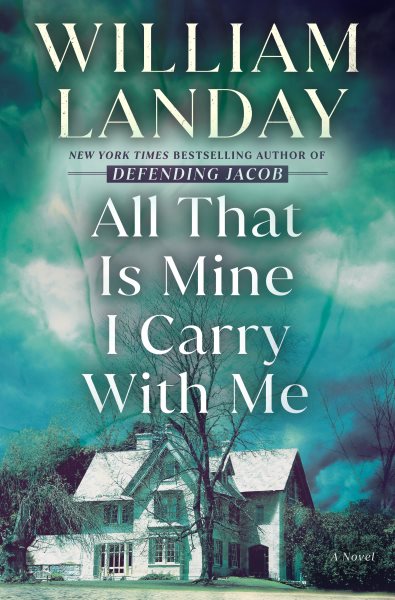
Our discussion of All That Is Mine I carry With Me by William Landay was easy and short this month. Although most of us found the novel interesting and easy to read, several found it too long and depressing. Most of us believed that the father was guilty of murder, but at least one of us felt that the evidence was circumstantial, making the ending still unsatisfying.

One member found the style convoluted. She suggested that Jane’s sister Kate should haveAllThatIsMineBookCover been used to describe Jane’s ghost perspective. She was disturbed by the idea that the daughter wrote the details of rape and her father’s fondling of his girlfriend’s daughter. She also wanted Dan to suffer. If proof of his murder was to be found, it should have happened before he got dementia so that Miranda could punish him by putting him in the senior home against his will. This would have given many of us a more satisfying ending.

We wondered why Alex wasn’t given his own section. Why would he stick so solidly by his father? One of us said, “Honor thy father.” Another reminded us of the proverb, “blood is thicker than water.” In general, we believed that Miranda and Jeff’s lives were ruined by their mother’s disappearance and the uncertainty of their father’s culpability. One member disliked Dan from the moment he insisted that Jeff mow the lawn in only one way, sharing a similar anecdote from his own upbringing.

We discussed how accurate was the depiction of Alzheimer’s, and one of us shared her own story of her grandmother’s recent passing. A member who is a retired nurse said that Alzheimer’s returns a person to the state of an infant. One of us recommended the book and film Still Alice. Someone questioned the ability of a male author to write from a woman’s viewpoint – but I don’t know if this was a compliment or a criticism! One of us recommended author Wally Lamb. Another of us shared his grandmother’s philosophy that there should never be reason for suicide. The world is so big. Just leave and start again somewhere else. As usual, we happened upon interesting connections and they flowed along in a surprisingly calm meeting.

I did not ask how Miranda and Jeff’s lives might have been different had their parents simply divorced. Wouldn’t Jeff have still been at odds with his father and the struggling black sheep of the family anyway? Miranda’s depression seemed clinical, perhaps inherited; how might she have been different? No one stepped into the question about circumstantial evidence and capital punishment. Nor to the question that in the end, when Miranda took the poison that had been intended for Dan’s suicide and closed the door to be alone with him, what will be her culpability? We thought on this though. One of us agreed that Miranda would likely be charged with murder.

Tattooed on Miranda’s arm is the Latin Omnia mea mecum porto – All that is mine I carry with me. One of our group said he still didn’t quite understand this reference. My cursory research did not find an authoritative answer. Is this the spurning of physical goods in favor of that which is always with us—our character and wisdom? At the end, has Miranda’s character changed? I also found a translation that suggested, “I am what I remember” – which is also fitting, given that our murder suspect had dementia at the end of the novel. Has his culpability changed now that he has no memory of murder?

Sometimes a lifetime is not enough to grasp such weighty questions.

Other works discussed:

  • If I Did It: Confessions of the Killer ; With Exclusive Commentary “He Did It” by the Goldman Family (2007) O.J. Simpson
  • Ladder of Years (1995) Anne Tyler
  • The Other Side of Suffering The Father of JonBenet Ramsey Tells the Story of His Journey from Grief to Grace (2012)
  • She’s Come Undone (1992) Wally Lamb
  • Still Alice (2009) Lisa Genova / (2014 Film)  starring

Lessons in Chemistry Discussion Journal

A member we haven’t seen for a while – life gets in the way of even such simple pleasures as our book club! – came by the desk last week because she really enjoyed Lessons in Chemistry by Bonnie Garmus and she was inspired to reread The Feminine Mystique by Betty Friedan. Several other people stopped to comment on how much they like the book, and more copies were checked out than people attend our meetings. This month, we have joined a community of readers greater than ourselves. I know this has been true of other books, but it felt remarkable because I had expected a humorous light read, based on the U.S. book cover, and instead found it dark and triggering. 

Book Bistro to the rescue! Our first responder had mixed feelings about the book. She enjoyed it well enough but was disappointed by the Hollywood ending. Our next felt that there was too much male-bashing, lists of stereotypes and discrimination. Another member enjoyed the novel; it kept her interest. She loved the dog. As a retired teacher she was horrified by Mrs. Mumford, and she loved the effect that the neighbor Harriet had on the family. As we continued around the table, our next responder said she liked how the various threads came together and she appreciated the happy ending.

How did our male readers respond to the book? One member said that he found the portrayal of men to be accurate. Too many men trying to control women’s bodies. He also found it laugh-out-loud funny. His favorite zinger was when Walter said he was waiting for the right moment to tell his daughter that he and she weren’t actually related. “Her fortieth birthday.” He loved that Elizabeth Zott’s daughter’s name is Mad. He loved the book. A little too wonderful to be true, but he believes it is about the journey. Another man said that he accepted the book as a period piece. He has a boss who deserves the bashing even today, noting that a human resources seminar on discrimination has tempered his boss’ behavior for the time being. My husband, who is also in the book club, had enjoyed it until I started to react to it. And another male member said that it is a good thing we’re in a book club to get different views! He thought there were plenty of good men in Lesson’s in Chemistry and he also found it laugh-out-loud funny, such as when Elizabeth Zott announced that Popeye was wrong about spinach! And when several of us laughed about Zott explaining on live TV which mushrooms could kill, another member said, “who needs mushrooms? You could kill with lots of salt and added fat!”

We had some discussion of seeming religion-bashing in the book, but even our most religious readers seemed nonplussed. One of us asked when people started talking about the autistic spectrum rather than just autism, and another mentioned the bevy of terms now used, including neurodivergent and neurospicy. One of us wanted to answer the first official book club question, which asks if we think libraries are still important. He was effusive in describing how The Las Vegas-Clark County Library District has provided important opportunities for him and his partner. Another member wondered if other districts offer such variety, calling out our music performances, art classes and Spanish class. We also answered question two and agreed that the pencil Elizabeth Zott wore in her hair was both a weapon and a symbol of strength. We didn’t get too far answering question five about what “smart” means to us. We don’t believe that a dog can learn 1000 words. It is interesting that of the eleven in the room, at least seven have experience in education.

As always, there is plenty I have missed and more we could have discussed. I opened the meeting with a simple science experiment mixing baking soda, citric acid and water to make an instant cold pack. Many of us don’t ever outgrow our fascination with chemical reactions. Maybe that also is why Lessons in Chemistry resonates. We don’t have to totally understand or agree to enjoy or appreciate. I received an email just before the meeting from a member who couldn’t make it, but his response to the book captured so well the acceptance of Elizabeth Zott as our hero and role model, as well as some of the faults. I will post it as a comment on the journal. The time we take – reading, writing, discussing – is powerful. YOU are powerful. 

  • Other works discussed:
  • The Feminine Mystique (1963) by Betty Friedan
  • Remarkably Bright Creatures (2022) by Shelby Van Pelt
  • Big Bang Theory (2007 – 2019 T.V. Show)
  • Young Sheldon (2017 – 2024 T.V. Show)
  • Marvelous Mrs. Maisel (2017 – 2023 Prime Video T.V. Show) 
  • Lessons in Chemistry (2023 Apple T.V. Mini-series)

The Heaven and Earth Grocery Store Discussion Journal

James McBride’s novel, The Heaven and Earth Grocery Store, is a behemoth – not so much for length as for density of characters, scope, aspirations, language, and more. Our discussion seemed muted. Although everyone spoke, I wasn’t sure if most of us liked the book, would recommend it, or were still unsure. Perhaps we like it in parts. 

At the meeting, our first responder was put on the spot, like an accidental auction participant, but he gamely offered that he appreciated the blended cultures. Our next responder loved the book, finishing it easily a couple of weeks ago and now, like many of us, was struggling to keep the characters’ names straight. He had trouble envisioning how the town was laid out and thought the author should have included a map! He loved the colorful language and quoted from the section when Paper describes Soap hitting Fatty, “So he balled up his fist . . . It started in Mississippi, gone up through the Carolinas, stopped for coffee in Virginia, picked up steam coming outa Maryland . . . and boom! He like to part Fatty from this world.”

One of our members said that she had trouble getting into the book at first, then she came back to it and after a while she was hooked. Another liked the beginning – he was interested in Chona and Moshe, but not so much in the mystery and rescue. Another loved how the sweet potato pie was used as a map to help Nate know how to get into Pennhurst to rescue Dodo. Which reminded still another member how slaves could communicate just by how they braided someone’s hair. This meeting our connections jumped outside the book in ways I had trouble following, which I believe highlights the complexity and challenge the book was offering us.

Other excerpts from our discussion:  Moshe’s desegregation of his theater was not so much courageous as desperate. The entertainment community gave voice and space for integration sooner than other arenas. The doctor was a mis-killing. The violence was still disturbing; Isaac was not admirable, and yet none of the getting of Dodo would have happened without his money. And weren’t Isaac and Moshe the ones who started the camp for disabled that was the prompt for McBride’s writing of this novel? The book reminded one of us of Oprah Winfrey’s show several years ago when someone noted that America is NOT a melting pot, which would make us all the same, but rather a salad bowl. Books like this one provide a window past prejudice. 

In particular, I read a couple of passages from the book:

  • “The seven requirements of Jewish life: wisdom, meekness, fear of God, love of truth, love of people, possession of a good name, and dislike of money.” 
  • “Chona wasn’t one of them. She was the one among them who ruined his hate for them, and for that he resented her.”

The New York Time’s reviewer, Danez Smith, called The Heaven and Earth Grocery Store a “Murder mystery inside a great American novel.” Since we just discussed last month what makes a classic, do we agree? We aren’t sure. One of us thought that it is being compared to Mark Twain’s work, with his earthiness. Another member thinks that sometimes, like The Grapes of Wrath, we know right away when we read a great novel, but perhaps time needs to tell. Poignantly, another of us said that she had never been asked to decide if something was a great novel; that seems like something we are told or taught. How well read or educated do you need to be to have this power? Have confidence! YOU have this power every day.

We discussed The Heaven and Earth Grocery Store in the Teen Zone this month, with newly painted bright-orange walls and a large video screen to display a short video[i] showcase of James McBride that included some pictures of his grandmother and Pottstown, PA. We played some music from a Mickey Katz CD and tasted chocolate babka. We asked early on, which characters in the novel are based on real people, and I have since found a great article[ii] that includes information about Pennhurst and what McBride refers to as “the demise of Pottstown’s industrial heritage.” Follow the link below or ask me for a copy of the article if you are interested. I also have marbles to inspire your memory on the little things that make a difference every day. Reading feeds our knowledge, our imaginations and our hearts. 

  • Other works discussed:
  • The Color of Water: a black man’s tribute to his white mother (1995) by James McBride
  • The Rabbi Small Mysteries (1964-1996) by Harry Kemelman

[i] https://www.youtube.com/watch?v=O1ToA-2TsnQ

[ii] https://www.pottsmerc.com/2023/08/10/pottstowns-chicken-hill-a-central-character-in-new-james-mcbride-novel/

Our Classic Book Read — You Choose 2024

In January each year, the Whitney Book Bistro reads a classic. This year, we each chose our own classic – either from some readily available at the library during our last meeting, or something we found on our own. But what makes a book a classic? We agreed that a book should be at least fifty years old; but that is not a hard and fast rule, we would consider this on a case by case basis. One of us suggested that the author should no longer be alive. Others, that the book and author be recognizable by many. It should still be relatable, artistic, filled with rich language. 

What if a story was ground-breaking for its time, introducing new ideas or styles, but it is no longer relatable and the artistry is perhaps a matter of opinion? I believe we would all take this on a case by case basis as well. With so many books in print now, could we even begin to have an accepted set of “classic” books for required reading? One member has heard that there are just seven basic plots.[1] At the end of our meeting, one of us reminded me that reading the classics used to mean Greek and Roman literature. Do students still read Homer? 

As we went around the room, sharing the book we chose, we had several cross discussions, about how struggle happens for every generation, how literature speaks to people in different ways.  Many of us recognized the books from the movies. Steinbeck was the most recognized of our choices. When I asked if any of us had a book we would want to have on a desert island, we all looked around the room, but I don’t remember anyone jumping up and down!

  • Coyote Waits (1990) by Tony Hillerman – DG could not get interested in any of the classics he considered, so ultimately, he decided to read a book he has been wanting to read. Tony Hillerman’s Navajo-detective novels have been a favorite of his and he was not disappointed. Researching a little, he was surprised to find that Hillerman was not Native American, but he did receive the Navajo Tribe’s Special Friend of the Dineh award.
  • Kidnapped (1886) by Robert Louis Stevenson – DR listened to the audiobook and found it engaging. He noted that many of Stevenson’s books are about shipwrecks.
  • Leaves of Grass (1855) by Walt Whitman – JS is still reading the collected version that Whitman refined and added to until his death in 1892. She researched his importance and seemed to appreciate some of his poems, but sometimes he seemed to be just “blabbering on” – not just free verse but more like arrogant journaling.
  • Of Mice and Men (1937) by John Steinbeck – KK enjoyed this book, but she found that even at just 100 pages, it was a tough read.  She had to stop and read out loud.
  • Maggie Girl of the Streets (1893) by Stephen Crane – MS actually read a collection of six stories, which she found to be hit or miss. The slang and language were challenging. “The Monster” (1898) was her favorite. She particularly enjoyed reading about the author whose reporter style was considered groundbreaking because he immersed himself in the life and war zones about which he was writing. His most famous book is The Red Badge of Courage, which most of us recognized.
  • The Life of Josiah Henson: Formerly a Slave: Now an Inhabitant of Canada, as Narrated by Himself (1849) – JS found this to be a classic slave narrative. He was particularly intrigued by the difference in our mindset regarding slavery now versus then. We could have had an entire discussion about this, including another member’s choice of Uncle Tom’s Cabin, but that will have to be another day!
  • Custom of the Country (1913) by Edith Wharton – KC had to order this from out of state to read a print copy of this book. He is a fan of Edith Wharton and would recommend any of her books, especially The Age of Innocence (1920). A tragic story about meeting society’s expectations. Since she is writing critically from and about the upper class, who had the money to buy her books, she has far-reaching impact. 
  • Dracula (1897) by Bram Stoker – WH was enthusiastic about this epistolary novel, which showed only individual and limited perspectives in the letters and journal entries included. He was surprised to learn that Bram stoker did not invent the vampire story but that he was the first to do it so well that he seems like the first. 
  • Grapes of Wrath (1939) by John Steinbeck – JSG wanted to read Don Quixote but decided that 1000 pages was just a little too long for December! Reading about characters moving from the middle of the country to California, seeking a better life but misled about the opportunities there, seemed particularly relatable given the continued immigration crisis in our country today. 
  • Tinkers (2009) by Paul Harding – VH said that at only ten-years old, this book may not be a classic by our definition yet, but it will be.  It is a first novel that won the Pulitzer Prize in 2010. The prose is astounding as the author describes each character from their death bed. She found his description of death noteworthy.
  • Rebecca (1938) by Daphne Du Maurier – MM had read and recommended Rebecca before. She wondered if she would still find it worthy. She did. The new wife is psychologically haunted by the previously deceased wife. The story is suspenseful and the language beautiful and colorful.
  • Uncle Tom’s Cabin (1852) Harriet Beecher Stowe – MR was challenged to read this because of a class she took this last summer about under-recognized female authors. It is not an easy read, considering both the length (over 800 pages) and the dated language. She had not yet finished it, but she appreciated it. This lead us again to the importance of still reading things that were ground-breaking, original, important, even though there are so many books to read!
  • The Stranger (1942) Albert Camus – I appreciated the philosophical considerations prompted by this short book, which was easy to read, relatable, even though the author was French and the story took place in Algiers.  I’ll post a little more information as a comment.

Review for the following books were sent by email because the members weren’t able to attend. Their full remarks will be posted as comments as well. 

  • I, Robot (1940-1950) collected stories by Isaac Asimov – PM has only started reading science fiction in the last few years and wanted to read Asimov’s Foundation series but thought he would start with some of the ideas the author first processed through early short stories.
  • Nero Wolf Series (1934-1975) by Rex Stout – AM first heard an audiobook of Too Many Cooks as a child in the early 2000s. Check out her review and recommendation for the importance of the books as a collection.
  • Of Mice and Men (1937) by John Steinbeck – CB in South Carolina

This list isn’t even inclusive of all the ones we might choose if we had the time and inclination. So many books – so little time has never seemed truer! 

Happy Reading! 2024!


[1] There is a book about this subject, available through the library: BOOKER, CHRISTOPHER. The Seven Basic Plots: Why We Tell Stories. 2005.  From Wikipedia:  “Overcoming the monster”; “Rags to riches”; “The Quest”; “Voyage and return”; “Comedy”; ”Tragedy”; “Rebirth.“

The Angel Of Rome Discussion Journal

In an interview with The Seattle Times to promote his collection, The Angel of Rome and Other Stories, Jess Walter says that “writing a short story is like going on a date and writing a novel is like having a relationship. For [him], short stories are really fun and playful.” Which is fortunate for us, because several of our members mentioned not usually liking short stories but laughing out loud while reading these.

Our discussion this month bounced around between the stories, with the general favoriteAngelOfRomeCover being the title story, “The Angel of Rome.” “To the Corner” was mentioned next frequently, and a couple of us called out “Mr. Voice.”  Our first responder was impressed by how well the author captured the feeling of just coming out as gay and found his female voices also seemed authentic. One of us enjoyed reading the stories but felt they didn’t quite end, which can be more common in literary fiction. Another member felt that one of the unifying themes is the twist at the end of every story in which the characters are revealed to be more than we first assume.
We were all surprised that the angel of Rome was the seemingly flighty actor Ronnie Tower. What a wonderful gift for the narrator to write a script for him. A member in South Carolina shared by email that she researched and discovered that the co-writer on this story, Edoardo Ballerini, went to Rome on a scholarship to study Latin. I’ll include her full note as a comment on the blog.

Most did not even notice that “Before You Blow,” was written in the second person, but this was particularly remarkable to one of us. Another member appreciated how the author captured in “Magnificent Desolation” that teaching involves not just working with kids but also their parents. We discussed the ending of “Drafting,” wondering if “the road fell away and the cold clear summit rose into view” meant that the narrator died in a crash? Or was this just the metaphorical movement away from the illness that consumed her? One of us noted that with everyone else, the narrator was defined by the cancer, but with this seemingly irresponsible ex-boyfriend, she could live in the moment and find herself again.

The gun in “To the Corner” played a large role for some of us. A gift for protection? For suicide? Accidental violence? We loved how the narrator connected with the kids on the corner, bringing them into his life and allowing him to touch theirs. One of us mentioned how kindness gets passed on.

We touched on some of the other stories, too. No one seemed certain about the title or significance of “Balloons.” One of us would like to find a retirement home like the one in “Town and Country.” Many of us noted how we are not prepared for how hard it is to care for our aging parents. Did Jess Walter write “Famous Actor” before or after Matthew Perry admitted stealing drugs from people’s bathroom medicine cabinets?[i]One member hadn’t liked the first story she read, but she re-read it before the meeting and did like it! Sometimes we just aren’t in the right time or place or mood. Many of us kept notes to help us keep the stories straight.  I will include in one of the comments my own notes, including spoilers.

This was our final meeting for 2023. If you’ve read along with us this year, let me know which of the books you read was your favorite. We will start off 2024 discussing a variety of classic novels or stories – much as we discussed this collection. Pick something that you have always wanted to read, tell us about a classic you remember, or pick a story from a recommended list. Let me know if you’d like some help finding a story. What makes a classic? You decide – then join our discussion.

  • Other works discussed:
  • Stephen King – he has a variety of short stories that are surprising and powerful.
  • Anxious People (2020) by Fredrik Backman
  • A Man Called Ove (2014) by Fredrik Backman
  • Inkheart (2003) by Cornelia Funke
  • Citizen Vince (2005) by Jess Walter  (Winner of the Edgar Awards Best Novel 2006)
  • Whitney Book Bistro previous short story selections:
  • Exhalation (2019) by Ted Chiang
  • Stone Mattress: nine tales (2014) by Margaret Attwood
  • This Is How You Lose Her (2012) by Junot Díaz

[i] In the copyright information, “Famous Actor” is credited as published in Tin House, Best American Short Stories 2017, Pushcart Prize Anthology XLI. Most of the online references I found for Matthew Perry were published after his death this year.  He is mentioned in interviews as saying that he would go to Open Houses on Sundays and steal from medicine cabinets. I didn’t find any early dates, but it could be possible. Matthew Perry’s autobiography, Friends, Lovers, and the Big Terrible Thing: A Memoir, was published in 2022.

A Long Petal of the Sea Discussion Journal

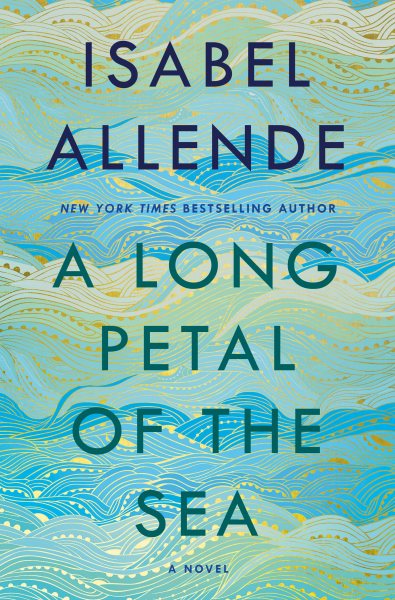
We had a conversation this week – about A Long Petal of the Sea, the Spanish Civil War and Franco, immigration, the Holocaust, Isabel Allende, political ideology, history repeating itself. Perhaps it was because I sat in a different seat in the room, but people seemed more relaxed even as the room seemed brighter, harsher and more barren. Our discussion moved back and forth across the table, not around the room, and we never referred to any of the book club questions.LongPetaloftheSeaCover

As usual, we found unexpected connections because one of us was born in Spain and, though he has a degree in History, he had never learned about the Spanish Civil War. He had heard of Pablo Neruda and was glad to have had this chance to read some of his poetry. Everyone seemed appreciative of the history conveyed, but we also found the novel difficult to read, especially in the beginning because of the horror and devastation of the war, as well as the number of characters introduced. One of us was obviously emotionally moved and had been unable to read to the end of the book.  Another found it strange; she had never read a book like it, but she loved it. Still another found the writing too much like reading a newspaper article. And one of us would like to read it again!

Several members mentioned how the historical events in the novel are reminiscent of current events. The idea that history is repeating itself resurfaced throughout the meeting. One of us was amazed at the number of political parties and ideologies Isabel Allende mentions.  Someone commented that dictators are always voted in and we discussed the United States’ complicity in the death of Salvador Allende and the ascension of Augusto Pinochet. We did not get into any politically divisive discussions but rather seemed concern for the future. One of us tried to allay our fears by noting that the US military is independent and the Catholic Church is not as powerful as it was in Chile at the time; but although many of us seemed to agree, I am not certain we were adequately reassured.

When I asked if anyone noticed another theme Isabel Allende considers central to her novel, one member said “free love,” which captures perfectly the breadth intended by the author and brought us back to characters and plot.  No one was surprised that Ophelia’s baby survived, but one of us was pleasantly surprised that the daughter showed up to meet Victor in the end. And did anyone trust Father Urbina? Discussing the character Carme made us laugh and one member read a favorite description: “She had shrunk until she looked like a plucked bird, a heap of bones and skin, with little hair left and a cigarette permanently dangling from her lips.”  Another member loved the tender time that Victor and Roser had together in the end. She also read a favorite passage: “Pain is unavoidable, but suffering is optional.”  At one point, two members started to have a heated discussion about the selfishness of Isidro del Solar, which I believe highlights the emotional undercurrent of this discussion.

One member has read many other novels by Isabel Allende and this novel seemed familiar to him.  He also mentioned films he recommends and I will list below.  We had a discussion about the Valley of the Fallen (Valle de los Caídos), which is now called Valle de Cuelgamuros, and is a controversial monument ordered by Franco to honor the Spanish Civil War dead.[i] We watched a short clip from an interview with the author and I have a handout showing a few pictures of the Argelés-sur-Mer refugee camp in France, a bronze sculpture by Alberto Giacometti,  a sample of paintings by Oswaldo Guayasamín, a travel image for the Chilean Lake District, and a bit more.

When I write these journals of our discussions, I am always amazed at how much we discussed in only an hour. Fourteen people. Seven men and seven women. More and more of late, I find myself referring to books and movies to bridge gaps of understanding, creating shared experiences, empathy, and more. It’s real!

  • OTHER WORKS DISCUSSED:
  • House of the Spirits (1982) by Isabel Allender
  • City of the Beasts (2002) first of a Young Adult series by Isabel Allende
  • Next Year in Havana (2018) by Chanel Cleeton (previous Whitney Book Bistro selection)
  • One Hundred Love Sonnets (2014) by Pablo Neruda
  • The Complete Memoirs: expanded edition (2021) by Pablo Neruda
  • FILMS:
  • House of the Spirits (1993) film adaptation of the novel, starring Jeremy Irons, Meryl Streep, Glenn Close, and Winona Ryder
  • Il Postino (1994) An Italian comedy-drama with a fictional story about Pablo Neruda meeting a postman and teaching him to love poetry (Wikipedia).
  • MUSIC:
  • “Manifiesto” by Victor Jara.  I played part of this song at the meeting. Many more of his songs/albums are available free through Freegal.

[i] I was a bit confused by this discussion. I believe that we were discussing this monument, which I looked up after the meeting. I found a recent article in The Guardian that I found informative:  https://www.theguardian.com/world/2023/jun/12/exhumation-of-civil-war-dead-from-spain-valley-of-cuelgamuros-begins 

The Vanishing Half Journal

The Vanishing Half by Brit Bennett is a story – a mystery of sorts – concerning the disappearance of one identical twin who decides to pass for white, severing contact with her previously known world to protect the secret that she has “one drop”[1] of black ancestry. Our first responder shared that he took a DNA test that revealed he had two percent black blood – all his life he had been passing for white and he didn’t know it! Although this concept seems absurd to many of us, someone who had read the book mentioned to me that she didn’t believe anyone could really pass; that you can always tell. These discussions with shared reading experiences matter.VanishingHalfCover

This month, we went around the table, fleshing out a few comments, and everyone brought a new observation that showed engagement with the story – even when they didn’t like the book. One of us had just started the audiobook and hadn’t been hooked by the first few chapters, although the narrator seemed good. Most of us found it easy to read, and one new member finished even though she had started it just three days before our meeting.

A few of us were disappointed that there wasn’t more action. Another found it a sensitive subject because her daughter-in-law vehemently opposed acknowledging her children’s black heritage. She liked the book, but it ended too abruptly. Several of us agreed, wondering if the author was setting up a sequel, or if she just got tired of writing. As with other books we’ve read, we weren’t convinced that the characters’ behaviors were realistic. We wanted more depth. Why couldn’t Stella have at least called her sister? A new member was moved by the realization of how a single decision can affect your entire life – and your family’s.

The story jumped around enough to make it hard to follow. We had to keep checking the dates at the chapter headings and it seemed to get worse near the end. One of us was particularly disappointed. She found Desiree selfish to keep Jude in Mallard and the book had not an ounce of happiness. Another member concluded that the book was not entertaining. However, one of us really liked Early, and there were many smiles and nods around the table! One of the book club questions asked what we thought might happen to the characters, and someone said the best ending would be that Stella’s husband Blake reveals he knew all along she was passing.

We considered why the author included the transgender storyline. One of us said that it highlighted the importance of inclusiveness. Isn’t that the American dream? It also deepened the concept of identity. Another member shared his own struggle with gender identity and how wearing masks feeds self-loathing, substance abuse, and parallel violence. He shared the story of the UpStairs Lounge arson attack in which a gay man started a fire that killed 32 people. “In 1973, LGBT scene in New Orleans was still largely underground, the Times-Picayune reported in 2013. A week after the fire, churches refused to conduct funerals for the dead. An Episcopal bishop rebuked a reverend who held a prayer service for the victims.” [2]

So often, when we read and hear stories, we make connections to our own lives. This can feel awkward, because we don’t want to lessen the recognition of trauma for others, such as Black Lives Matter to All Lives Matter. The author wrote an essay in 2014 that I found referenced in several places: “I Don’t Know What to Do with Good White People.”[3]  We wished that we had a member from the black community to broaden our perspective of the book.

Near the end of the meeting, one of us suggested that the seemingly unfinished ending and unanswered questions actually encourage us to think. We discussed a lot in just under an hour. The Vanishing Half covers not even half of all the topics it touches on, too. We noted that segregation and hatred continue. We see it in the news every day. Laws can be rewritten. Someone at the meeting said, “to thine own self be true.” Who are we?

OTHER WORKS DISCUSSED:

  • The Personal Librarian (2021) by Marie Benedict and Victoria Christopher Murray
  • Pudd’nhead Wilson (1894) by Mark Twain
  • Unbearable Lightness of Being (1984) Milan Kundera
  • The Jeffersons  (1975-1985) television
  • An Imitation of Life (1934 and 1959) films
  • _____________________________
  • Passing (1929) by Nella Larsen (2021 Netflix Film also)
  • God Help the Child (2015) by Toni Morrison
  • The Mothers (2016) by Brit Bennet
  • A Chosen Exile: A History of Racial Passing in American Life (2014) by Allyson Hobbs
  • One Drop: My Father’s Hidden Life—a Story of Racial and Family Secrets (2007) by Bliss Broyard
  • The Stories Whiteness Tells Itself: Racial Myths and Our American Narratives (2022) by David Mura

[1] “One drop rule: U.S. History. a social classification, codified in law in some states during the 20th century, that identifies biracial or multiracial individuals as Black if they have any known Black African ancestry, even from a Black ancestor many generations removed.” Based on the definition from Random House Unabridged Dictionary. https://www.dictionary.com/browse/one-drop-rule

[2] “On June 24, 1973, an arson fire at the UpStairs Lounge, a popular gathering spot for New Orleans’ LGBT community in the French Quarter, results in 32 deaths and at least 15 injuries. At the time, it was the deadliest known attack at a gay club in American history. The fire’s official cause was “undetermined,” and no one was ever arrested for the crime.” https://www.history.com/this-day-in-history/upstairs-lounge-arson-new-orleans

[3] You can find this on-line, or I can get you a copy at the library – just let me know.  I found it here: https://jezebel.com/i-dont-know-what-to-do-with-good-white-people-1671201391

Remarkably Bright Creatures Discussion Journal

During our discussion of Remarkably Bright Creatures by Shelby Van Pelt, one of our members called Marcellus the Einstein of octopuses. Marcellus was definitely the star of the show, and we were fascinated by his intelligence, his personality, and his perspective. Despite this, many of us were jokingly surprised I didn’t bring octopus for a snack! I even had a side conversation about how octopus doesn’t taste very good – and I’ve heard that humans don’t either. I am surprised that we didn’t discuss anthropomorphism.RemarkablyBrightCreaturesCover

Our first responder was someone who couldn’t attend the meeting but who sent in an email review, giving the book only four out of ten stars. I specifically asked for responses from members who liked the book – and I wasn’t disappointed.  In addition to marveling over Marcellus, several of us identified with the need to get ready for the end of life and the hardship and worry of facing it alone. One of us mentioned males in his neighborhood who became helpless after the loss of their wives, wondering if this is generational and may be different for today’s youth as they age. Another member mentioned that since she became a widow two years ago, book after book seems to use this as a storyline. She was glad Remarkably Bright Creatures had Marcellus and a happy ending.

We also had a thorough discussion of sibling personality theories. Many of us shared personal experiences from large families. Was Cameron spoiled because he was basically an only child? One member was an only child, and he was definitely not spoiled. His was a single, working mother and they had an agreement – that he would behave and take care of himself. Another member wondered about reincarnation and if we could choose our parents, why we wouldn’t choose wealthier ones? And does not knowing our parentage really make such a difference as it did for Cameron? One of us confirmed how her half sibling had struggled and still now, in her seventies, wonders why she was abandoned. DNA testing and ancestry databases are filled with people trying to answer these questions.

We answered a few of the discussion questions.  A year after the end of the novel, one of us imagines that Tova will convince Cameron to search for his mother. Tova’s Swedish Dala horse figurines reminded him of the Mahjong game set important for his family traditions. One member had a cat who he is convinced was a reincarnated person. Another believes that Cameron was punishing himself in response to his abandonment and needed a new familial connection to feel worthy. We never did answer the query one of us chose: What did Cameron mean by “conscience does make cowards of us all?” We recognized it as a reference from Shakespeare, but what did it mean in terms of the novel?

Of course, we didn’t all like the book – and it is important that everyone is comfortable sharing their opinion. One of us was frustrated with Cameron and couldn’t stay interested. Another of us dislikes fantasy in books and he was remarkably quiet! Although the title seems to be referring to octopuses, in the book, Marcellus calls humans “remarkably bright creatures.” It’s really all about perspective. Respectfully shared, everyone’s matters!

RUN ROSE RUN Discussion Journal

James Patterson is a prolific and popular author. According to Publishers’ Weekly, he sold his 100 millionth book in April 2023.[i] “Patterson has already published 319 books. About 109 of them have been New York Times bestsellers, according to his publisher, Hachette Book Group.”[ii] He has co-authored two books with Bill Clinton – The President is Missing (2018) and The President’s Daughter (2021). And now Run Rose Run, co-authored with Dolly Parton.

Our general response to the novel was that Dolly Parton’s voice and music-industry details were interesting, but the mystery and ending were disappointing, if not downright bad. The first responder, who generally seems to like all books, apologized because she found the story trite and a little far-fetched, but she was interested in the music Dolly Parton wrote for the book. Another member called it saccharine, a bunch of slush. Even as we discounted the likelihood of many plot points—secrets, superhuman resilience, contract negotiations without help, and more—we also recognized that people who experience trauma often find it difficult to trust, that Ruthanna seemed so much like we imagine Dolly Parton to be that many of us were willing to suspend our disbelief and just be entertained.

As usual we found personal connections. One of us grew up near Hollywood, fantasizing about becoming a star and walking into the studios there; he found he could live vicariously through the story. Another member drew our attention to the fact that the girl was still being saved by the man in the end. That member was inspired by the enthusiasm of others in previous meetings to quote directly from the book where Ruthanna is referencing her daughter: “She’d finally gotten out of her mother’s shadow, only to turn around and walk right into his.”

Although there was one member at the meeting who did not know about Dolly Parton before reading Run Rose Run, most of us knew some of her music, her movies, her philanthropy, and many looked up more because of the book. Interspersed throughout our discussion were details and questions about Dolly Parton.   One of us recommended Ken Burns’ 2019 documentary Country Music.[iii] We discussed Dolly Parton’s relationship with Porter Wagoner and how being called “little” would be triggering. We discussed who could play the roles in the proposed movie version – if not Dolly Parton for Ruthanna, then Annie Potts! 

At the end of the meeting, we watched a short interview with Dolly Parton and James Patterson on Good Morning America.[iv] Most of us questioned how they wrote the novel together and apparently James Patterson sent an outline of chapters and plot and Dolly fleshed the characters in a bit and sent the chapters back. We also watched Dolly Parton singing a song she wrote for Johnny Carson, to showcase the young, prolific songwriter.[v]  And, in addition to our regular snacks, we had some Tennessee Moonpies, minus the RC Cola!

OTHER WORKS DISCUSSED:

  • Run Rose Run (Music) by Dolly Parton available in CD or streaming or on Dolly Parton’s website
  • Nine to Five (1980) Film starring Dolly Parton, Jane Fonda, Lily Tomlin
  • Best Little Whorehouse in Texas (1982) Film starring Dolly Parton and Burt Reynolds
  • Country Music: a film by Ken Burns (2019) 16 hour PBS mini-series
  • George and Tammy (2022-2023) Showtime original T.V. show starring Michael Shannon and Jessica Chastain
  • Begin Again (2013) Film starring Keira Knightley and Mark Ruffalo
  • Dolly Parton’s Heartstrings (2019) Netflix T.V. Series creating stories based on Dolly Parton’s songs 
    • Songs:
  1. “I Will Always Love You” (1973) written by Dolly Parton (made popular by Whitney Houston)
  2. “Jolene” (1973) Dolly Parton
  3. “He Stopped Loving Her Today” (1980) George Jones (written by  B. Braddock and C. Putman) mentioned as the saddest song ever written

[i] https://www.publishersweekly.com/pw/by-topic/industry-news/people/article/92158-james-patterson-sells-his-100-millionth-book.html

[ii] https://www.foxbusiness.com/lifestyle/james-patterson-books-sold-net-worth-celebrity-collaborations

[iii]Available through the Las Vegas-Clark County Library District in DVD format or streaming.  This is 16 hours of film during which, according to TheLibraryDistrict.org, “Ken Burns chronicles the history of a uniquely American art form, rising from the experiences of remarkable people in distinctive regions of the nation. From its roots in ballads, hymns, and the blues to its mainstream popularity, viewers will follow the evolution of country music over the course of the twentieth century as it eventually emerged to become America’s music. Features never-before-seen footage and photographs, plus interviews with more than 80 country music artists.”

[iv] https://www.youtube.com/watch?v=aOLENwJCpLM

[v] This is the entire Johnny Carson Interview. The song starts at about 11:15.  https://www.youtube.com/watch?v=Z7TL0E-U4vY

The Last Story of Mina Lee Discussion Journal

This last month I have had a lot more enquiries about the Book Club. Not drawn by the book, The Last Story of Mina Lee by Nancy Jooyoun Kim, but interested in participating. We had sixteen people present at our meeting, two brand new participants, in addition to a couple of members who responded by email. Everyone spoke and in our brief hour we had an amazing discussion. The connections that we make are what I appreciate most about our book club – connections with books, with each other, with the past and the future, with people we may never know but whose lives we may impact through our heightened understanding of the world and informed action throughout our lives. Talk about the circle of life!

LastStoryOfMinaLeeCover

Our first responder immigrated from Mexico to the Los Angeles area when he was eight years old and has been excited by the many books we have read this year taking place in locations familiar to him—from The Library Book (September), Clark and Division (November), All In (June), and now The Last Story of Mina Lee. One of us remarked that just the mention of so many Korean comfort foods would be moving to readers who recognized them. I had been inspired to visit an Asian market and put out sand pears, Asian apples, Korean melons, kimchi-flavored ramen packages, kimchi-flavored seaweed snacks, and cans of rice punch for people to take home. I also found a Seoul Food Korean Cookbook in the library that helped me understand the ingredients and effort involved in making kimchi. Another member had enjoyed looking up the various foods mentioned, particularly noting the unusual double J in jjigae (a popular Korean stew).

We wondered that Mina was more interested in learning Spanish than English. We recognized that it is harder for adults to learn a foreign language and easier to connect with other immigrants—less threatening or embarrassing to struggle with language in front of them. One of us had a dear friend who immigrated from Syria, without knowing any English. Her friend struggled terribly and watching American soap operas on television helped. Another of us likes to watch Spanish telenovelas because it is easier to understand what is going on, even if you don’t understand all of the words. Then another member said that we were dating ourselves; now we have technology and Google Translate! Which brought on a discussion of the reliability of technology: GPS that leads you to a dead end or bad translations that at best make no sense. 

We were incredulous that a child could be raised by a mother who spoke no English and yet not speak the mother’s native language. I watched an interview in which the author, Nancy Jooyoun Kim, said that her own mother could not speak English and she used Google Translate to have more complex conversations than toddler speak. The author believes that, like Margot and Mina, because her mother worked so much and they had no other family around also speaking Korean, once she reached school age, she became focused on perfecting English, which for her meant NOT learning Korean.[1]

One of us hadn’t yet finished the book, but she particularly appreciated the dynamic of the mother-daughter relationship.  Her mother is also an immigrant and she has such a close relationship with her that she could not imagine how Margot could be so disparaging of Mina. This led to a brief discussion about how the children of immigrants want to distance themselves from their parents in order to assimilate. Some of us felt that allteenagers are like that! But Margot was no longer a teenager. An email responder considered Margot a “spoiled brat,” and several members agreed.

A new member found a lot of problems with the story.  She considered Margot an unlikeable plastic character.  She didn’t think the crime mystery was necessary and she wanted more detailed descriptions. She felt the timeframe was unrealistic, three months from arrival to Mina’s pregnancy, and then Mr. Park shot on Christmas Eve, eaten by animals, and found on Christmas Day. Many of us did like the mystery and we discussed the likelihood that Margot would have forgiven Mrs. Baek. Margot understood that there was no malice, it really was an accident. One member liked the book up until the end; so again, the story didn’t work for everyone. Still another of us shook her head and said that the whole book was a tragedy. Mina’s life, the struggles of immigrants, the Los Angeles riots that ruined many more businesses than just Mina’s. 

And then one of us said that the real tragedy was the lack of communication. How could Mina and Margot sit at dinner together as described and not talk?  Which brings us back to a previous comment that there is a difference between loneliness and being alone. I did not mention it at the meeting, but I particularly like Mina’s question: “Would Margot ever realize that when Mina said she was bored, she was trying to say that she was lonely?” Was Mina afraid to show and accept love because she believed she lost everything she loved? One of us read a quote from Mina’s visit to the Grand Canyon: “Beauty was safety. Beauty kept us from harm.” This reminded him of Keats’ poem, Ode on a Grecian Urn: “Beauty is truth, truth beauty,—that is all Ye know on earth, and all ye need to know.”[2]

We ended the discussion wondering why Mina did not tell Mr. Kim he had a daughter. We all wanted to know and the majority of us felt that, particularly because he was dying, he should have been told. This seems crucial. In the interview I watched, the author acknowledged shame as a powerful motivator. Mr. Kim was married. Mina had wondered about being faithful to her deceased husband. Even though we believe that we are more open-minded now, one member stressed that silent judgement against single mothers still exists. One of us shared that when her father died, the secrets that came to light were shocking. People are so much more complex than what they present to their families, or to the world. 

And we are both the individual and the community, a little more connected because we’ve experienced the same book.  Thanks for reading and discussing with us.

  • Other Works Discussed:
  • All In: an autobiography (2021) by Billie Jean King
  • Clark and Division (2021) by Naomi Hirahara
  • Clock Dance (2018) by Anne Tyler
  • I Am the Subway (2021) by Kim, Hyo-ŭn – a bestselling Korean picture book translated by Deborah Smith
  • Kimchi, Kimchi Every Day (2022) Korean-American author-illustrator Erica Kim shares her pride in her delicious cultural food through her cut paper art technique. 
  • The Library Book (2018) by Susan Orlean
  • Pachinko (2017) by Min Jin Lee
  • Seoul Food Korean Cookbook: Korean Cooking From Kimchi and Bibimbap to Fried Chicken and Bingsoo (2015) by Imatome-Yun, Naomi
  • Speak, Okinawa: a memoir (2021) by Elizabeth Miki Brina
  • The Wangs vs. The World (2016) by Jade Chang

[1] The Gloss Book Club. June 30, 2022. Web accessed 7/10/2023.  https://www.youtube.com/watch?v=LCenkA5YkAY

[2] https://www.poetryfoundation.org/poems/44477/ode-on-a-grecian-urn