The River We Remember -One reader’s response

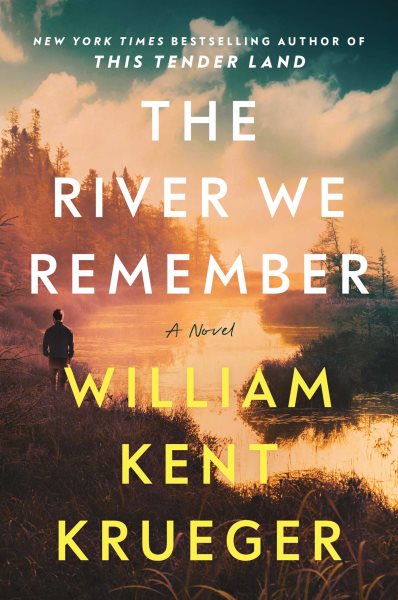
Our book club has read two books by William Kent Krueger, Lightning Strike, a prequel to his Cork O’Connor mystery series, and Ordinary GraceThe River We Remember is similar to both of these, in their small-town Minnesota setting, time period (1958-1963), and coming of age themes. From our previous two discussions, William Kent Krueger’s books have been well-liked, reliably-engaging, comfort reads. 

I chose The River We Remember because our meeting fell on Veterans Day, which is in the middle of Native American Heritage Month. Veterans’ Day is one of the few holidays that sticks to one date, November 11th, in honor of Armistice Day, 1918. I hoped this story about a Native-American veteran accused of killing a wealthy landowner would heighten the connections we build through our shared-reading experience while also honoring our veterans and Native Americans. 

The book was well written, the mystery and storylines woven together believably and fairly. I read choppily, at the end of long days, but I was able to keep up without re-reading. The themes and characters weren’t exactly stock, but they were familiar and poignant. The stoic Native American working the land. The Battle of Wounded Knee in 1890. Betrayal. John Wayne. “The Purple People Eater.” The Naked and the Dead by Norman Mailer. The Catcher in the Rye by J.D. Salinger. Tortilla Flat by John Steinbeck. For me, the most important theme of The River We Remember is the danger of keeping secrets. The most poignant is when the author reminds us, “it’s always boys who go to war.” The youth who are now our veterans.

Krueger’s descriptions pleased me and painted images of people and concepts in new ways that I appreciate. Summer as a season “that breathed promise.” The sky “was beginning to salt with stars.” A gesture that “nailed hate to his heart.” “When the world throws at you nothing but stones, maybe to survive you simply become stone yourself.” While he was serving in Vietnam, my uncle wrote a poem he titled, “Eyes of Stone.” How could this not resonate with me? I can’t help but wonder, though, what the response of twenty-somethings might be. 

Why do we read? To escape, to learn, to simply pass the time? Someone recently told me that to hope is not just to wish, but to expect. Since I was unable to attend the meeting this month, I am missing the most important part of the experience! I hope you’ll share your thoughts about the book and the meeting.

Little Fires Everywhere Discussion Journal

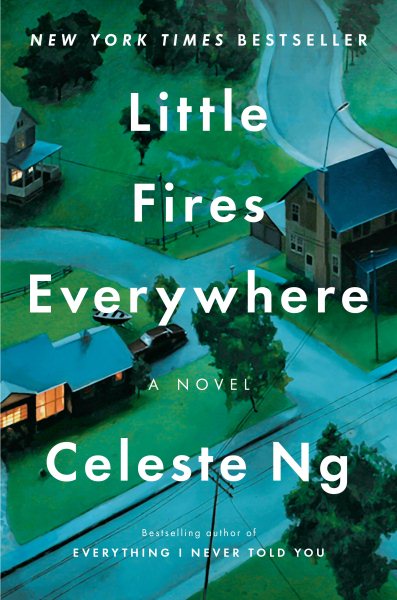
Little Fires Everywhere by Celeste Ng was easy to read but challenged us all in different ways. The novel starts provocatively, with a house burning down, a disheveled and stunned parent, and oddly placid children. Would we have kept reading without this teaser?

We got off to a slowish start. Our first responder made us chuckle because she found it easy to read and it seemed familiar – then she realized she had seen the television series! Although she remembered some of the major plot points, she had forgotten enough to stay interested. Our next responder found it twisty, like Big Little Lies by Liane Moriarty, and she wanted to read the book before watching the series. This led to a discussion of race because the actors for Mia and Pearl in the series are black. The author was vague about the race of Mia and Pearl, which leaves it open for discussion. One of us had thought Mia was Asian, which would lend more authority to the characters because the author’s parents are Chinese immigrants and she grew up in Shaker Heights.

As we continued sharing back and forth across and around the table, we were a little more critical about the story development. Easy to read but a bit slow. Forgettable. Stereotypical. We still liked it though! It was unbelievable that the friend at the abortion clinic would so adamantly refuse to give in to Mrs. Richardson’s demands and then would leave her alone in the room anyway. One of us commented about how common it is in police dramas for files to be left available for people to discover. Pearl was a teenager looking to fit in, would she have stood up to Lexie about using her name? Why didn’t the McCullough family have an alarm. How did Bebe afford the airfare? Don’t American courts always side with the birth mother? Wouldn’t social services try to find the mother who abandoned a baby before adopting it out?

One of us commented on how few men were in this book. A new member said she considered the main theme to be the journey of motherhood, about everyone trying their best. Another member felt there were no villains, but it seemed to me that the majority of us found Mrs. Richardson filled that role. One of us had even been reminded of her while watching the series Monster because of references to serial killer Ed Gein’s mother. Some of us wanted Mrs. Richardson to see the error of her ways. We wanted comeuppance. We want a sequel. Another member said she really liked the book, maybe more than all of us – “Aren’t people just like this?”

Why did Izzy set the fires? To punish her siblings? I think we all agreed with one of us who said that Izzy was setting the fires not just to punish her siblings but to give them a clean slate. As Mia told Izzy, “. . . after the burning the soil is richer, and new things can grow.” (pg. 295) Did Izzy ever find Mia?

Most of us seemed fascinated by Mia’s art. She could have made a lot of money. She had the contacts and the talent. Although we didn’t discuss this much, I know that several of us would like to see Mia’s art. I would watch the series just to see how they pictured it. One of us is a tie-dye artist and remembers seeing one of his designs from a distance, displayed at First Friday downtown Las Vegas. “Wow.” I imagine it as jaw-dropping and awe-inspiring. I would like to see that, too.

I read comments by an absent member, describing each character in the book as an individual character trait. See the comments for details. This enabled me to see the book a bit more abstractly. Our new member described the writing as Hollywood-style, ready for the screen. Still another member brought up one of the most controversial topics. The book reminded him of how traumatized a friend was to find out that two of his girlfriends had abortions, that a part of him had been destroyed without his consent or say. Mrs. Richardson echoes this when she accuses Moody of impregnating Pearl. I could see opinions swirling, but it’s a touchy subject, and more than we could handle in our short time together. But that’s the power of thinking about what we read and starting the conversation. We will be more prepared, with empathy and different perspectives.

One of our members had read the novel before and still loved it. The writing, the character development, the issues. She confided after the discussion that she had been running behind and considered missing the meeting, but she really wanted to hear what we thought. Such are the connections we make, how we touch others with a comment, the way a book, even one we think we hate, makes us think rather than simply accept. What we do from there is up to us – and the possibilities are as endless as the books available to us.

Other Works Discussed
  • Transmogrification (pg. 187): “to change or alter greatly and often with grotesque or humorous effect.” Merriam Webster online dictionary for transmogrify.
  • Traditional surrogacy (Mia) vs. gestational surrogacy (egg and sperm donated with mother as contracted carrier) https://www.conceiveabilities.com/surrogates/surrogacy-terms/
Other Works Discussed
  • Modern Family (2009-2020 television series)
  • Monster (2022- television series)
  • Playing Nice (2025 television series)
  • Before We Were Yours (2017) by Lisa Wingate
  • Article: Tennessee Court Rules for Chinese Parents in Dispute (2007): http://www.nbcnews.com/id/wbna16773596
  • Previous Book Club Selections
  • Digging to America (2006) by Anne Tyler
  • Leavers (2017) by Lisa Ko
  • The Tea Girl of Hummingbird Lane (2017) by Lisa See

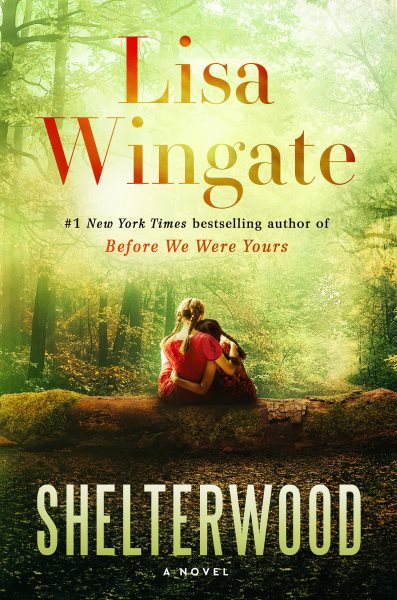
Shelterwood Discussion Journal

Perspective is everything. The room was bright and the table seemed oddly narrow and long, with little room to circumvent. I sat at one end and looked down a tunnel of friendly faces, somehow acutely aware of body positions, aware that one of us needs to read lips and that the room seemed to be unusually warm. 

 As I tried, yet failed, to get supporting visuals to show on the monitor, I could hear friendly chatter and some discussion of the previous book and its sequels. Everyone seemed relaxed and contributed, but the discussion seemed weighted to one side, overwhelmed by frustration with human greed, corruption, and history repeating itself. Our discussion of Shelterwood seemed calmly chaotic and shallow—like people treading water. 

Our first responder enjoyed the book and, perhaps because she is a retired teacher, she appreciated the resiliency of the children. I asked everyone to think of something that stood out to them, and she liked how Charlie answered his mom when she chastised him for questioning her adult conversation, “I didn’t listen, I heard. I can close up my eyes . . . but my ears don’t got lids.” She listened to the audiobook and appreciated the cast of narrators voicing different characters. So much better than our last book!

The next responder missed a 6 p.m. dinner to join us! She was frustrated at first by the altering timeline, but she got used to it. She liked the book. The corruption that was revealed in 1990 just emphasized how nothing changes. Another member was fervent in his response. He grew up in Oklahoma and was unaware of so much history. He seemed completely overwhelmed by society’s continued corruption; how we accept everything in our own timeline, even as we call out evil from the past. He particularly condemned child labor in family businesses. A new member, who joined us even though she hadn’t read the book, shared her feeling that those who try to make a difference are not heard until it is too late. We had a common refrain: Why haven’t we learned from history? We are doomed. The sad plight of orphans.

On a more positive note, someone brought up how Braden, in the 1990 timeline, was working to make a difference, even if it was to help his own family. Another one of us mentioned the parable of the Starfish Thrower.[i] Another member was impressed by the incredible knowledge of the children and how their group kept growing. She made a note of Choctow words to share with us and later in the discussion, when the exploitation and greed revealed was ready to crush her – grasped hold of the romance of the ending. This reminded me of how important such writing choices are for giving us hope and building resilience, however predictable or unrealistic.

As we continued around the table, one of us shared that the story reminded him of visits to West Plains Missouri. He had always thought he had Native American blood, but Ancestry DNA says that he is 100% European. Another member liked the book and its revelation of exploitation of children, especially Native Americans. He was reminded of harvesting pecans in his youth. A machine shook the tree to make the nuts fall and, on the ground, the pecans were the same color as the leaves! He found a connection to other books we have read that highlighted or denounced male patriarchy. We were horrified at how they erased Kate Barnard, although fortunately they didn’t or we wouldn’t know about her! 

We compared the novel to our previous selection, Crow Mary. Lisa Wingate had an impressive list of references and her main character, though oppressed, was part of her own ethnic community. One of us felt that may be why he appreciated this book so much more than Crow Mary – less cultural appropriation. What did we think of Dewey as a self-proclaimed “Robin Hood?” What about Ollie’s adoptive father? Were we surprised? Did he redeem himself?

So much of the discussion I know I have missed! At the end of the meeting, as we were comparing our own discussion of society’s ills with the ineffectual ladies’ groups in the book, I asked:  What can we do to make a difference? Our new member said: Get to know your neighbor. Little by little. One starfish at a time. And as we were gathering our things to leave, small discussions about the room, one member lamented that we hadn’t discussed shelterwood, the connections that the trees make, called out in the novel, to make the forest strong. Maybe we didn’t discuss it directly, but it was there, just not in so many words.

Till next time . . .

WORDS:

  • “Anumpulit issa” (stop talking in Choctaw)
  • “of a sudden”
  • “Pinti” (mouse in Choctaw)
  • “himitta” (young)
  • “forest bathing” (Shinrin-yoku in Japan)

OTHER WORKS DISCUSSED:

  • Cabrini (2024 Film)
  • Crow Mary (2023) by Kathleen Grissom
  • Far and Away (1992 Film)
  • Killers of the Flower Moon (2017 Book/2023 Film) by David Grann
  • The Medicine Woman of Galveston (2024) Local author Amanda Skenandore
  • One Day, Everyone Will Have Always Been Against This (2025) by Omar El Akkad
  • True Grit (1968 book/1969 Film) by Charles Portis

[i] “Well, I made a difference for that one!” https://www.thestarfishchange.org/starfish-tale

Red Queen Discussion Journal

Our discussion of Red Queen by Juan Gómez-Jurado was complex and revealing. Because the book was written in Spanish, I specifically asked our readers to pay particular attention to proverbs and pop-cultural references. How much is universal? How much of what we read is the translator? I was worried that the increasingly disturbing violence and possibly cliched superheroine and sidekick would be off-putting. I shouldn’t have been worried. Most of our readers found the book to be a page-turner, even if not their favorite – and they were ready to delve deeper into specifics of writing, story, and character development.

Our first responder had started out listening to the audiobook and found the story to be difficult to follow. She was unable to take advantage of how the author changed perspectives by chapter because the narrator was too monotone.  Despite the difficulty, she moved back to the printed page and felt the brain challenge was worth it. A new member had trouble with the audio book because the narrator was too dramatic – like listening to a Spanish telenovela.

Our third responder zoned out trying to listen to the audio! Fortunately, she also did not give up. She was engaged by the story, but her first comments were that the pacing seemed strange, with unnecessary historical details about buildings and tunnels. She felt like it was written and ready for the television series it has already inspired! She wondered if anyone else had considered that Mentor was behind the murders just to get Antonia working again? We all seemed shocked by this idea, so I’d answer, “No!”

The story was confusing enough for several of us who wondered about the motivations behind the murders: why were the criminals using the religious references, what happened to the reporter, what about the housekeeper who lost her son, must we read the other two books to find closure, was that the author’s plan all along? We definitely wanted to understand more about the characters’ motivations and were not satisfied that we were expected to read more books. Probably half of us will continue in the series – or at least watch the English-dubbed television series.

What about the characters? One of us thought that Antonia Scott was created like Captain America, but all for Spain. Another member called Antonia a freak and wanted to know more about the housekeeper. Another loved that the author included a gay character without his sexuality being a major part of the story. He felt the characterization was spot on. John had to be super good, just to be a cop. He reminded our reader of Jonathan Kellerman’s LAPD Detective, Milo Sturgis.[i] We still wondered if the gay theme wasn’t offensive, but another member suggested that although depictions in the book might be distasteful, they were realistic to a traditionally machismo society and role. Currently in law school, she also appreciated the scene in which Ortiz’s lawyer manipulated Ortiz into putting his company ahead of his daughter’s rescue. Another of us commented that she is constantly amazed at people’s ability to rationalize anything.

We noticed and talked about so many things. Even though the story took place in Spain, at least one of us mentioned their disappointment that it could have been in anywhere USA. Was that because the translator was doing too good a job making the story accessible? What else might have changed? At a member’s suggestion, I let AI answer that question – apparently other readers and reviewers elsewhere have had the same concern. One member said that she was just reading along and ready for the next book – as if she were too accepting and not critical enough. But isn’t being engaged also important? Entertainment, education, shared experiences. There’s a time and a place for everything. I hope you’ll find that time and place with us in the future.

  • WORDS:
  • Amnosia – loss of smell
  • Campero eggs – a type of chicken
  • Cocochas – “Kokotxas is a traditional Basque fish stew. The dish is made from stewed fish necks / dewlap (normally from a fatty fish like cod or hake) served with a sauce made from white wine, garlic, flour and olive oil.”[ii]
  • Koan – an unanswerable question or riddle
  • Panniers – a pair of bags that fasten around the back tire of a bicycle or motorcycle
  • Phaeton/phaeton – “a vintage automobile of the touring-car type”[iii] or specifically in the book, a VW Phaeton. But also, according to multiple sources, Son of the Sun-God in mythology.
  • Philology – the study of literary texts, specifically for linguistics

[i] “[Jonathan Kellerman’s] next idea was for the guy who would become the bestselling, longest-running gay character in all of crime fiction: Delaware’s best friend and crime-solving partner, LAPD detective Milo Sturgis, a 6-foot-3, 250-pound, gruff, brilliant detective, ostracized by his colleagues, tolerated only because he has the highest solve rate in the department. As Kellerman describes Milo’s life in that manuscript, ‘A gay cop was a person in limbo. You could never be one of the gang back at the station, no matter how well you did your job. And the homosexual community was bound to be suspicious of someone who looked, acted like and was a cop.’”

I found previous description of Jonathan Kellerman’s character in an article in Tablet Magazine titled, “When Whodunnits Become Woke.”

https://www.tabletmag.com/sections/arts-letters/articles/kellerman-milo-sturgis

[ii] There are a lot of interesting reference for this. For ease of explanation, I chose Wikipedia: https://en.wikipedia.org/wiki/Kokotxas

[iii] Dictionary.com

The Seven Husbands of Evelyn Hugo Discussion Journal

The Seven Husbands of Evelyn Hugo was published in 2017. A large trade-paperback copy crossed my desk at the library – an intriguing title that reminded me of the title by Stuart Turton, The Seven and a half deaths of Evelyn Hardcastle (2018). But they were very different books. I make this comparison because I read Turton’s book in 2019 when it was recommended to me.  I passed on Evelyn Hugo. But Taylor Jenkins Reid’s book grew in popularity, especially after she published Daisy Jones & The Six (2023), which was made into a television series that same year. The Library District created a book-club kit and anecdotal evidence from passersby indicated that it would be a popular choice.

So, what did we think? Our first responder called it salacious, soapy, like reading a really long edition of People magazine. That made us laugh. It is definitely easy to read. We bandied about names of different actresses that could have inspired Evelyn Hugo. Elizabeth Taylor was married eight times! Racquel Welch. Jean Harlow. Sopia Loren. Marilyn Monroe. And what about Celia? Audrey or Katharine Hepburn? Grace Kelly? I played a dancing clip of Rita Hayworth[i] (born Margarita Carmen Cansino[ii]), both for entertainment and to showcase the multiple faces of a Hollywood icon. 

One of us seconded the book as a fun, easy read.  He said it felt familiar. He appreciated that Evelyn had no regrets. Sometimes it was difficult to follow the transition between Evelyn’s story and the voice of the reporter in the contemporary chapters. One member didn’t like the choice of the name Hugo. Another just found Evelyn despicable because of the way she used people – but then she could also see how Evelyn’s bits of wisdom helped Monique. A new member reminded us how people often judge women more severely for behavior that would be accepted in a man. Our next responder called out that people in the book seemed to be props instead of partners.

The book was a page-turner for many of us. One member particularly loved the spectrum of sexuality showcased in an era when they had to hide it. We discussed Rock Hudson, who is mentioned in the book, and Alan Turing[iii]. Someone asked, who is at fault when people are forced to lie? Who exactly did Evelyn hurt? Her marriages were business deals, transactional. Perhaps she hurt her first husband, but his life seems to have turned out well.

Some of us read along and were surprised by the ending and connection to Monique. Others read it like a mystery, looking for clues such as Monique’s heralded right to die article. Would Harry have died if Evelyn had called an ambulance right away rather than wait to move the bodies? We ended, being reminded of Evelyn’s explanation that being heartbroken and having a failed marriage are two different things.[iv]

I am writing this a full week after our meeting. Just imagine how much fuller it was, with thoughtful asides, laughter, and connections.  ‘Till next month . . .

  • Other works discussed:
  • Big Lies in a Small Town (2020) by Diane Chamberlain.
  • Death Upon a Star (2025) by Amy Patricia Meade
  • Feud: Bette and Joan (2017) Television Series
  • My Mom Jayne (2025) documentary about Jayne Mansfield
  • “Uptown Funk” Old Movie Stars Dance Compilation (Online Video)
  •  

[i] Note the green dress!  https://www.youtube.com/watch?v=mz3CPzdCDws

[ii] https://www.britannica.com/biography/Rita-Hayworth

[iii] “Turing was elected a fellow of the Royal Society of London in March 1951, a high honour, yet his life was about to become very hard. In March 1952 he was convicted of ‘gross indecency’—that is to say, homosexuality, a crime in Britain at that time—and he was sentenced to 12 months of hormone ‘therapy.’” “Queen Elizabeth II granted Turing a royal pardon [in 2013].” https://www.britannica.com/biography/Alan-Turing/Computer-designer

[iv] “If you are heartbroken right now, then I feel for you deeply, Evelyn says. That I have the utmost respect for. That’s the sort of thing that can split a person in two. But I wasn’t heartbroken when Don left me. I simply felt like my marriage had failed. And those are very different things.”  https://www.goodreads.com/quotes/9256498-if-you-are-heartbroken-right-now-then-i-feel-for

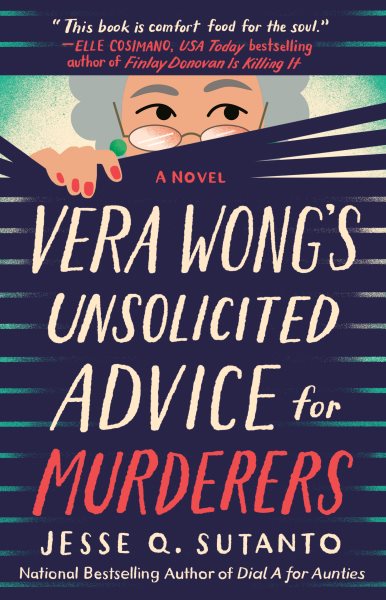
Vera Wong’s Unsolicited Advice for Murderers Discussion Journal

One of the things I love about working in a library is handling books, looking at covers, reading titles. Her Royal SpynessCheddar off DeadDeath Bee Comes HerAssault on PepperUp to No Gouda. Even without a dog or cat on the cover to catch my attention, Vera Wong’s Unsolicited Advice for Murderers by Jesse Q. Sutanto stood out. Her title, Dial A for Aunties stood out, too, but The Library District didn’t have enough copies! 

At the meeting, our first responder called the book delightful, a fun story, cleverly written. Our next mentioned what turned out to be common opinion – Vera wasn’t immediately likeable, but she grew on us. Saying “She was a bossy bitch” actually made us laugh. Another member liked how much a difference Vera made in everyone’s lives, but he found the story a bit verbose.

We marveled at all the cooking Vera managed. One of us was fascinated by how she drew so many people together in the face of calamity. He was particularly touched by how Vera won over Emma. Another member found Vera’s skill at manipulating people remarkable. We wondered at what one member called the halo effect. When I looked this up later, the halo effect[i] is considered cognitive bias or an error in reasoning – but the application is fitting because the way Vera presents herself and their biases made people respond to Vera in a way that was effective.

We weren’t completely won over, though. Several people thought Emma was too precocious for a two-year old. One member did not have sympathy for Vera and was pleased that the author focused on other characters’ viewpoints. We weren’t convinced about Vera’s powers, but that halo effect . . .

We had some pleasant side conversations. Julia’s re-found passion for photography was inspiring. One of us has taken up writing down words – inspired by another member’s example. Most of the unusual words in this book are not English. We talked about color contrasts and keeping the misspelled sign: “Vera Wang’s World Famous Teahorse.”

(Spoiler alert) Most of us were surprised by the identity of the murderer and only two of us figured it out. No one wanted any of the main characters to be guilty and unless the author brought in a ringer – who could it be? One of us asked if anyone had considered Tilly? This made us pause – he would have been an interesting choice! But would that have fit the cozy expectation? We certainly loved how surprised Tilly was, seeing his mother in a hospital bed surrounded by people he didn’t know she knew!

Was this a cozy mystery?[ii] Amateur sleuth, focusing on community, minimal violence and sex, often including a romance – think Miss Marple. One of us realized that a book he had come across fit this description exactly, adding the common element of a dog or cat. When he looked up the author, he realized there were 20 books in the series. I wish I could remember the name. Send in or bring your cozy-mystery recommendations!

In the meantime, Vera’s next mystery is out: Vera Wong’s Guide to Snooping (on A Dead Man). Also, checkout the comments for some nice responses from members who couldn’t attend the meeting.

  • WORDS:
  • Congee: rice porridge “a steaming bowl of freshly cooked congee.” Page 190
  • Astaga: Oh, my! (an interjection) wordhippo.com[iii]
  • TEAS:
  • Jin Xuan Oolong Tea. I brought these tea bags to the meeting but did not serve tea. According to Vera, tea must be brewed properly. If you’d like to try it, I still have some. I can’t vouch for the quality. This is the tea Vera served to Riki. “Ah, Jin Xuan, one of the best type of tea. Is also called ‘milk tea’ because the taste is so creamy and sweet, almost like milk.” Page 46
  • Yeo’s Crysanthemum Tea Drink. I brought this canned drink for us to try. It was lightly sweet and plain.

[i] https://www.britannica.com/science/halo-effect

[ii] https://www.pbs.org/wgbh/masterpiece/specialfeatures/the-cozy-mystery-explained/

[iii] https://www.wordhippo.com/what-is/the-meaning-of/indonesian-word-0416d4a9e0a7f893615e0ebd49eb97bea9b36bfd.html

Big Lies in a Small Town Discussion Journal

“Speaking of Pictures” is the title of the December 4th, 1939, LIFE Magazine article showcasing the prizewinning sketches that would adorn post offices around the USA as a part of a federal works project to heal not just the body, but the soul of America. Who knew? Well, all of us who read Big Lies in a Small Town now do! Although Diane Chamberlain’s story is fiction, it weaves history into a murder mystery that most of us found well-written, easy to read, and realistic. Perhaps the novel didn’t WOW us – but it gave us plenty to talk about.

Our first responder has read Diane Chamberlain’s books before – all good. This one is nice, straightforward, mostly positive, and the dual timeline didn’t bother him. Our next responder had a hard time at first but really liked it. Another member didn’t think she was going to like the novel, but she did. She was “thrilled with the ending.”

She also called out a powerful talking point as a possible sequel – how would the victim of Morgan’s car accident receive her? Most of us agreed that showing up on the woman’s doorstep was a selfish act. Morgan should have written or called first. One of us believes that most people don’t really forgive and Morgan especially had not yet even accepted herself as an alcoholic. Another member called out that although making amends is an important part of AA’s twelve-step program, it should only be done if it doesn’t do harm. He mentioned further that forgiveness is important – not so much for the person being forgiven – but as part of the victim’s healing, letting go, and moving on.

As we continued around the table, we considered plot points and perspectives. One of us recalled reading along and saying out loud: “It just took a very dark turn.” He noted that Anna’s story line was written in the first person and Morgan’s in third person, which helped keep the storyline straight. He also appreciated the treatment of racism; the hidden flower in the mural and Morgan’s relationship to the artist were “fabulous” twists. We admired Jesse for his actions to save Anna, understanding the tremendous risk he took. We wondered at Anna’s naivete. With just a little bit of work, she could have been safe; but she didn’t have experience with many males in her life. One of the discussion questions asked about the role of the prologue and many of us had forgotten it.

We liked the author’s characterizations – they seemed like people rather than stereotypes. One of us noted the detail of how the workmen in the studio were described and Morgan’s attraction to them. We disagreed about Morgan’s guilt in the car accident. She was drunk and let her boyfriend drive, even though he was also drunk. But— she didn’t leave the scene. Why would she say she had been driving? Her boyfriend was emotionally abusive. And he got away with it. She needed a better lawyer! A couple of us were disturbed that Morgan’s relationship with her parents couldn’t be repaired.

I didn’t say this at the time, but as I write, I wonder about the difference between good and great novels. Perhaps like good and great art in general. Could the author have answered our questions? Would the novel have been too long, too slow, less entertaining? Do the novels we love seem so perfect because they already fit our understanding of the world and we take things for granted that others don’t?

We also discussed the healing power of art. How Anna painted and repainted that motorcycle into her mural. Art is used to help trauma patients and coloring is actually advertised for adults. One of us mentioned coloring when stressed and another does diamond art.

We ended the meeting with a connection to Eleanor Roosevelt and our December discussion. One member shared a friend’s grandmother’s memento from an auction many years ago, in a box with a three-cent stamp: a salmon-colored gargle cup. Things, like books and paintings, are imbued with meaning because we have experiences and connections to the past, in the present, and for the future.

WORDS:

  • Above your raisin’ – putting on airs/appearing smarter than the people who raised you
  • Furriner: phonetic spelling of a word intended to mean foreigner
  • Atelier: artists’ studio

OTHER WORKS DISCUSSED:

  • The Titanic (1997) Film
  • Sacred Clowns (1993) Tony Hillerman – previous book club selection

Interesting websites for more information:

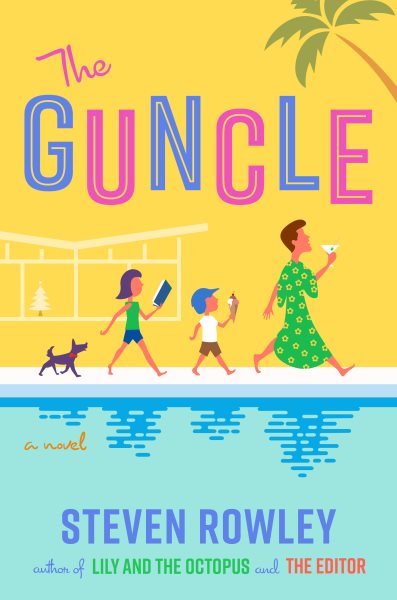
The Guncle Discussion Journal

I read The Guncle by Steven Rowley prior to selecting it for our book club. I laughed out loud so often that my husband couldn’t read his own book. Book club picks, even when uplifting or darkly humorous, are seldom funny to an entire group. This is true of The Guncle, but based on our discussion, the humor and wit paired with the sensitive approach to diversity and grief makes it a winner.

Although our discussions are always interesting and filled with insight, each member seemed to capture something different and important. I could almost see wheels turning and thoughts seemed wonder-full. 

Usually, I combine the meeting responses into concepts and formal paragraphs, but even though I have certainly missed some details and complexity, the beauty of our members thoughts as the discussion flowed seems captured best with just these notes:

  • Absolutely loved everything about the book. Laughed, cried, and found it authentic. He cried through chapters 19 and 20. His favorite zinger: “Would you like a martini?” “I’m six.” “Is that a yes?”
  • Loved that they have a birthday party for Sarah and Patrick gave them each a wish.
  • Loved the descriptions and similes.
  • Could not suspend his disbelief that the children could have been better off with a man they do not know who knows nothing about children, far away from home and familiarity. Yeah, it was funny and worked out okay, but . . .
  • Laughed so loud while reading on her porch that she worried people would think she was crazy. She liked the addition of Grant’s stutter and believed that the children taught their guncle a lot about love.
  • Although the story seemed over the top and took him a while to get into it, he found it more interesting by the second half. He felt the story showed how to deal with change. He kept wondering how the author might have set it up to make it more interesting and relevant from the start.
  • She liked the humor but primarily found it poignant. She appreciated how Patrick helped Maisie when she didn’t want to go into the pool and the Christmas in July gift of framed pictures of their mother.
  • Being from San Bernadino, he really appreciated the inclusion of the Cabazon Dinosaurs[i].
  • He once blessed the marriage of a triad (what a throuple used to be called) and they recently celebrated their 25th anniversary. What did we think of JED, the throuple?
  • She felt a little bit of angst when Patrick got together with Emory – it seemed a risky thing to do with young children in the house.
  • An adventure. Patrick had the money and that helped. A lot of sensitive stuff, but it worked.
  • She liked how Patrick put so much thought into how to help the kids with their grief.
  • Patrick told stories of their mother that they wanted/needed to hear. That is what is needed when people are grieving.
  • Patrick gave them the structure that children need.
  • The kids asked good questions.
  • We liked Patrick’s answers to questions!
  • One of us adored Emory.
  • No one wakes up at twelve and decides to be gay. It’s inborn.
  • It’s when you realize you’re crushing on all the dudes.
  • What is Guncle Rule #14? She kept track but couldn’t find that one. (I said we could certainly find it if we asked Google – but no! It’s a mystery).
  • Favorite Guncle rule:  “Live life to the fullest.”
  • Watch Auntie Mame with Rosalind Russell.
  • No, Lucille Ball!
  • She really liked the author’s writing. She could see the setting and envision the characters so clearly.
  • In a book like this, you just have to suspend disbelief and enjoy it.
  • Laughter is the best medicine.

I wish you all much laughter and love in this new year. Join the discussion. It makes a difference.

  • WORDS:
  • Pergola – an arbor formed of horizontal trelliswork supported on columns or posts, over which vines or other plants are trained.
  • Pastiche – an incongruous combination of materials, forms, motifs, etc., taken from different sources; hodgepodge.
  • Frosé – Frozen Rosé
  • OTHER WORKS DISCUSSED:
  • The Guncle Abroad (2024) Steven Rowley
  • Little Birds (1940s) Anaïs Nin – feminist erotica first published 1979
  • Auntie Mame (1958) starring Rosalind Russell
  • Mame (1974) starring Lucille Ball
  • The Brady Bunch (1969-1974) Television Show
  • Mother Knows Best – I don’t know if we were referring to a real show or if this was just a take off of Father Knows Best.

[i] “The Cabazon Dinosaurs have long been regarded as one of the most iconic roadside attractions. Featured in cult classics such as Pee Wee Herman’s Big Adventure and The Wizard, the dinosaurs have staked their place in pop culture.”    https://www.cabazondinosaurs.com

The Heaven and Earth Grocery Store Discussion Journal

James McBride’s novel, The Heaven and Earth Grocery Store, is a behemoth – not so much for length as for density of characters, scope, aspirations, language, and more. Our discussion seemed muted. Although everyone spoke, I wasn’t sure if most of us liked the book, would recommend it, or were still unsure. Perhaps we like it in parts. 

At the meeting, our first responder was put on the spot, like an accidental auction participant, but he gamely offered that he appreciated the blended cultures. Our next responder loved the book, finishing it easily a couple of weeks ago and now, like many of us, was struggling to keep the characters’ names straight. He had trouble envisioning how the town was laid out and thought the author should have included a map! He loved the colorful language and quoted from the section when Paper describes Soap hitting Fatty, “So he balled up his fist . . . It started in Mississippi, gone up through the Carolinas, stopped for coffee in Virginia, picked up steam coming outa Maryland . . . and boom! He like to part Fatty from this world.”

One of our members said that she had trouble getting into the book at first, then she came back to it and after a while she was hooked. Another liked the beginning – he was interested in Chona and Moshe, but not so much in the mystery and rescue. Another loved how the sweet potato pie was used as a map to help Nate know how to get into Pennhurst to rescue Dodo. Which reminded still another member how slaves could communicate just by how they braided someone’s hair. This meeting our connections jumped outside the book in ways I had trouble following, which I believe highlights the complexity and challenge the book was offering us.

Other excerpts from our discussion:  Moshe’s desegregation of his theater was not so much courageous as desperate. The entertainment community gave voice and space for integration sooner than other arenas. The doctor was a mis-killing. The violence was still disturbing; Isaac was not admirable, and yet none of the getting of Dodo would have happened without his money. And weren’t Isaac and Moshe the ones who started the camp for disabled that was the prompt for McBride’s writing of this novel? The book reminded one of us of Oprah Winfrey’s show several years ago when someone noted that America is NOT a melting pot, which would make us all the same, but rather a salad bowl. Books like this one provide a window past prejudice. 

In particular, I read a couple of passages from the book:

  • “The seven requirements of Jewish life: wisdom, meekness, fear of God, love of truth, love of people, possession of a good name, and dislike of money.” 
  • “Chona wasn’t one of them. She was the one among them who ruined his hate for them, and for that he resented her.”

The New York Time’s reviewer, Danez Smith, called The Heaven and Earth Grocery Store a “Murder mystery inside a great American novel.” Since we just discussed last month what makes a classic, do we agree? We aren’t sure. One of us thought that it is being compared to Mark Twain’s work, with his earthiness. Another member thinks that sometimes, like The Grapes of Wrath, we know right away when we read a great novel, but perhaps time needs to tell. Poignantly, another of us said that she had never been asked to decide if something was a great novel; that seems like something we are told or taught. How well read or educated do you need to be to have this power? Have confidence! YOU have this power every day.

We discussed The Heaven and Earth Grocery Store in the Teen Zone this month, with newly painted bright-orange walls and a large video screen to display a short video[i] showcase of James McBride that included some pictures of his grandmother and Pottstown, PA. We played some music from a Mickey Katz CD and tasted chocolate babka. We asked early on, which characters in the novel are based on real people, and I have since found a great article[ii] that includes information about Pennhurst and what McBride refers to as “the demise of Pottstown’s industrial heritage.” Follow the link below or ask me for a copy of the article if you are interested. I also have marbles to inspire your memory on the little things that make a difference every day. Reading feeds our knowledge, our imaginations and our hearts. 

  • Other works discussed:
  • The Color of Water: a black man’s tribute to his white mother (1995) by James McBride
  • The Rabbi Small Mysteries (1964-1996) by Harry Kemelman

[i] https://www.youtube.com/watch?v=O1ToA-2TsnQ

[ii] https://www.pottsmerc.com/2023/08/10/pottstowns-chicken-hill-a-central-character-in-new-james-mcbride-novel/