Bloodchild & Other Stories

Last October, our group considered whether we thought the ethnicity of the writer mattered if the writing was well done. A visitor from Whitney’s Social Justice Book Club was adamant – she wants to see herself reflected in books and subtle understandings of culture and place make a difference in making this connection. She called out Octavia Butler’s novel Kindred, published in 1979 but recently adapted as a miniseries streaming on Hulu. Kindred is a powerful story using time travel as a device to explore how someone from our modern era would cope as a slave. At the October meeting, we also discussed how authors from marginalized groups often feel pigeon-holed, published only when writing about race, struggles, and stereotypical expectations.

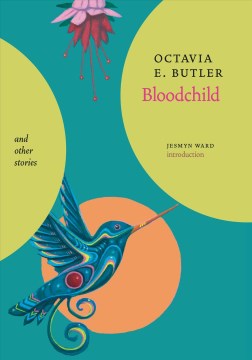
BloodchildCover

“In 1995, renowned author Octavia E. Butler became the first science-fiction writer, and one of the first Black women, to receive a MacArthur ‘Genius’ Fellowship grant.”[i]  I wanted us to read some of her science-fiction stories, but I also know that most of our members are not science-fiction fans. Octavia Butler’s short story collection, Bloodchild & Other Stories (1995) contains a variety of stories, as well as two essays on writing. The title story, “Bloodchild,” was winner of several Best Novelette awards, including the 1984 Nebula Award, the 1985 Hugo Award, the 1985 Locus Award, and the 1985 Science Fiction Chronicle Award.[ii] Since the library had to order copies for us to be able to read these stories and we did not have Large Print copies available, I asked that members read at least two:  “Bloodchild” and “The Book of Martha.”

Only eight of us came to the discussion and everyone agreed that the stories were well written and engaging, but most of us found them too dark, even horrifying. One of us, though, is now reading more of Octavia Butler’s work; and an email responder mentioned that she appreciated reading something different for a change. Our first responder explained that she considered the stories well written because they captivated her, she wasn’t bored, and the descriptions made her “see” the worlds being created; but she only found “Next of Kin” and “The Evening, the Morning, and the Night” to be even a little hopeful. She needs some hope and a happy ending. Another of us said she went home after our last meeting and read the first story – only to have nightmares! She appreciated the subtle twists in the stories and kernels of hope.

The stories were definitely thought-provoking. Dystopian. One member said, “the war happened and we lost.” Octavia Butler is famous now for being prescient[iii] and we reflected that these stories show humanity realistically, how we can and will persist. One of us called this a “tough assignment.” He reads a lot, but he never picks up science fiction.  He liked the story “Next of Kin,” even though it was about incest, just because it was a recognizable world. No one mentioned the stories “Speech Sounds” and “Crossover.”[iv]

But what about the two stories we were challenged to read? “Bloodchild” was creepy! The author mentions in her afterword that the story is not about slavery, but we were not convinced. Humans are kept on a preserve, used for breeding, fed drugs, not allowed to keep guns, and kind handlers keep away the bad for this particular family. I wish I had asked, “What if the author had been White?” Would we have questioned if this was slavery or accepted it as our fate for landing on a strange planet? Why wasn’t it enough that she wrote it to deal with her fear of botflies and her desire to write a male pregnancy story? 

“The Book of Martha” was more relatable. I asked if we considered it sacrilegious. One of us had to get past this version of God that is not her belief; but she could do it, just as she can suspend her disbelief in other stories. We discussed the challenge to making a change for the better that would outweigh negative consequences. And the benefits of negative consequences. We appreciated that God made suggestions but did not tell Martha what to do, which is addressing free will.  Another member reads alternative histories and finds it fascinating to think that with just small changes, we would be living a different life. One of us mentioned the Doomsday Clock[v]  and how scary things are out there.

I was reading science fiction and fantasy in the 1970s and 1980s. I loved Isaac Asimov, Anne McCaffrey, Ray Bradbury. I never heard of Octavia Butler until I began working at the library. I have now read this collection three times and I still marvel at the stories’ complex simplicity! I definitely recommend Kindred and hope to read more of Butler’s novels. So many books, so little time, is real.

We had some trouble keeping the stories straight and discussed how short stories seem to be more easily forgotten than novels. I asked if anyone could remember any of the stories from December 2023’s collection, The Angel of Rome, and only one of us grasped some details of the title story. So why do we read and discuss, especially things that are outside of our interests and inclinations? We actually didn’t discuss this. We mentioned power, fear of consequences, dinosaurs, cats, male pregnancy, kosher pickles, making the world a better place. Even when I re-read these journals, I often don’t remember the books. I remember how I feel – about books, stories, and the people with whom I share this connection. Until next time . . .


Word discussed:  PERSIST

  • OTHER WORKS DISCUSSED:
  • The Good Place (2016) Television sitcom starring Ted Danson
  • Alien (1979) Film

[i] National Women’s Hall of Fame. (n.d.). Octavia E. Butler. Women of the Hall. https://www.womenofthehall.org/inductee/octavia-e-butler-2/.  Web accessed: 2-13-2025.

[ii] https://en.wikipedia.org/wiki/Bloodchild_and_Other_Stories

[iii] Just google her name – the interest in her and her humility and persistence are astounding. Here is one: “The Power and Prescience of Octavia Butler’s Parable of the Sower,” NPR recording posted October 8, 2024. https://www.npr.org/2024/10/08/1210938285/1a-10-08-2024

[iv] “Speech Sounds” won a Hugo for Best Short Story in 1984 (https://en.wikipedia.org/wiki/Bloodchild_and_Other_Stories) and “Crossover” was her first publication in 1971 (https://en.wikipedia.org/wiki/Octavia_E._Butler).

[v] “The Doomsday Clock is a design that warns the public about how close we are to destroying our world with dangerous technologies of our own making. It is a metaphor, a reminder of the perils we must address if we are to survive on the planet.” https://thebulletin.org/doomsday-clock/faq/

The Guncle Discussion Journal

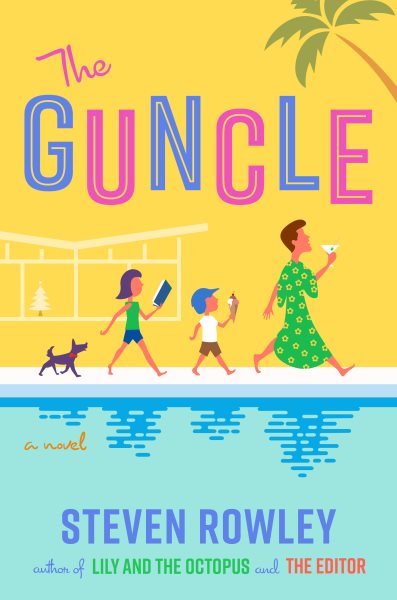
I read The Guncle by Steven Rowley prior to selecting it for our book club. I laughed out loud so often that my husband couldn’t read his own book. Book club picks, even when uplifting or darkly humorous, are seldom funny to an entire group. This is true of The Guncle, but based on our discussion, the humor and wit paired with the sensitive approach to diversity and grief makes it a winner.

Although our discussions are always interesting and filled with insight, each member seemed to capture something different and important. I could almost see wheels turning and thoughts seemed wonder-full. 

Usually, I combine the meeting responses into concepts and formal paragraphs, but even though I have certainly missed some details and complexity, the beauty of our members thoughts as the discussion flowed seems captured best with just these notes:

  • Absolutely loved everything about the book. Laughed, cried, and found it authentic. He cried through chapters 19 and 20. His favorite zinger: “Would you like a martini?” “I’m six.” “Is that a yes?”
  • Loved that they have a birthday party for Sarah and Patrick gave them each a wish.
  • Loved the descriptions and similes.
  • Could not suspend his disbelief that the children could have been better off with a man they do not know who knows nothing about children, far away from home and familiarity. Yeah, it was funny and worked out okay, but . . .
  • Laughed so loud while reading on her porch that she worried people would think she was crazy. She liked the addition of Grant’s stutter and believed that the children taught their guncle a lot about love.
  • Although the story seemed over the top and took him a while to get into it, he found it more interesting by the second half. He felt the story showed how to deal with change. He kept wondering how the author might have set it up to make it more interesting and relevant from the start.
  • She liked the humor but primarily found it poignant. She appreciated how Patrick helped Maisie when she didn’t want to go into the pool and the Christmas in July gift of framed pictures of their mother.
  • Being from San Bernadino, he really appreciated the inclusion of the Cabazon Dinosaurs[i].
  • He once blessed the marriage of a triad (what a throuple used to be called) and they recently celebrated their 25th anniversary. What did we think of JED, the throuple?
  • She felt a little bit of angst when Patrick got together with Emory – it seemed a risky thing to do with young children in the house.
  • An adventure. Patrick had the money and that helped. A lot of sensitive stuff, but it worked.
  • She liked how Patrick put so much thought into how to help the kids with their grief.
  • Patrick told stories of their mother that they wanted/needed to hear. That is what is needed when people are grieving.
  • Patrick gave them the structure that children need.
  • The kids asked good questions.
  • We liked Patrick’s answers to questions!
  • One of us adored Emory.
  • No one wakes up at twelve and decides to be gay. It’s inborn.
  • It’s when you realize you’re crushing on all the dudes.
  • What is Guncle Rule #14? She kept track but couldn’t find that one. (I said we could certainly find it if we asked Google – but no! It’s a mystery).
  • Favorite Guncle rule:  “Live life to the fullest.”
  • Watch Auntie Mame with Rosalind Russell.
  • No, Lucille Ball!
  • She really liked the author’s writing. She could see the setting and envision the characters so clearly.
  • In a book like this, you just have to suspend disbelief and enjoy it.
  • Laughter is the best medicine.

I wish you all much laughter and love in this new year. Join the discussion. It makes a difference.

  • WORDS:
  • Pergola – an arbor formed of horizontal trelliswork supported on columns or posts, over which vines or other plants are trained.
  • Pastiche – an incongruous combination of materials, forms, motifs, etc., taken from different sources; hodgepodge.
  • Frosé – Frozen Rosé
  • OTHER WORKS DISCUSSED:
  • The Guncle Abroad (2024) Steven Rowley
  • Little Birds (1940s) Anaïs Nin – feminist erotica first published 1979
  • Auntie Mame (1958) starring Rosalind Russell
  • Mame (1974) starring Lucille Ball
  • The Brady Bunch (1969-1974) Television Show
  • Mother Knows Best – I don’t know if we were referring to a real show or if this was just a take off of Father Knows Best.

[i] “The Cabazon Dinosaurs have long been regarded as one of the most iconic roadside attractions. Featured in cult classics such as Pee Wee Herman’s Big Adventure and The Wizard, the dinosaurs have staked their place in pop culture.”    https://www.cabazondinosaurs.com

The Heaven and Earth Grocery Store Discussion Journal

James McBride’s novel, The Heaven and Earth Grocery Store, is a behemoth – not so much for length as for density of characters, scope, aspirations, language, and more. Our discussion seemed muted. Although everyone spoke, I wasn’t sure if most of us liked the book, would recommend it, or were still unsure. Perhaps we like it in parts. 

At the meeting, our first responder was put on the spot, like an accidental auction participant, but he gamely offered that he appreciated the blended cultures. Our next responder loved the book, finishing it easily a couple of weeks ago and now, like many of us, was struggling to keep the characters’ names straight. He had trouble envisioning how the town was laid out and thought the author should have included a map! He loved the colorful language and quoted from the section when Paper describes Soap hitting Fatty, “So he balled up his fist . . . It started in Mississippi, gone up through the Carolinas, stopped for coffee in Virginia, picked up steam coming outa Maryland . . . and boom! He like to part Fatty from this world.”

One of our members said that she had trouble getting into the book at first, then she came back to it and after a while she was hooked. Another liked the beginning – he was interested in Chona and Moshe, but not so much in the mystery and rescue. Another loved how the sweet potato pie was used as a map to help Nate know how to get into Pennhurst to rescue Dodo. Which reminded still another member how slaves could communicate just by how they braided someone’s hair. This meeting our connections jumped outside the book in ways I had trouble following, which I believe highlights the complexity and challenge the book was offering us.

Other excerpts from our discussion:  Moshe’s desegregation of his theater was not so much courageous as desperate. The entertainment community gave voice and space for integration sooner than other arenas. The doctor was a mis-killing. The violence was still disturbing; Isaac was not admirable, and yet none of the getting of Dodo would have happened without his money. And weren’t Isaac and Moshe the ones who started the camp for disabled that was the prompt for McBride’s writing of this novel? The book reminded one of us of Oprah Winfrey’s show several years ago when someone noted that America is NOT a melting pot, which would make us all the same, but rather a salad bowl. Books like this one provide a window past prejudice. 

In particular, I read a couple of passages from the book:

  • “The seven requirements of Jewish life: wisdom, meekness, fear of God, love of truth, love of people, possession of a good name, and dislike of money.” 
  • “Chona wasn’t one of them. She was the one among them who ruined his hate for them, and for that he resented her.”

The New York Time’s reviewer, Danez Smith, called The Heaven and Earth Grocery Store a “Murder mystery inside a great American novel.” Since we just discussed last month what makes a classic, do we agree? We aren’t sure. One of us thought that it is being compared to Mark Twain’s work, with his earthiness. Another member thinks that sometimes, like The Grapes of Wrath, we know right away when we read a great novel, but perhaps time needs to tell. Poignantly, another of us said that she had never been asked to decide if something was a great novel; that seems like something we are told or taught. How well read or educated do you need to be to have this power? Have confidence! YOU have this power every day.

We discussed The Heaven and Earth Grocery Store in the Teen Zone this month, with newly painted bright-orange walls and a large video screen to display a short video[i] showcase of James McBride that included some pictures of his grandmother and Pottstown, PA. We played some music from a Mickey Katz CD and tasted chocolate babka. We asked early on, which characters in the novel are based on real people, and I have since found a great article[ii] that includes information about Pennhurst and what McBride refers to as “the demise of Pottstown’s industrial heritage.” Follow the link below or ask me for a copy of the article if you are interested. I also have marbles to inspire your memory on the little things that make a difference every day. Reading feeds our knowledge, our imaginations and our hearts. 

  • Other works discussed:
  • The Color of Water: a black man’s tribute to his white mother (1995) by James McBride
  • The Rabbi Small Mysteries (1964-1996) by Harry Kemelman

[i] https://www.youtube.com/watch?v=O1ToA-2TsnQ

[ii] https://www.pottsmerc.com/2023/08/10/pottstowns-chicken-hill-a-central-character-in-new-james-mcbride-novel/