The Absolutely True Diary of a Part-time Indian Discussion Journal

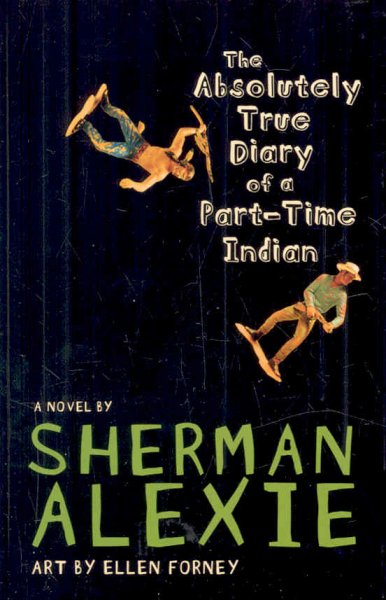
We started the discussion about Sherman Alexie’s The Absolutely True Diary of a Part-AbsolutelyTrueDiaryBookCoverTime Indian by listening to a few passages from the audiobook, read by the author. One member had recommended the sing-song, story-telling rendition, which is particularly effective in bringing the narration to life. I then mentioned the book as a winner of the 2007 National Book Award for Young Adult fiction, which prompted the questions: What makes a novel young-adult versus adult? Illustrations? Style? Audience? Economics? Geography (mentioned by a member after the meeting)?
When I finally got around to asking if anyone wanted to share first impressions, the room was silent. This was the first time in 18 months that no one spoke up! Slowly, we began discussing the young-adult focus, friendship, poverty, and personal experiences. One member wondered how many of us had ever thought of Indian reservations as the Rez before. Human greed, current events, books and movies — as usual, I found new and interesting perspectives throughout. Clearly most, probably all, members enjoyed the book — but the discussion was challenging. We were just hitting our stride as it was time to go. One member brought up the author’s strong emphasis on the destructive prevalence of alcoholism. Someone mentioned the changing perceptions of names, lyrics, and slurs. Another mentioned that he has read much about Native Americans, but that he learned more about life on Indian reservations from this book than from any other.

The Absolutely True Diary of a Part-time Indian is an engaging and powerful novel – as straightforward as its title – filled with humor, tragedy, hyperbole, and truth. I would definitely categorize the book as young adult; but, like The Curious Incident of the Dog in the Nighttime, or To Kill a Mockingbird, it should be read by adults. Although I wouldn’t want to lose anything shared, I wish we could have kept discussing! But we can always do so, here, or on our own, with family and friends. The thing about a good book is that it can – and should – be passed around and brought up again and again and again.

So, if you were unable to attend the meeting or would like to add your thoughts about the book, please comment here and continue the discussion!

  • Other works mentioned:
  • Zelig (DVD) Woody Allen, 1983
  • Follow the Rabbit Proof Fence by Doris Pilkington, 1996
  • Rabbit Proof Fence (DVD) 2002
  • Curious Incident of the Dog in the Nighttime by Mark Haddon, 2003
  • To Kill a Mockingbird by Harper Lee, 1960
  • The Buddha in the Attic by Julie Otsuka, 2011
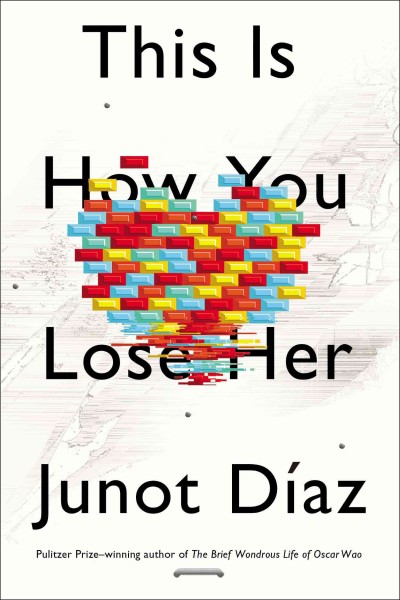
This Is How You Lose Her September Discussion Journal

ThisIsHowCoverThis month we discussed a collection of short stories by Pulitzer-prize winning author Junot Diaz.  Members’ reactions were mixed and passionate! At least three members had been unable to read much of the book, put off by the vulgarity of the language and sexual references. One member read the book twice, wondering why I would choose a book like this for a group with older members. Many asked –  where is the warmth, the humor, the glossary? Is this really what the author wanted us to learn about Dominican men, Dominican women?

Like the author, one member was brought to the U.S by his parents at the age of seven, and the familiarity of the immigrant experience and the use of Spanish-language throughout, appealed to him. The book’s setting, the serial infidelity, the machismo, are foreign to the majority of us; but is this generational, geographical, or simply experiential? One member pointed out that the change in Las Vegas in the last 30 years is startling – from the formality of dress that used to be seen attending shows to the increased nakedness of many young women going “clubbing.” Previous book club selections, like Winter’s Bone, In One Person, The Buddha in the Attic, Wench, also depicted raw, unfamiliar realities. What makes one appealing and another not?

The collection is framed by two stories of great love lost. The first story is particularly coarse and jarring at the start, and I imagine it has turned away many readers. Without a plot or mystery to solve, gentler stories, like “Otravida, Otravez,” told from the viewpoint of a woman, and “Invierno,” the main character’s retelling of his first experiences in the U.S., can be lost. I know that the author’s choice of order for the stories is important, but had I read the collection before selecting it, I would have recommended that members read those two first – not because they are the best stories, but because they could help provide an understanding to enable the reader to sympathize with the main characters.

One member asked those of us who liked the book to explain why, specifically; so I read a few quotes I had quickly written down.  The extracted statements don’t carry quite the same weight, because their power is often in the beauty of simplicity juxtaposed with the coarseness of reality – “When Magda was still my girl, when I didn’t have to be careful about almost anything.” (p.3) Or for “Nilda,” who was his brother’s girl, “She couldn’t see me or she would have known that I thought she was beautiful.” (p.38) Describing “Alma” with “arms that are so skinny they belong on an after school special.” (p.46) And the female narrator in “Otravida, Otravez,” “I never see the sick; they visit me through the stains and marks they leave on the sheets, the alphabet of the sick and dying.” (p.55) Or, “He is excited but he is also scared. This is something I know, a place I’ve been.” (p.69)

I chose This is How You Lose Her in recognition of Hispanic-American Heritage Month. Our group spoke a bit about how often we lump all Spanish speakers together, as if they are all from Mexico; about often unrecognized black Latin America. Opening our eyes to a different experience, even if only through literature, extends our understanding and tolerance. Like another member mentioned, however, I am not sure if I could recommend this book, without the discussion, even though it is one of my favorites so far.

Next month, in recognition of Native-American Heritage Month, we will be discussing a young-adult novel by Sherman Alexie, The Absolutely True Diary of a Part-Time Indian. Alert: This book has some vulgar language, references to masturbation, alcoholism, death and violence. It also has illustrations and humor. Give it a chance and join our discussion.

  • Other works mentioned:
  • *Winter’s Bone by Daniel Woodrell
  • *Wench by Dolen Perkins-Valdez
  • *Netherland by Joseph O’Neil
  • *The Buddha in the Attic by Julie Otsuka
  • *In One Person by John Irving
  • A Better Life (DVD) 2011
  • Under the Same Moon (DVD) 2008 Spanish Language Film
  • Black in Latin America (DVD) 2011

*All previous Whitney Book Bistro selections

Still Life Discussion Journal – July 2013

It’s summer, the desert, and hot. Record-breaking hot. The kind of heat that keeps the car from ever cooling down and has fueled fires for weeks now. And yet five members came out for our discussion last week!

StillLifeBookCoverWe read a lighter book in June, the first in Louise Penny’s popular Inspector Gamache series, Still Life.  Published in 2005, the book received starred reviews from Publishers’ Weekly and Booklist, won several mystery awards, and has been adapted into a television movie still to be released this year (Canadian). Nearly a year ago, the Las Vegas Review Journal’s Jane Ann Morrison even wrote about her trip to Canada and interview with Louise Penny.

The discussion was straightforward. We laughed a lot. No one at the meeting seemed interested in reading more in the series, but we were all intrigued by the description of Jane’s art and gave credit to the author for Ruth Zardo’s poetry. One member considered the book too preachy and another didn’t find the mystery and solution believable. I found the writing awkward and wonder if this is a language difference. At the end of the meeting, we listened to an on-line French pronunciation guide provided by the author on her website. We all agreed that we would love to go to Canada! And several members shared their experiences.      

Still Life is a first novel and the author had the daunting task of setting up a cozy town, Three Pines, as well as characters who could grow over more mysteries. Part of the appeal of a cozy mystery is attachment to the setting and characters. Sometimes, I worry about the need to have something significant to discuss in a book or movie. But our meetings remind me that what’s significant is the shared experience: the recommendation, the condemnation, perhaps the horror, and definitely the laughter.

  • Other works mentioned:
  • W. H. Auden
  • Agatha Christie
  • Lord Peter Wimsey series by Dorothy L. Sayers

The Buddha in the Attic May 2013 Discussion Journal

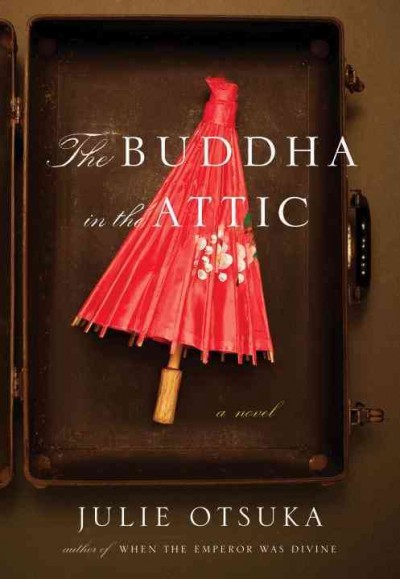
BuddhaInTheAtticBookCoverAs I read The Buddha in the Attic, by Julie Otsuka, I was awed by the first person plural narrative voice. I thought about how, when I write these notes on our meetings, I often use the collective We to share our experience. Even though individuals make the statements, the group absorbs them, refutes them, nods, smiles, scowls, laughs, even remembers. It is really very powerful, which is why I am drawn to record the meetings. For future members. For the Us.  But to continue that voice for 138 pages . . .

Most of us agreed that the book was repetitious. Some of us skimmed as we moved along in a chapter. One of us didn’t feel as connected to the characters as individuals and was not as moved by it as she might have been if it had shared the detail of an individual experience. Another felt as if he were reading a non-fiction book. Which of course can be dangerous if the book is not well researched and accurate.  Is that my statement or the group’s? It’s tricky!

We discussed the book in snippets, much like it’s written. We looked up the reference to the laughing Buddha, hidden in the attic when the Japanese leave for the internment camps, hidden away like they were during the war. We read the discussion questions and realized that we didn’t remember specific enough details to answer many of them. “Women are weak but mothers are strong.” Some of the Japanese women were mothers before they came to America. Are the Americans the most savage tribe?  One member pointed out that the buying up of the Japanese-Americans’ goods was reminiscent of the Jewish holocaust. And the “I am Chinese” buttons similar to the Jewish armband. Is this human? American? Considering Muslims and our fears today, have we learned anything from these experiences?

One member said that she hadn’t liked the collective We voice at first, but when she got to the end, she realized how powerful it was that the We disappeared and was eventually forgotten by the We left behind. Which of course brings up stories from those of us left behind. Some of us admitted knowing nothing about the internment until hearing about it in school. Many had known only of the fear — fear of war, fear of the Japanese.  One of us had worked for a Japanese woman whose property had been held for her by an “Irish” friend. Another member remembered Snow Falling on Cedars, by David Guterson, in which a son refused to honor his father’s promise to a Japanese family.

The Buddha in the Attic seemed sometimes like a long poem, with anaphora and alliteration a choice not just repetition. The We is more common in poems. Some of us found the beauty and the story enough, as if the details of experience were carried by the feelings evoked, with some individual facts and images impressed on our consciousness. Others still would have liked more detail, which is also important, if it keeps us searching for answers and ever learning.

At the end of the meeting, we discussed whether authors really intend all we find and discuss in a book.  Who writes these discussion questions? How important are they? I believe that our discussions are exercises for the brain, and sometimes, when I am searching really hard for an answer, I am convinced that I can feel my brain hurt with the strain, just as if I am exercising any other muscle. Many of the members agreed. Though not every one.

Other Works discussed:

  • “A Rose for Emily” by William Faulkner (famous for its first person plural narrative)
  • Anthem by Ayn Rand (first person plural narrative representing collectivism)
  • Snow Falling on Cedars by David Guterson
  • Tallgrass by Sandra Dallas (our November 2012 selection)
  • “1917” by Mary Swan (acknowledged by Julie Otsuka as inspiring her first chapter — the story is written in a very similar style)

Beautiful Ruins April 2013 Discussion Journal

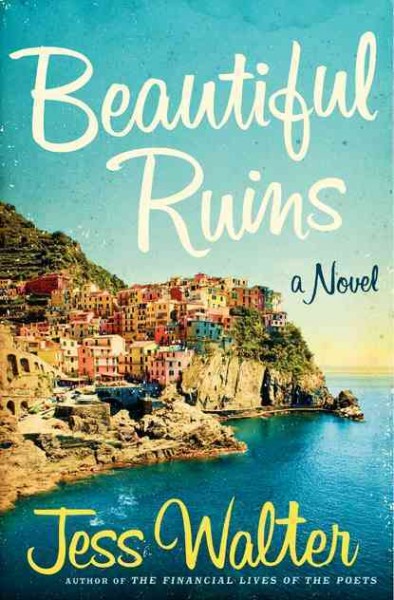
BeautifulRuinsBookCoverAt the start of each meeting, I usually ask if people want to share their responses to the book — did they like it, love it, hate it, or any number of possible first reactions to a book.  This can be risky, like a leap of faith, asking people to share what might turn out to be a minority view. Often, many of us can appreciate the book much more after the discussion, looking at it through others’ eyes, discovering meanings missed, and, like laughter, enthusiasm can be contagious.  But that immediate response may be the truest, because it reflects the likely impact of the book — undiscussed, perhaps cast aside in favor of another book, or cherished and passed on among family and friends. 

This month, we discussed Beautiful Ruins by Jess Walter, and the first responder said she had trouble getting into the book and wondered if anyone had been unable to finish it. Several of us did find the book to be slow to start, and the changing characters and times were frustrating at first. One patron found it repetitious and another wondered about its relevancy, especially since so much concerned the making of the movie Cleopatra in 1962. Who is the audience? Would younger readers even care?

In general, most members seemed to like the book. Characters we dislike at the beginning become more interesting by the end and the last chapter recap of what happened to all of the characters, even minor ones, was mentioned by several of us. Two members had listened to the audio version and said that the reader was excellent.

The discussion questions I had printed from litlovers.com were especially helpful this month, although I forgot to distribute them with the books, so we hadn’t all been able to think about them ahead of time. The intersection of art and life brought up several images–from Pasquale’s vision of the tennis court, the bunker art, reality shows, the movie version of Lydia’s play about Pat, and more.   Many of us remembered the furor surrounding the Elizabeth Taylor – Richard Burton love affair and one member had seen Cleopatra because of the publicity — just like in the book! Art intersecting with the book club!

We continued to jump about among the questions, discussing the theme of love that ran throughout. I hadn’t actually thought of the book as filled with humor, and the question made the group think a moment, but as we discussed it, we found bits of humor, words and images, that made us smile — the battle of insults between Pasquale and his friend, the absurdity of the reality shows. We skipped over many questions that I think would have been great to discuss.  Although meeting for only an hour keeps us on task, it can leave a great many things unsaid; but I like to think of it as jump-starting our brain.

We were left with several questions, about how much of this fiction book might really be true. (according to imdb.com, Richard Burton died in 1984 and had three children, one with Elizabeth Taylor). Could you really bake lye into a loaf of bread and would it kill you? And who, in 1962, would have nausea, miss a menstrual cycle, and believe cancer over pregnancy? Sometimes, truth is stranger than fiction, so we get back to that art intersecting life question.

Beautiful Ruins is a book that spans 50 years and has at least eight main characters and their perspectives. One member’s first reaction to the book was that the main point is that “we want what we want.” Every character and every reader comes back to that reality. In  the book, Alvis Bender tells Dee, “All we have is the story we tell. Everything we do, every decision we make, our strength, weakness, motivation, history, and character—what we believe—none of it is real; it’s all part of the story we tell. But here’s the thing: it’s our  . . . story!”  (pg 266 )  Another member highlighted Pasquale’s mother: “ ‘Sometimes,’ she said,’ what we want to do and what we must do are not the same.’ She put a hand on his shoulder. ‘Pasqo, the smaller the space between your desire and what is right, the happier you will be.’ “ (pg. 304) I certainly want life to continue intersecting art in the Whitney Book Bistro!

Other works discussed:

  • The Stranger by Albert Camus
  • Unbearable Lightness of Being by Milan Kundera (movie recommendation)
  • Beginners Goodbye by Ann Tyler (March selection)
  • Juliet Naked by Nick Hornby (June 2012 selection)
  • Age of Innocence by Edith Wharton (March Movie Club selection)

The Beginner’s Goodbye Discussion Journal

On Tuesday, the Whitney Book Bistro discussed The Beginner’s Goodbye. I had chosen BeginnersGoodbyeCoverthe book because Anne Tyler is a remarkable and well-liked writer. The book is a 2012 Booklist Editor’s Choice selection, was given a starred review in Publisher’s Weekly, and Library Journal called it “essential reading.” Every book we read has some detractors, and Beginner’s Goodbye was no exception. The Kirkus reviewer called it “an uncharacteristically slight work by a major novelist.”

Although one member didn’t like the book and another found it to be an easy read but wondered at the end why he had read it, we found plenty to discuss – almost as if we were discussing friends and neighbors. One member found the first part of the book slow and said she would not have finished if it hadn’t been a book club book. But by the end, she liked it.

I wondered at the end of last month’s journal how our expectations would inform our reading, and I definitely sensed a fondness for Anne Tyler that superseded this particular work. One member felt the author wrote a male narrator convincingly, another remarked that it was no wonder since Tyler was the older sister of three brothers!

Nothing really extraordinary happens in the book, and that is perhaps its strength. We can so easily identify with the ordinariness. Even the narrator’s visits with his deceased wife are not the spectacular hauntings of a ghost but the subtle insistence of memory. Perhaps. One member wished that there was a companion book, telling the story from the wife’s viewpoint, and most of us seemed to agree.  We even joked that we should contact Anne Tyler to make the suggestion.

The Beginner’s Goodbye is a book about loss and regret, and I was moved by the members who were willing to share their own losses with the group – parents, children, spouses. When I choose a book for the group to read, looking at award winners, popular authors, well-regarded authors, diverse topics, I often worry about wasting our time or missing something great. The Beginner’s Goodbye made me think about missed opportunities, and I’m glad the book club isn’t one of them.

Other books mentioned:

  •             A Spot of Bother by Mark Haddon (2011 book club selection)
  •             Netherland by Jospeh O’neill (Sept. 2012 book club selection)
  •             The Dovekeepers by Alice Hoffman
  •             Author Wally Lamb
  •             Destiny of the Republic by Candice Millard
  •             Orphan Master’s Son by Adam Johnson
  •             Language of Flowers by Vanessa Diffenbaugh

Miracle at St. Anna Discussion Journal

MiracleAtStAnnaCoverThis past Tuesday, the Whitney Book Bistro discussed Miracle at St. Anna by James McBride. The discussion brought forth stories from our members—stories about segregation and race, about war, politics, and remembrance.  The immediate reaction from the group was that the story was just too sad. And many found it confusing, difficult to keep the characters straight and filled with an odd depiction of miracles/spiritualism. Yet the discussion was full and varied; and we only referred to one question from the discussion prompts.

Everyone seemed to find Miracle at St. Anna educational and worthwhile, but not all of us would have chosen to read it. I chose the book because, although I don’t generally read war novels, or violent crime novels, I had been impressed by McBride’s bestselling memoir, The Color of Water.  I was equally impressed by his first novel, Miracle at St. Anna. I found it beautiful and uplifting—from the simplicity of Train, who thinks rubbing a statue head can make him invisible, to the decency of a German soldier amidst inhuman cruelty, through the continuing miracle of life and love through the ages. Of course, in between is some ugly fighting, deception, and politics.

Our views of the things we read are so often tempered by our moods and experiences. We may love a book on a first read and despise it on a second! One of the great things about discussing and sharing books is that it can bring new understanding to the books and in many ways, to the world around us.

At the meeting, one member remarked that perhaps we should discuss the books before we read them. Discussion makes a difference.