Unknown's avatar

About Kristine

I am the current moderator of the Whitney Library Book Club

Where’d You Go Bernadette Discussion Journal

Our discussion of Where’d You Go Bernadette was shorter than usual. Several people had been initially turned off by the epistolary format, but many had been hooked by the laugh-out-loud scene descriptions. Without looking at the discussion questions, we naturally covered many of them. It seemed for most to be an enjoyable read with some sharp WheredYouGoBernadetteCoverinsights into character and a fascinating description of Bernadette’s art – the Twenty Mile House.

But what was the point? I was most taken by that question. A couple of members drew a comparison with Carl Hiaasen. But is this book satire? Caricature? Realism? Bernadette was over the top in general, but we all agreed that she had been severely depressed since her loss of the Twenty Mile House, untreated, and self-absorbed. We agreed that she had a close relationship with Bee, but we were divided on her relationship with Elgin. Was it salvageable? How much of everything that happened is simply a plot device?

We discussed the different characters and agreed that the story was being told by Bee because she was the most likeable and steady. We laughed at various scenes and looked for parallels in other books. We all liked the virtual assistant – even if it was a member of the Russian Mafia! And to my surprise, no one seemed interested in Antarctica!

A pleasant read and a pleasant discussion! Our next book will be Ocean at the End of the Lane by Neil Gaiman. I read aloud an excerpt from a lecture he gave in 2013 about the importance of libraries and the value of Science Fiction in opening doors to possibilities. His story may be different than those we’ve read before. We’ll meet next month and know.

  • Other works discussed:
  • Nature Girl by Carl Hiaasen
  • Quiet: the power of introverts in a world that can’t stop talking by Susan Cain
  • The Rosie Project by Graeme Simsion

Ordinary Grace Discussion Journal

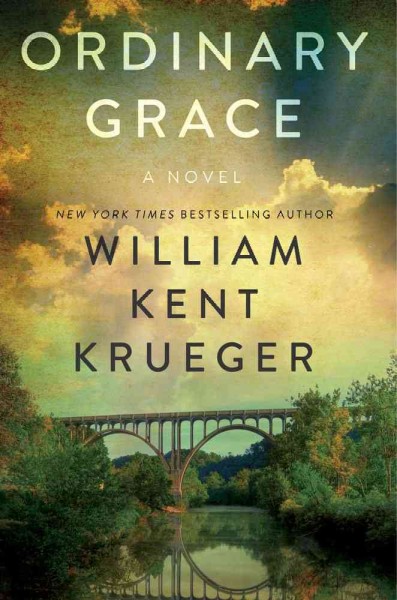
With all the construction going on in our library this month, meeting in our usual location seemed like a gift! Although the discussion doesn’t officially start until 6:30pm, many of us arrived early to get settled in, look at the discussion questions, and visit. The room was bright and warm, soiled from years of use, too few tables for our large group, yet the friendly faces and lively chatter were refreshing.OrdinaryGraceCover

Everyone seemed to like the book. Because of the religious references and easy mystery, I had anticipated some possibly serious dislike, but members were impressed by the writing style, the nostalgia, the quintessentially American story. Several of us remarked on the food descriptions. Instead of expecting a novel of suspense, we accepted, as one member described, “a novel of characters.” One member had been so engaged by the writing that she never snuck a peek at the end (as she admitted often doing!).

Several members were particularly moved by the father’s sermon after the loss of his daughter. We discussed the title and the concept of grace. One member wished she had thought of the term “ordinary grace” when a family member would use gatherings as an audience during holiday dinners. Another reminded us of the author’s use of a quote from the Greek playwright Aeschylus, “the awful grace of God.” Still another had been inspired to lookup and find a multitude of meanings for the word grace and ordinary grace.

The mother, Ruth, was well liked by our group. She was not a typical minister’s wife, although her musical talent fit perfectly for the position. Nathan was so calm and caring, forgiving, and never seemed to raise his voice, even when justifiably angry. Emil Brands gave us the most lively part of the discussion. Was he “blind: to others, self-centered, recluse, or outcast? Was Ariel an angel? A typical infatuated teen?

As we discussed possible unanswered questions, everyone wanted to know what had happened to Nathan in the War. We wanted a better understanding of the relationship between Nathan and Gus. The wrapup at the end seemed too easy for some of us.

One member was incredibly disturbed by the immorality of listening in on private confessions and the devastating consequences. Small-town morality, homosexuality, and more than I can even remember filled out our discussion. As I watch a group of unrelated people, drawn together by the community of books – shared experiences that may never have been but that will always be better for our discussion – I can’t help but feel that all is as it should be.

  • Other works discussed:
  • The Body (1982 Short Story) by Stephen King
  • Stand by Me (1986 Film adaptation of The Body)
  • Dandelion Wine (1957) by Ray Bradbury
  • She’s Come Undone (1992) by Wally Lamb
  • To Kill a Mockingbird (1960) by Harper Lee
  • Previous Whitney Book Bistro Selections:
  • Absolutely True Diary of A Part-Time Indian (2007) by Sherman Alexie
  • The Curious Incident of the Dog in the Nighttime (2003) by Mark Haddon
  • Nature Girl (2006) by Carl Hiaasen
  • The Round House (2012) by Louise Erdrich
  • Sacred Clowns (1993) by Tony Hillerman
  • Tallgrass (2007) by Sandra Dallas

Quiet: the power of introverts Discussion Journal

Quiet. Sometimes I wonder what that is. Birds and bugs in a forest could drown out the sound of a falling tree, even if someone were there to hear it! Is that a plane overhead? Or a motorcycle? A leaky faucet? Or just the roar of silence in my ears? And in our library, cell phones buzz and spout music and alarms, often without anyone attempting to silence them. Friends and tutors chatter. We answer phones and give directions. Babies even laugh more annoyingly than they cry. And we discuss books and movies QuietBookCoverwith a passion that sometimes needs to be shushed as much as anything else.

Perhaps that’s why Susan Cain’s book, Quiet: the power of introverts in a world that can’t stop talking, seemed like a good fit for our book club. Well, that and the number of best books of 2012 recommendations I read.

I decided to break our discussion group into three smaller groups, with six people each, because Susan Cain mentions that smaller groups are more productive than larger ones. This makes reporting on (and moderating) the discussion quite challenging! In addition, the novelty of the arrangement was off-putting to some members and this book is a new kind of non-fiction for us – informative and anecdotal rather than strictly historical or biographical.

Several members had not finished the book or had only read at it. One member hadn’t read it because it felt like a textbook. For another, it just didn’t hold her interest. Yet another had read it months ago and was enjoying it even more listening to it on audio. One felt that she understood her sound-sensitive grandson better. One was moved to form an action plan to present to her employer to improve working conditions in her office. Still another could not follow the logic. And yet another was so taken with the book that it seemed to rekindle her spirit.

At the end, I asked what had stood out. In review, each group mentioned Susan Cain’s discussion of a culture of character versus personality and how modern politics are plagued by extroverts whose personality reigns. In particular, one member passionately mentioned the rush to war for non-existent weapons of mass destruction—an example of extroverts rushing in where introverts would have waited. Many of us seemed to like the book and find it relevant, although some of us also wanted more solutions!

But that’s just an opinion, based on my observation. I obviously didn’t hear it all! Reading non-fiction reminds me how important accuracy in reporting can be. Susan Cain’s book seemed well researched. But it is not that difficult to find research to fit an opinion. One member mentioned that although the example of Steve Wozniak was inspiring as related, it did not tell the whole story.

My discussion journals never tell the whole story either. We bring with us not only our own life histories and unique perspectives to the discussion at hand, but also our understanding of our discussion group members after years and many meetings. A video couldn’t capture it all. But I hope these journals remind us why we met – and choose to continue . . .

  • Other works mentioned:
  • Destiny of the Republic by Candice Millard
  • The Immortal Life of Henrietta Lacks by Rebecca Skloot
  • In the Garden of Beasts by Erik Larson
  • Mindset: the new psychology of success by Carol Dweck
  • Outliers: the story of success by Malcolm Gladwell
  • Seven Habits of Highly Effective People by Stephen Covey
  • Twenty Miles From a Match by Sarah Olds

The Rosie Project Discussion Journal

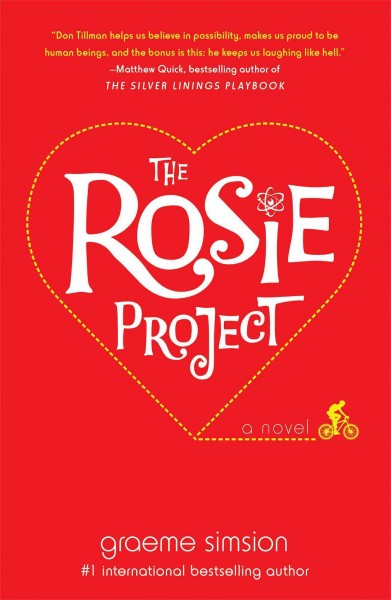
I’m pretty sure everyone liked The Rosie Project by Graeme Simsion. Some of us really liked the book. I suppose there is a spectrum of likeability. I hear and remember RosieProjectCovercomments. With fifteen smiling and reflective faces around the table, I make a judgment call and record it here. We didn’t take a survey.

Perhaps our discussion seemed quieter because we were on the stage. Sounds were muted and the air had a foggy quality—diffused light from high ceilings and shadows behind thick dark curtains. When I mentioned we were meeting in the theater, one member had worried that our group had gotten so big we needed an auditorium!

When I asked for someone to offer the first response, quiet chatter reigned. Finally, one member drew our attention and our discussion began. She found the book to be utterly believable and lifelike. Another had never before heard of Asperger Syndrome. Yet another described his experience with an obviously much-loved brother.

We spent much of the hour discussing spectrum disorders. Not just autism, though mainly so. The autistic stage is universal. Autism was not identified until 1944. Do all people with Aspergers have a good memory? Most also have SID (Sensory Input Disorder). Early training and socialization make a difference. Why are so many more boys diagnosed with Autism? Some previously diagnosed schizophrenics are now found to have autism. And in the future it may be schizophrenia again. How do we really know? Is psychology a science?

Bill Gates. Vladamir Putin. Steve Jobs. Our family members, friends, maybe that obnoxious man or woman we try to avoid. And my favorite – Mr. Darcy.

Loveable to some of us, obnoxious to others, Don Tillman described communication issues that made us laugh out loud. One member said the book had been written as a play and polished over eight years. Even though the main characters were from Australia, it seemed very American. Those who listened to the audio book said that the reader sounded American.

We discussed a lot of other books and movies, although none of the same ones Don Tillman mentions. Several of us mentioned The Big Bang Theory television show and the ever-more culturally recognizable Sheldon. Now our group has Don Tillman. And we are part of an even larger group. As of today, Amazon had 6,873 reviews of The Rosie Project—4072 five-stars ratings and 2034 four-star ratings.

Working in a library, I’ve had people ask about the value of fiction. Is it just entertainment, escape, relaxation? Aren’t we any different now that we have read this book, alone and as a group? Do we view the world any differently? Are we less biased or more accepting? The Rosie project was an engaging, easy to read story. Although it’s main character is Gregory Peck-handsome and perhaps not truly as awkward and obnoxious as many people we encounter, the issues raised are pertinent and brought us together. We didn’t always agree, but we listened and shared, exercised our brains and our hearts.

  • Other works discussed:
  •  Big Bang Theory (television show)
  • Curious Incident of the Dog in the Nighttime by Mark Haddon
  • Defending Jacob by William Landay
  • House Rules by Jodi Piccoult
  • Pride and Prejudice by Jane Austen
  • Some very interesting read-a-likes — just ask at your local library!

Frankenstein Discussion Journal

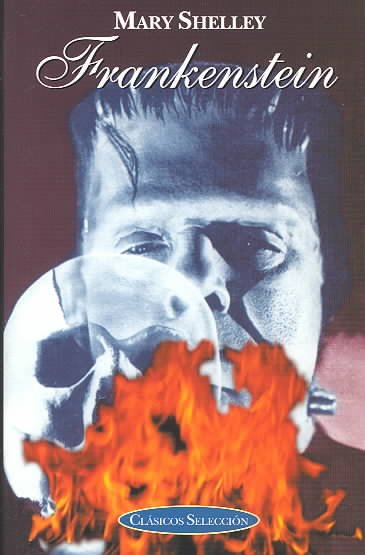
Frankenstein is what I consider a shared cultural icon. If we saw a squared head with boltsFrankensteinSpanish on the side, many of us, around the world, would think of Frankenstein. And many of us might even know pertinent details, having seen only snippets of the story in print, film, or costume. But would we know Frankenstein? And does it even matter?

Frankenstein by Mary Wollstonecraft Shelley was written and published nearly 200 years ago. Considered by many to be the first science fiction novel, the book is short, readable, often requested by students for reading assignments – and yet only five people out of the 20 at our discussion had read the story before it was selected for our book club. And were we surprised! Most of us agreed that the story was not at all what we had expected. Sad–yes–but so much more than horror, murder, and mayhem!

One member had read the annotated version, which included pictures of some of the handwritten pages and detailed information about the historical setting, style, and more. FrankensteinBookCoverSince the original story was published anonymously with an introduction by Shelley’s husband, many people had assumed the poet was the author – and he did contribute to the prose. Handwriting differences indicate his poetic influence on word choices and meanings. This member highly recommended the annotated version and was able to give us authoritative information to some of our questions.

We all agreed that Frankenstein is philosophical, filled with literary references, science, politics and religion. I had been particularly captivated by Shelley’s references to the discovery of the Americas and by such beautiful language as “inspirited by the wind of promise.” Another member wondered about Shelley’s knowledge of Judaism. Discussions of God figure prominently in the work. We wondered about the ornate language and the use of the epistolary form. Was Mary Shelley writing about her own search for parental validation through Frankenstein’s monster? Who has time or energy to philosophize like this any more? She was only 18 when she wrote the story, but for that time she was nearly middle-aged and had already lost a parent and one child. In addition, what was the moral, if Robert Walton only turned back because his crew insisted? Perhaps it has something to do with knowing when to cut your losses.

One of us even wondered whether Victor Frankenstein couldn’t have also been the monster – an intriguing suggestion that might solve some of the problems with the story. Victor Frankenstein wasn’t likable. He abandoned his family, not writing for months during his obsession. He made a big and dangerous monster. He fell into fits for months. He didn’t share his knowledge of the monster to help others. And he abandoned his orphaned brother. We all laughed when one member mentioned how Victor Frankenstein’s ramblings and musings (sigh!) seemed just to go on and on.

And of course, we discussed science. Several times we came back to the question of how Frankenstein could find so ugly something he created. Yet aren’t we still so blinded by possibilities that we don’t recognize the dangers until too late? Mary Shelley was kept indoors during the cold summer of 1816. No television. No video games. No internet. What a different world it might be . . .

Fortunately we do still get together and discuss philosophy and literature and life. Our discussion was full and self-sustaining. As always, not to be missed.

  • Other works discussed:
  • Dracula (1897) by Bram Stoker
  • On the Origin of Species (1859) Charles Darwin
  • “Yes, Frankenstein really was written by Mary Shelley. It’s obvious – because the book is so bad.” article by Germaine Greer (The Guardian. April 12, 2007)

Twenty Miles From A Match Discussion Journal

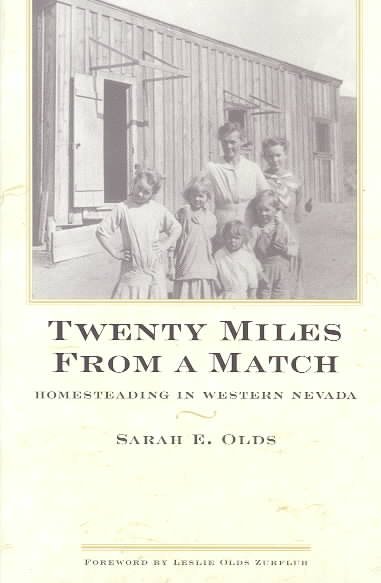
Creating shared experiences through books is my primary objective for our book club. Reading can be pleasurable, educational, and more! But in a large community, especially TwentyMilesFromAMatchone populated from around the world, it can bring us all a little bit closer, give us a reason to get together, help us understand each other, make us all insiders — privy to a history and legacy that is much more than the “Sin City” outsiders see. Participating in this year’s Nevada Reads: First All State Community Group Read is exactly the kind of experience I feel privileged to share.

We had over 20 library patrons and eight staff members read Twenty Miles From a Match by Sarah E. Olds. Staff members shared (and continue to share!) their thoughts — often with a smile or laugh. One staff member was particularly taken by Sarah Olds’ “great determination.” She was impressed by how “a positive attitude goes a long way in making our lives happier and contented.” Another was more unbelieving that the tall tales were actually true!

At our meeting, we had the same mix of awe and incredulity: Pollyanna, Eyeopener, Superwoman! Several members commented that they like their “city life” and couldn’t imagine choosing to head out into the desert wilderness. This was pioneering, not just homesteading! One felt that the book was “like a window into another world.” Another loved the silence in the story. Our world today — with television and internet — is always demanding our attention. He said that the book “hit me and gave me a sense of loss.”

We discussed our own experiences.  One member grew up in rural Hawaii, laughingly sharing with us how the word macadamized seemed made for the macadamia nut shells they used to cover roads. We all seemed to be struck by the sense of community. Thirty-five miles from Reno and twenty miles from a match, Sarah Olds’ family seemed more a part of a community than we are with neighbors ten feet away. Another member had taken her children in the 1970s to rural North Dakota to escape city life — a fabulous experience but hard. Bad things can happen anywhere.

Which brought us back to the importance of that positive attitude. That horse that never died! A one room school — basically in your own house! Can you imagine dancing all night long? We thought longingly over these possibilities. I asked about the feminism in the book and many seemed to think women had it easier in the West.  Sarah Olds was accepting of the prostitutes as a business, even if she didn’t want associate with them. A few of us wondered about A.J. He seemed certainly a crotchety old man, who just kept living despite being seriously ill! But he made sure everything was in her name before he died. One member felt that songs and hymns seemed to keep Sarah’s spirits up throughout. She was the quintessential supermom. One staff member shared the quote: “Mama, you can think the queerest things are fun! My back aches, my eyes are full of dirt, and my fingers are sore. I intend to stay with this job till it’s finished, but it isn’t a bit of fun!”

We spent a lot of time discussing fiction versus nonfiction. How can we know what is true or not?! How true is any memory? Any memoir? We agreed that the story was easy to read. Sarah Olds had a great voice. She was a natural storyteller. There were no literary pretensions. We decided that she was writing oral history. We discussed the differenceI was surprised to learn than none of the members present had read Laura Ingalls Wilder’s books. I was a huge fan and even though her books are marketed as fiction, the people, places and stories are seemingly as real to me as those of Sarah Olds — if not more so because she has a museum with pictures and artifacts.

I cannot emphasize enough how important sharing our history can be. In a scrapbook, in a journal, in short written anecdotes. At one of my first book club meetings a member TwentyMilesMtgDec2014mentioned that she didn’t think her grandchildren would care about her stories. Maybe not now, but in twenty years. . . Whose stories will we be reading in another fifty years?

We never reviewed any of the book discussion guide questions. Time flies — and in my memory, it was wonderful. I still haven’t covered everything. As always, the discussion can continue here, or wherever we meet someone who shared this experience. It matters!

  • Other works discussed:
  • Works by Willa Cather
  • David Copperfield by Charles Dickens (book and dvd)
  • Death Valley Junction : the story of the Amargosa Opera House by Marta Becket.
  • Gold Camp Drifter, 1906 – 1910 by Emmet L. Arnold
  • Friendly Fallout 1953 by Ann Ronald.
  • Lazy B : growing up on a cattle ranch in the American Southwest by Sandra Day O’Connor
  • Little House books by Laura Ingalls Wilder
  • Little house in the Ozarks : the rediscovered writings by Laura Ingalls Wilder ; edited by Stephen W. Hines.
  • Martha and the Doctor : a frontier family in central Nevada by Marvin Lewis ; edited by B. Betty Lewis.
  • “Portraits of an Antique West” by William J. Shepperson. Nevada Historical Society Quarterly Fall 1980. web accessed 12-4-2014 nsla.nevadaculture.org

Nature Girl Discussion Journal

For the last ten years in the library, I have heard people mention Carl Hiaasen’s books as funny and environmental. His young adult book-to-movie, Hoot, was inspiring. Nature Girl did not come with ready book-discussion questions, and although the book covers aNatureGirlCover plethora of issues we could discuss — mental illness, sexuality, telephone sales, marriage, religion, and parenting — I found myself researching satire, parody, and humor. I was repulsed by the crudity and disturbed by the light-hearted treatment of a serious mental illness. A co-worker tried to encourage me to lighten up! Surely I had to admit that sewing a man’s chewed-off fingers onto the wrong parts of his hand is funny! And I suppose it is as absurd as suggesting we eat children to solve the Irish potato famine.

Book Bistro to the rescue! Everyone seemed to agree that the book was so absurd that I shouldn’t take anything in it too seriously. One member liked that Hiaasen’s female characters have substance. Another new member suggested that society is so used to absurdity that we require even more outrageous behavior and images to be shocked enough to respond. She was so enthusiastic and reminded us of parts that made us laugh out loud. I felt as if we were discussing a different book, and yet I recognized the story. It was cathartic, which is perhaps the point. In an interview with 60 Minutes, the author states that he likes writing fiction because he can make the bad guys have the ending they deserve, “and then light a cigarette.”

Carl Hiaasen is a journalist who writes a column for the Miami Herald. His work has also appeared in many well-known magazines. One member liked the bits of political and topical issues that pop into the story throughout and another had researched the story on the internet and drew our attention to the author’s name choices. Another member grew up in Miami and thus we discussed the area, the climate and the environment. After we watched the ten minute interview with 60 Minutes, drawing our attention to the reality in Carl Hiaasen’s absurdity, one member wondered if anyone else had noticed the similarity of Las Vegas to the maligned Miami!

Although we had mixed reactions to the book, we had a great discussion.

  • Other works discussed:
  • There’s Something About Mary (1998) (DVD) Cameron Diaz, Ben Stiller, Matt Dillon
  • Beauty Queens (2012) by Libba Bray (satire)
  • Edge of Eternity and Pillars of the Earth by Ken Follett
  • A Modest Proposal by Jonathan Swift
  • Potato Factory by Bryce Courtenay
  • Goldfinch by Donna Tartt
  • Jack Reacher books by Lee Child

In the Garden of Beasts Discussion Journal

We met on the stage. Worn wooden floor, grand piano, curtains, shadows, tables and InTheGardenOfBeastschairs. A single caged bulb on a rolling stand glared near us, more a beacon than light. Two hundred and fifty empty seats stretched out below. Our own stammtisch, set to discuss Erik Larson’s In the Garden of Beasts: Love, Terror, and an American Family in Hitler’s Berlin.

Everyone seemed to have liked the book. One member felt as if she were back in school, learning about the horrors, familiar yet new. So much has been written and filmed about Hitler and World War II. Several people were impressed with how Erik Larson tried to convey the mood, the family’s perspective rather than his own, to help us understand how the rise of Hitler could have happened at all.

What will we look back in fifty years and re-evaluate? One member mentioned Syria. We discussed embassies, wealth, ambassador qualifications, and the foreign service. One of us remembered that just a few years ago the new Ambassador to Norway had been unaware that the Norwegian government is a constitutional monarchy. As we have often discussed at meetings before, do things ever really change?

One member strongly recommended the book Tower of Basel: the Shadowy History of the Secret Bank that Runs the World, by Adam LeBor. We discussed the importance of finance, from the American desire to be repaid by Germany to the continued financing of the Third Reich. Others mentioned the autobiography of Charles Lindbergh. When considering the character of Martha Dodd, we discussed the moral atmosphere in Berlin at the time, referencing Christopher Isherwood’s Berlin Stories, the basis for the stage play Cabaret.

I continued to defend Martha Dodd as more naive than depicted, but another member reminded us that the Nazi government recruited sociopaths — how could she be naïve in such company? Another read a quote from Diels on page 252, “The infliction of physical punishment is not every man’s job, and naturally we were only too glad to recruit men who were prepared to show no squeamishness at their task. . . .It had also been attracting unconscious sadists, i.e. men who did not know themselves that they had sadist leanings until they took part in a flogging. And finally it had been actually creating sadists. For it seems that corporal chastisement ultimately arouses sadistic leanings in apparently normal men and women. Freud might explain it.”

We discussed other characters and the lack of pictures in the book; America’s anti-semitism and civil rights issues; the fact that Dodd was a disciple of Wilson. We liked Dodd. One member reminded us that he did not change his principles. He would not attend Nazi party meetings nor have further dealings with Hitler.

This meeting was striking, in atmosphere and tone. All good things must come to an end — if only so that we can enjoy them again. Next month. Same time. Different book.

  • Other works discussed:
  • Berlin Stories by Christopher Isherwood
  • Destiny of the Republic: a tale of madness, medicine, and the murder of a president by Candace Millard
  • Every Man Dies Alone and Other Works by Hans Fallada, who remained in Germany during the Third Reich
  • Night by Elie Wiesel
  • Tower of Basel: the Shadowy History of the Secret Bank that Runs the World by Adam LeBor

The Language of Flowers Discussion Journal

I chose The Language of Flowers by Vanessa Diffenbaugh because it covered a serious topic, aging out of foster care, and included an engaging subtopic, the language of flowers. In addition, over 3,000 Amazon reviewers had given the book 4.5 stars out of 5. Potentially, something for everyone.LanguageOfFlowersCover

The first responders could not identify with the main character. The overwhelming majority seemed to be unable to sympathize with Victoria’s abandonment of her baby, of her refusing assistance. The story was romanticized and unrealistic. And yet, didn’t that make it readable? Some members shared personal experiences. Others wondered how a professional midwife could not have known that Victoria needed more assistance and helped her with the constant nursing. One new member wanted to know more about Meredith, the social worker. Another felt that Meredith had set Victoria up for failure as she warned each family how difficult she was. We discussed mental illness and drug addiction. Even though the author has experience with foster children, we didn’t feel the book gave us a good picture of the foster system. So what was the point? We didn’t really get there.

One of the discussion questions asked us to define what makes a family. Catherine and Elizabeth were related, but were they family? As I listened and watched the discussion, about families now including all manner of support systems, not just blood relations, I couldn’t help but think about communities as families. Work families, library families, book club families. All needing support in different ways. All communicating in different ways. It makes me think of a story in Robert Fulghum’s All I need to know I learned in Kindergarten about a kid who plays hide-‘n-seek too well — “Get found kid!”

The room seemed filled to the brim with familiar and new faces, attentive and engaged. Although I know that everyone did not speak, the discussion moved between members and no one seemed to dominate. A large group has both the potential to bring in a lot of viewpoints and to make it more difficult for some to speak out. After the meeting, one member shared that she really liked the book. Another commented on learning about the Camellia Network, co-founded by Vanessa Diffenbaugh, “a support net(work) for youth aging out of foster care” (https://camellianetwork.org/). I wonder now, looking back, if we shouldn’t have broken into smaller groups. It’s a work in progress!

  • Other works discussed:
  • Call the Midwife by Jennifer Worth
  • White Oleander by Janet Fitch


The No. 1 Ladies’ Detective Agency Discussion Journal

I chose The No. 1 Ladies’ Detective Agency for July because I knew that the series is No1LadiesDetectiveAgencyCoverincredibly popular, funny yet substantive, and I hoped its ease would make good summer/vacation reading. The ready availability of many books, including sound recordings, is also a big plus for our book club!

Since I heard Alexander McCall Smith speak at the American Library Association conference here in Las Vegas, I was ready to show some YouTube clips of his comedic routines, a YouTube sample of Botswana pumpkin cooking, and the sweeping shots of Botwana shown at the start of the HBO television series adapted from the book. We had cookies and bush tea (red rooibos from South Africa).

Then we had some technical difficulties. W-fi, plugs, connections, laptop, i-pad, dvd, television. In hindsight it is rather funny to think of taking a seemingly simple story, people who have chosen to take time reading and coming out to discuss a book, and then throwing in technical media! It all worked out in the end, but not necessarily as planned!

I had anticipated enthusiastic, devoted readers and some skeptical newcomers. What we had was a rather quiet group. Those who had re-read the book found it appealing again. Others seemed to like it as well. Since none of us have been to Africa, we couldn’t truly judge its reality.

Before the meeting, one member commented that he found the narrator to be unreliable, since he knew that it was a white male writing about a black female detective. In general, since the author was raised in Africa, we accepted his narration. We discussed the accuracy of the dialogue. I was enamored of the author’s language and read several sentences that I had highlighted throughout. I also mentioned his use of many archaic words I appreciated. We discussed HIV and how it is not spoken of directly. About how positive a view this is of Botswana. We noted that the book is more like a collection of short stories than a novel, and how the author himself says he is afflicted with “serial novelism.”

Every member spoke and brought out interesting aspects prompted by the discussion questions and on their own. As we wondered about Mma Ramotswe’s youthful acceptance of her abusive husband, one member mentioned reading Of Human Bondage. Another compared the opening lines of Isak Dinesen’s Out of Africa with the opening lines “Mma Ramotswe had a detective agency in Africa, at the foot of Kgale Hill.” I marvel at the common association we all now share.

As always, if there is something I have missed or something you’ve thought of that you would like to add or share, make a comment!

  • Other works discussed:
  • Of Human Bondage by Somerset Maugham
  • Out of Africa by Isak Dinesen