
Our April book club selection was The Leavers by Lisa Ko. Winner of the 2016 Pen/Bellwether Prize for Socially Engaged Fiction, the novel was also a finalist for the 2017 National Book Award. Although I chose the book last year to give us insight into immigration issues and to celebrate Asian Pacific Heritage Month (May), reading it in March as the world reacted to the new coronavirus with fear, loss, disbelief and even xenophobia was challenging.
The language was clear and easy to follow, but the time-line and perspective jumped around enough to keep me uncertain, at least at first, who, where and when the characters were. Was it the story and characters that disinterested me or the distraction of reading in the midst of what seemed to be a possible end to civilization as we know it? I had trouble liking either Polly or her son, although I appreciated their angst, their desire to control their own destiny, their need for something that is missing – a parent, a calling, relevancy. I identified more with the adoptive parents. I felt that their characters were treated shabbily, barely developed—shallow in comparison to the adoptive parents in our previous selections, TheTea Girl of Hummingbird Lane or Digging to America. In contrast, I very much admired Michael, Vivian, even Leon. Perhaps that was easier because we saw their final successes without living through their struggles.
Lisa Ko started writing The Leavers in 2009 after travelling to Fuzhou and researching immigration. She wanted to capture “the story behind the story, a tribute to heart, sweat, and grind.”[i]I think she succeeded in writing compelling fiction rather than political commentary. However, I would have liked more information about the detention centers. I find it horrifying that we would hold someone over a year in a detention center, with only minimal explanation, but the final reveal and explanation for Polly’s leaving was disappointing. Lisa Ko’s essay, “A Better Life,” has the same title as the 2011 film about an Hispanic-American immigrant father and son,[ii] a film we showed in our Second Sunday Movie Club and one I definitely recommend.
I know there is more I could discuss here, but I miss the community of our group. Often, when I am disappointed in a book, our members surprise me with a new perspective. They help me find what I didn’t know I liked. They teach me to be less critical or challenge me to defend my praise. As we are locked down in our homes, communicating by phones and computers, I miss the feel of energy in a room with people, kinetic, the haze through our overhead lights, even the anxiety of beginning.
Our next scheduled book is The Tattooist of Auschwitz, which has a huge list for the e-book. The downloadable audiobook is available through HOOPLA with your library card. I suggest, though, that we read something else and pass on the recommendation – more like a book circle. Keep notes on what you are reading – I want to hear about it!
Until we meet again . . .
[i]http://lisa-ko.com/wp-content/uploads/2016/06/Ko-essay-THE-LEAVERS.pdf
[ii]https://lvccld.bibliocommons.com/item/show/1802331134 A Better Life (2011) Directed by: Chris Weitz, Cedric Kahn PG-13
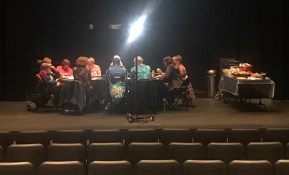 library patrons for our first Table Reading. We read out loud, sitting around a table on the stage of our beautiful theater – not as a performance, but as a chance to step outside our comfort zone and do something different and challenging. As a bonus, I found that hearing the play read, imperfectly and yet movingly, helped me appreciate this outwardly nostalgic and simplistic play all the more. For those of us who participated in the reading, our experience and understanding could not be but different than those who did not. During this month, as people at the library noticed the book selection, several stopped to share that they had performed in this play during high school!
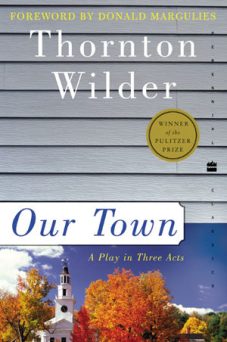 We discussed how the play’s stage manager role, minimalistic set and lack of props was groundbreaking for 1938. Our Town won the Pulitzer Prize in 1938 “For the original American play, performed in New York, which shall best represent in marked fashion the educational value and power of the stage, preferably dealing with American life, $1,000.”
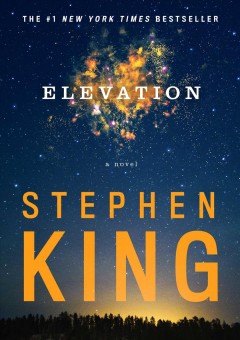 more novella than novel and when I announced the selection, most members were glad the book was short.
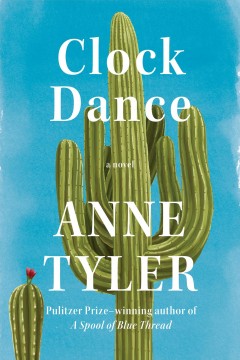
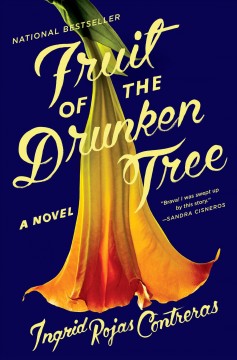
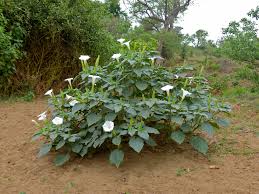 Nevada and is related to the Drunken Tree used for the title – another shared experience through a book!