In the Garden of Beasts Discussion Journal

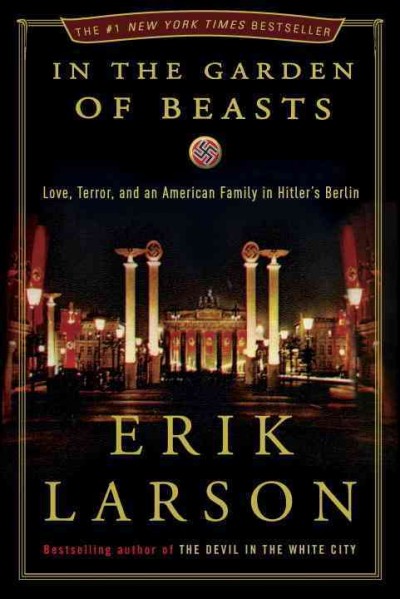
We met on the stage. Worn wooden floor, grand piano, curtains, shadows, tables and InTheGardenOfBeastschairs. A single caged bulb on a rolling stand glared near us, more a beacon than light. Two hundred and fifty empty seats stretched out below. Our own stammtisch, set to discuss Erik Larson’s In the Garden of Beasts: Love, Terror, and an American Family in Hitler’s Berlin.
Everyone seemed to have liked the book. One member felt as if she were back in school, learning about the horrors, familiar yet new. So much has been written and filmed about Hitler and World War II. Several people were impressed with how Erik Larson tried to convey the mood, the family’s perspective rather than his own, to help us understand how the rise of Hitler could have happened at all.

What will we look back in fifty years and re-evaluate? One member mentioned Syria. We discussed embassies, wealth, ambassador qualifications, and the foreign service. One of us remembered that just a few years ago the new Ambassador to Norway had been unaware that the Norwegian government is a constitutional monarchy. As we have often discussed at meetings before, do things ever really change?

One member strongly recommended the book Tower of Basel: the Shadowy History of the Secret Bank that Runs the World, by Adam LeBor. We discussed the importance of finance, from the American desire to be repaid by Germany to the continued financing of the Third Reich. Others mentioned the autobiography of Charles Lindbergh. When considering the character of Martha Dodd, we discussed the moral atmosphere in Berlin at the time, referencing Christopher Isherwood’s Berlin Stories, the basis for the stage play Cabaret.

I continued to defend Martha Dodd as more naive than depicted, but another member reminded us that the Nazi government recruited sociopaths — how could she be naïve in such company? Another read a quote from Diels on page 252, “The infliction of physical punishment is not every man’s job, and naturally we were only too glad to recruit men who were prepared to show no squeamishness at their task. . . .It had also been attracting unconscious sadists, i.e. men who did not know themselves that they had sadist leanings until they took part in a flogging. And finally it had been actually creating sadists. For it seems that corporal chastisement ultimately arouses sadistic leanings in apparently normal men and women. Freud might explain it.”

We discussed other characters and the lack of pictures in the book; America’s anti-semitism and civil rights issues; the fact that Dodd was a disciple of Wilson. We liked Dodd. One member reminded us that he did not change his principles. He would not attend Nazi party meetings nor have further dealings with Hitler.

This meeting was striking, in atmosphere and tone. All good things must come to an end — if only so that we can enjoy them again. Next month. Same time. Different book.

  • Other works discussed:
  • Berlin Stories by Christopher Isherwood
  • Destiny of the Republic: a tale of madness, medicine, and the murder of a president by Candace Millard
  • Every Man Dies Alone and Other Works by Hans Fallada, who remained in Germany during the Third Reich
  • Night by Elie Wiesel
  • Tower of Basel: the Shadowy History of the Secret Bank that Runs the World by Adam LeBor
The Language of Flowers Discussion Journal

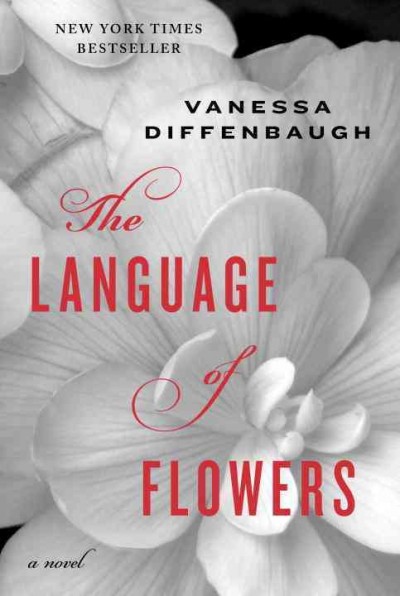
I chose The Language of Flowers by Vanessa Diffenbaugh because it covered a serious topic, aging out of foster care, and included an engaging subtopic, the language of flowers. In addition, over 3,000 Amazon reviewers had given the book 4.5 stars out of 5. Potentially, something for everyone.LanguageOfFlowersCover

The first responders could not identify with the main character. The overwhelming majority seemed to be unable to sympathize with Victoria’s abandonment of her baby, of her refusing assistance. The story was romanticized and unrealistic. And yet, didn’t that make it readable? Some members shared personal experiences. Others wondered how a professional midwife could not have known that Victoria needed more assistance and helped her with the constant nursing. One new member wanted to know more about Meredith, the social worker. Another felt that Meredith had set Victoria up for failure as she warned each family how difficult she was. We discussed mental illness and drug addiction. Even though the author has experience with foster children, we didn’t feel the book gave us a good picture of the foster system. So what was the point? We didn’t really get there.

One of the discussion questions asked us to define what makes a family. Catherine and Elizabeth were related, but were they family? As I listened and watched the discussion, about families now including all manner of support systems, not just blood relations, I couldn’t help but think about communities as families. Work families, library families, book club families. All needing support in different ways. All communicating in different ways. It makes me think of a story in Robert Fulghum’s All I need to know I learned in Kindergarten about a kid who plays hide-‘n-seek too well — “Get found kid!”

The room seemed filled to the brim with familiar and new faces, attentive and engaged. Although I know that everyone did not speak, the discussion moved between members and no one seemed to dominate. A large group has both the potential to bring in a lot of viewpoints and to make it more difficult for some to speak out. After the meeting, one member shared that she really liked the book. Another commented on learning about the Camellia Network, co-founded by Vanessa Diffenbaugh, “a support net(work) for youth aging out of foster care” (https://camellianetwork.org/). I wonder now, looking back, if we shouldn’t have broken into smaller groups. It’s a work in progress!

  • Other works discussed:
  • Call the Midwife by Jennifer Worth
  • White Oleander by Janet Fitch


The No. 1 Ladies’ Detective Agency Discussion Journal

I chose The No. 1 Ladies’ Detective Agency for July because I knew that the series is No1LadiesDetectiveAgencyCoverincredibly popular, funny yet substantive, and I hoped its ease would make good summer/vacation reading. The ready availability of many books, including sound recordings, is also a big plus for our book club!

Since I heard Alexander McCall Smith speak at the American Library Association conference here in Las Vegas, I was ready to show some YouTube clips of his comedic routines, a YouTube sample of Botswana pumpkin cooking, and the sweeping shots of Botwana shown at the start of the HBO television series adapted from the book. We had cookies and bush tea (red rooibos from South Africa).

Then we had some technical difficulties. W-fi, plugs, connections, laptop, i-pad, dvd, television. In hindsight it is rather funny to think of taking a seemingly simple story, people who have chosen to take time reading and coming out to discuss a book, and then throwing in technical media! It all worked out in the end, but not necessarily as planned!

I had anticipated enthusiastic, devoted readers and some skeptical newcomers. What we had was a rather quiet group. Those who had re-read the book found it appealing again. Others seemed to like it as well. Since none of us have been to Africa, we couldn’t truly judge its reality.

Before the meeting, one member commented that he found the narrator to be unreliable, since he knew that it was a white male writing about a black female detective. In general, since the author was raised in Africa, we accepted his narration. We discussed the accuracy of the dialogue. I was enamored of the author’s language and read several sentences that I had highlighted throughout. I also mentioned his use of many archaic words I appreciated. We discussed HIV and how it is not spoken of directly. About how positive a view this is of Botswana. We noted that the book is more like a collection of short stories than a novel, and how the author himself says he is afflicted with “serial novelism.”

Every member spoke and brought out interesting aspects prompted by the discussion questions and on their own. As we wondered about Mma Ramotswe’s youthful acceptance of her abusive husband, one member mentioned reading Of Human Bondage. Another compared the opening lines of Isak Dinesen’s Out of Africa with the opening lines “Mma Ramotswe had a detective agency in Africa, at the foot of Kgale Hill.” I marvel at the common association we all now share.

As always, if there is something I have missed or something you’ve thought of that you would like to add or share, make a comment!

  • Other works discussed:
  • Of Human Bondage by Somerset Maugham
  • Out of Africa by Isak Dinesen

The Dog Stars Discussion Journal

This week so far we have a hate-crime killing in Las Vegas which left two police officersDogStarsCover and three other people dead, and another school shooting, this time in Oregon, leaving two people dead and at least one wounded. I’m sure many other violent crimes became known during the same time period, and more remain behind closed doors, hidden for years, if ever even to see the light. Movies in our local theaters include Edge of Tomorrow, X-Men: Days of Future Past, The Amazing Spider-Man 2, Captain America: The Winter Soldier, Maleficient, Godzilla, and A Million Ways to die in the West. Pretty violent fare – with something for everyone, good and bad alike. Yesterday was election day, too, which in this social-media world sometimes seems more like spin-the-bottle dare than choice. In this environment our Book Bistro met to discuss the dystopian future presented by Peter Heller in The Dog Stars.

Several book club members liked the novel, one even more so after a second reading. Our first responder found the clipped, journal-like narrative style to be beautiful, like a long poem, and easy to read. Yet some didn’t like the writing style and struggled to read it. One member so fervently disliked the book that she felt if she were ever to ban a book, this would be it! Many of us had mixed feelings, but the majority felt that in a post-apocalyptic world, survival of the fittest, as described by Heller, would rule at first, civilization only later.

Some of the details seemed too easy. This limited point of view left a lot of questions and seemed almost like cheating. If flying out of the valley was too dangerous with the extra weight, why didn’t Hig pick up both father and daughter on the road? Why weren’t more people connecting by radio? We discussed global warming as a continued threat and disagreed about whether the ending was happy or bleak.

The meeting was surprisingly calm, but the members are a respectful group and avoided the potential divisiveness of opposing views—at least outwardly. I have in the past been told that a member was hesitant to speak out because of fear of confrontation. Several members did speak at once, which is unavoidable and even a good sign of passion. But some of us are better at interrupting. After the meeting, one member wondered why the discussion guide did not ask about Hig’s killing his wife. That would have been an excellent discussion point! Why that detail?

One of the reasons I write this journal is to offer an opportunity for members to add comments they would have liked to make. Or maybe, only on reflection, hours or days after the meeting, an answer comes to us! Post a comment here or give it to me at the library to post for you.

We answered only a couple of the questions from the discussion guide and finished early enough to introduce our next book, The No. 1 Ladies Detective Agency by Alexander McCall-Smith. Many of us were surprised that this bestseller had not been read by everyone. None of the four men in the group have read it! I asked them to think about the believability of a black, female narrator written by a white male. If you have read the book before, re-reading is a great time to pay attention to the language and how the author conveys his ideas. Reading Dog Stars, I couldn’t help but wonder, where was the library? So many books and all the time in the world . . .

Other works mentioned:

  • The Brief History of the Dead by Kevin Brockmeier
  • Andromeda Strain by Michael Crichton
  • The Stand by Stephen King
  • The Road by Cormac McCarthy
  • “Time Enough At Last” episode Twilight Zone (DVD)  (Based on the short story by Lyn Venable)

Call the Midwife Discussion Journal

In general, Call the Midwife: a memoir of birth and joy and hard times seemed to be wellCallTheMidwifeCover liked. Reactions were positive, even inspiring one of us to read the other two books in this series, Shadows of the Workhouse and Farewell to the East End. The first member to speak said that he had expected to be overwhelmed with descriptions of childbirth but was surprised to find the book interesting and engaging. Another member mentioned that he had been impressed by the writer’s easy style and believability.

Since several, but not all, members have seen the PBS television series that is now in its third season, the discussion was a bit uneven, including some comparisons we could not all share in understanding. However, the dramatization brings up an important issue regarding fact vs. fiction – something we often take for granted when we see words like: based on a true story, non-fiction, or memoir. The author’s style is analytical, including a lot of social commentary and gritty details glossed over and changed in the television series. Yet it is also a memoir, written 50 years after the fact. An article in the Daily Mail quotes the author’s daughter Suzannah: “All the eccentricities of Sister Monica Joan in the books . . . are based on Monica Merlin.” *  British actress Monica Merlin, not an Anglican nun. The group did not seem concerned by this fictionalization, but perhaps it informed the thoughtful and lively, even occasionally contentious discussion that followed.

Discussion points included: No woman should have 25 babies. She was a prisoner. Breastfeeding is not a reliable method of birth control. All mothers are biologically driven to protect their children. Everyone is different. Expectations for fathers were different then. No baby as small as described could have survived. No baby would be forcibly removed from a mother in the United States, even in the 1950s. Yes possibly. Biology shouldn’t matter in the treatment and love for a child. He not only accepted the child but forgave his wife. Many, many, different, similar, and passionate opinions. I cannot stress enough how valuable all opinions were and are! Everyone was impressed by the author’s willingness to admit her failings, and we all thoughtfully considered our own history of judgment and enlightenment.  

Before the meeting, one member’s first response was that the book was sad. Stories take us so many places – real and imaginary. Inside and out. We cry, laugh, and learn. From the Land of Oz, to the docks of East London, to a post apocalyptic Colorado. Where will the Whitney Book Bistro go next? Join us and find out!

        * ”Cor… the midwife! An affair with a married man at 16? Pass the gas and air: It’s the wild past of Call The Midwife’s creator, by her own family.” By Jo Knowsley. January 25, 2014. MailOnline. Web accessed 5-11-2014. http://www.dailymail.co.uk/femail/article-2545981/Cor-midwife-An-affair-married-man-16-Pass-gas-air-Its-wild-past-Call-The-Midwifes-creator-family.html

  • Other works discussed (all non-fiction):
  • The life and times of Call the midwife : the official companion to seasons one and two by Heidi Thomas
  • The Zookeeper’s Wife by Diane Ackerman
  • Destiny of the Republic by Candice Millard
  • Historical non-fiction by Erik Larson

Wicked: the life and times of the wicked witch of the West Discussion Journal

Wicked was published in 1995 and over the years several people have told me I just “had” to read it. The musical has a great soundtrack and a happy ending, so the book seemed like a good pick for our group. And it was. Although not in the way I had anticipated!WickedBookCover

I struggled reading it, at least for the first half. Little seemed familiar to me—the descriptions were coarse and sexual, and the gnarly baby teeth gave me serious nightmares. I could tell that it was heavy with symbolism, religious and political innuendo, and much that seemed to pass directly over my head. I struggled to keep names and locations straight, and nearly panicked at the thought of my book club members’ responses!

Of course, I shouldn’t have worried. Although I wasn’t alone in my struggles, most members had tried to finish it. Some had read it before, liked it, and wondered why it was more difficult this time. Another still considered it one of her favorite books and had found even more to savor at this reading. Reading it for the first time, one member was ready to start on the second book in the series, although he had been disappointed in the ending.

Most of us were not surprised that the Witch was not as evil as she was portrayed in the Wizard of Oz. We discussed whether any fairy tales are intended only for children and what could be found with deeper analysis. Our last two books dealt with the nature of evil and I can’t help but wonder how much of our understanding and tolerance is because we are a well-read group. Does this transfer to our understanding in real life? How could it not?

On several occasions the room was quiet with thought. Several members agreed that the use of Animals vs. animals as a theme was not just a statement for animal rights, but for the rights of all societal outsiders – and Elphaba is the ultimate outsider. We disagreed whether Elphaba would ever really add wings to monkeys. The author was working with popular source material and he stays true to things not assumed, although more is inferred than we might otherwise imagine! The opening prologue served not just to set the stage, letting us know that the story would eventually lead to a known world, but showed us how people use gossip to help them understand their world, explaining things that don’t make sense.

We were surprised that Frank L. Baum’s classic was first published in 1900 as America’s first original fairy tale. We did not discuss the nature of science fiction and fantasy and how it serves to point out moral truths, creating a recognizable world that is still separate enough to keep our defenses down and penetrable. I am glad I read Wicked, and like others in the group, I would like to know how the story is continued. One member who has read more of Gregory Maguire’s books said that this was his heaviest. Perhaps one day . . . .

  • Other works discussed:
  • Defending Jacob by William Landay
  • Round House by Louise Erdrich
  • The Wonderful Wizard of Oz by Frank L. Baum
  • The Wizard of Oz (DVD)
  • Oz the Great and Powerful (DVD)
  • Mary Poppins by P.L. Travers
  • Saving Mr. Banks (DVD)
  • Fairy Tales and Nursery Rhymes
  • Other Gregory Maguire books


Round House Discussion Journal

RoundHouseCoverRound House by Louise Erdrich was easy to read.  That was the last question I asked, and the consensus seemed to be positive, even if not everyone liked the book. One member was incredulous that thirteen year olds could be so mature.  We started the meeting discussing the age of the narrator, drinking, driving, and sex. We wondered if this was something distinctive to Native Americans, but some of us remembered our own early teen years while another wondered if this freedom isn’t common in white families with two parents working.  Our own experiences growing up—rural, urban, protected, wealthy, poor, free—have a profound impact on our reading and acceptance of a story, and this was clearly evident in a thoughtful discussion in which members referred to each other’s comments with respect and consideration.

One member felt that the tragedy of alcoholism and hopelessness on reservations was treated too lightly in the book. He referenced a recent article in the Review Journal about increases in suicides among Native Americans. Everyone understood that the author’s main concern in writing the book had been Indian law and jurisdictional issues – especially concerning violence against Native American women. We spent a good amount of time discussing respect and violence – how Americans seem to admire rudeness and be obsessed with crime, about the impact of violent video games and the value of positive role models.

Growing up, seeing our parents suddenly as old and flawed, facing Wiindigoos, spirituality and belonging: so many themes and characters that some of us found the book a bit hard to keep straight. One of us said that reading about the camaraderie made her wish she had been a boy growing up! We all agreed that Cappy was a true friend and felt the sorrow of his loss. We could have kept discussing. In many ways, we only touched the surface.

As I read Round House, I could not help but see connections to many other books I have read, in and out of the Book Bistro. The impact of reading on my understanding of the world around me and the variety of people I meet and serve in the library is profound and one of the most valuable, even when I read strictly for pleasure and when a book seems forgotten as soon as put down. I handed out a list of the many books long-time members may have read over the last several years and I encourage all readers to take an opportunity to stop and think about what they have read—as an exercise for the brain as well as because what we read has become a part of us, good and bad, and this shared community experience brings us all closer together.

  • Other Works Discussed:
  • The Absolutely True Diary of a Part-time Indian by Sherman Alexie
  • Jeremiah Johnson (DVD)1972; Robert Redford; Sydney Pollack (Director)
  • Stand and Deliver (DVD) 1988; Edward James Olmos
  • Stand by Me (DVD) 1986; River Phoenix (based on the short story “The Body” by Stephen King)
  • This Is How You Lose Her by Junot Diaz
  • To Kill a Mockingbird by Harper Lee

Defending Jacob Discussion Journal

As we gathered to discuss Defending Jacob, the room was filled with chattering and DefendingJacobCoverenergy.  Several members noted that the book had been easy to read and kept them engaged. One new member said she was glad she read the book, but she couldn’t say she liked it.  Another was impressed by the realistic picture of our justice system. Yet another felt the book was full of holes and too much foreshadowing. One new member was disappointed by the ending, even angry. Perhaps, like the parents in the story, she had wanted the twist to be exoneration.

Does a murder gene exist? Which plays a larger roll in determining behavior, genetics or environment? We were mixed in our opinions. We asked: What does the author intended for us to get from his novel? Why does it matter? This is fiction, a novel, something to be read for pleasure. True. But many of us want more and our book club challenges us like a lateral thinking puzzle.

We discussed the reliability of the narrator, especially a character who had the “murder gene.” One member suggested that the Grand Jury interview sections were imagined rather than real. Another wondered about the mother—we only heard her side of the story through the narrator. Some felt that the mother’s actions in the end were admirable; others considered her insane. We had several conversations going on at once and the enthusiasm was palpable.

The biggest surprise, though, was when one member mentioned that our discussion had actually made her dislike the book! Quite the opposite of the usual response! Books, like people, are full of surprises.  Our book club keeps us guessing!  Our next book, Round House by Louise Erdrich, is a National Book Award winner.  Give it, and us, a try and join the discussion!

  • Other works discussed:
  • The Sociopath Next Door by Martha Stout
  • The Sopranos (Television Series)

Pride and Prejudice Discussion Journal

Pride and Prejudice Discussion Journal

I was surprisingly nervous going in to our discussion about Pride and Prejudice by Jane PrideAndPrejudiceFlyer2014Austen.  Her books have been so widely read – loved and hated!  Made in to movies. Adapted. Imagine Pride and Prejudice and Zombies by Seth Grahame-Smith. She was the favorite author of my English Novel professor in college.  Sir Walter Scott’s quotes make him seem smitten. Twainquotes.com shares many negative comments, ending in this excerpt from a letter written by Mark Twain in 1898, “Everytime I read ‘Pride and Prejudice’ I want to dig her up and beat her over the skull with her own shin-bone.” I just can’t get past, “Everytime I read . . .”!

Fortunately, several members had either never before read Jane Austen, or had read Pride and Prejudice in school and no long remembered it – perhaps even forgot it because it was required reading! Many of us asked, why is this considered great literature? Or, it was laborious to read, how in the world do high school students get through it?

I am not sure that Jane Austen’s works are considered great literature. One of the library’s Great Courses DVD sets, Classic Novels: Meeting the Challenge of Great Literature, does not include any of her books. We discussed the importance of considering the time the book was written, a period of great social change. The American Revolution. The French Revolution. Not a political book, but definitely a social one. A book of manners, behaviors, and opinions about the time during which it was written.  It is not an historical novel, but it gives us a glimpse of history. One member pointed out that we cannot be sure that the words pride and prejudice even had the same meaning to the author as they have to us!

We discussed whether or not technology, such as washing machines, has decreased the need for men to find a wife. How men can now stay home and care for the household. About arranged marriages and the role of Internet dating. About the time spent walking. And walking. And walking. To town. Through gardens and around the estate grounds. About the quiet – compared to teenagers walking in malls or meeting for coffee (and a donut!). About lust versus love. How great a role did the wealth of Mr. Darcy really play in Elizabeth’s sudden change of heart? Jane Austen was only 21 when she first wrote this story, how did that influence her characterizations? Why is Pride and Prejudice the most popular of Jane Austen’s novels?

One member asked about the name Jane.  Why did Jane Austen use it in her novel? Did she identify with that character? Although I imagine this question has been asked and researched somewhere, we were stumped. I think the consensus was that it must have been a common name. Yet, I have come back to that question again and again. Although I had always assumed that Jane Austen identified with the spunky character of Elizabeth Bennet, the one character who showed the least pride and prejudice was Jane Bennet. Names are always important. As are the questions. Thanks for joining the discussion.

  • Other Works Discussed:
  • Sense and Sensibility by Jane Austen
  • Emma by Jane Austen
  • Northanger Abbey by Jane Austen
  • Great Expectations by Charles Dickens
  • Wuthering Heights by Charlotte Bronte
  • Classic Novels: Meeting the Challenge of Great Literature (Great Courses DVD) by Arnold L. Weinstein
  • Pride and Prejudice (DVD BBC mini-series) Colin Firth
  • Multiple other film versions of Jane Austen’s works

Flight Behavior Discussion Journal

Flight Behavior by Barbara Kingsolver was well-liked by most members at the meeting, but some of us found it a bit too preachy. One of us did not quite accept the concept of relocated butterflies, even though the author stated she had well-researched the possibility. The story covered so many concepts—marriage, love, poverty, education, the media, religion, global warming, monarch butterflies—we would be hard-pressed to find a book we have read this year with which we couldn’t compare it. At the start of the meeting, we watched a short clip of cascading monarchs in their natural, Mexican-mountain habitat.  We then watched a sheep being sheared.  Both of these scenes were described by the author in such detail that we all acknowledged our admiration of  Barbara Kingsolver’s writing.

We jumped to the end of the story because of several members’ dissatisfaction with the flooding—it seemed uncertain and surreal.  A good story left unfinished. One member wondered if Dellarobia might have actually been considering suicide. Others wanted to know what followed. Another compared the flood to the destruction of the original home of the butterflies, and still another to the unpredictable future posed by global warming.

Everyone seemed to agree that the presentation of the media was accurate.  Several members shared how the media focuses on the negative, increasing fear and unhealthy stereotypes. We discussed poverty and the cost of smoking. Could Dellarobia have really quit so completely? Was abortion never mention or considered because of the location, the religion, or something else?  Do Americans distrust science? How are we supposed to know what to believe? Members shared personal stories that underscore the power of the book in helping us generate discussion.

Most members have read Barbara Kingsolver’s work before and especially recommend The Poisonwood Bible. So many books . . .

  • Other works discussed:
  • Winter’s Bone by Daniel Woodrell
  • Philomena (Film currently in theaters) Judi Dench
  • An Inconvenient Truth by Al Gore
  • Inequality for All (Film released this fall) Robert Reich