It was a dark and stormy night . . . Well, maybe not so stormy – but the roads were wet, chill was in the air, and it was election day, 2022! We were fortunate to have nine of us gathered to discuss Clark and Division by Naomi Hirahara. We started off discussing food and book clubs, with Baby Ruth candy bars to remind us of the Curtiss Candy Company, dried squid and rice with spam from a Henderson Japanese market. Most of us were not adventurous enough to try the squid or Musabi, but I felt energized by the connections to the book.

Our response to the story was varied. Some of us liked it, some were disappointed not to have more information about the internment camp experience, some thought the detail about Chicago was lacking, and one of us pointed out that the book would have had to be two to three times as long to accommodate all of that information—like James Michener starting with the creation of the Hawaiian Islands! Some of us enjoyed the mystery, some found the ending unbelievable, and one of us appreciated the coming of age story. For one reader it wasn’t exactly a page turner, but most of us agreed that the book was easy to read.
I shared some images I found in my research: The Lost City of Tropico[i], Manzanar War Relocation Center[ii], the Curtiss Candy Company[iii], the author’s map of important locations from the book[iv], the Newberry Library[v], oni masks[vi]. I had been unaware of the 1907 Expatriation Act[vii] that took away the citizenship of American women who married non-citizens. We discussed the Civil Liberties Act of 1988[viii] that gave redress checks of $20,000 and a presidential apology to 82,219 American-citizens-of-Japanese-decent internment survivors.
A returning member noted how she only learned of the Japanese-American internment in college. Another how she grew up in Los Angeles and only learned of the internment because she worked for a florist-shop owner who had been interned. This owner, who called all white people “Irish,” explained that an “Irish” friend had saved their property for them. Many of us were surprised to learn that there was an “‘Exclusion Line,’ which demarcated those who would be forced into detention, [and] ran directly through the Phoenix area.”[ix]
I added to question six about Aki’s definition to herself in relation to her sister, wondering how it might have been different had her sister not died. Most of us felt that she might not have blossomed, almost as if her growth came “out of the ashes.” One member, as a child of ten, felt that older children are forced to take on more responsibility. And she would have been forced into that role after her sister’s death. The turning point for Aki came when she got her own haircut style in Chicago. One of us, though, argued the opposite. Aki took care of burying her dog entirely on her own. Rose went her own way in the camp and Aki was able to be her own person. She also was headstrong and probably would have had a break from her sister even without her death.
We asked if she ever really loved Art? Probably not. Why is the book named after the intersection/subway? Just because her sister died there? We didn’t find a strong answer. The details of discrimination seemed generic and could easily have been against any marginalized group. Did Rose kill herself only to save her family? Wasn’t there a bit of pride involved? She had been recently pregnant, had a butchered abortion, was being blackmailed. The stress alone could have caused a rash decision. We still didn’t quite accept that Aki could have roamed safely into drug dens and more.
Our library has a Social Justice Book club that will meet next week and is discussing police abolition. How unexpected that our fiction book should make a connection to this issue! The Japanese-Americans in Clark and Division not only would not report rape to the police but were actively being blackmailed by the police. One of us has had to call 911 on several occasions and finds it eye-opening to imagine what it would be like to be afraid to call for help. Another of us noted how some people just don’t believe that police treat people differently. Do we believe a non-fiction, referenced book more than a fiction story that enables us to empathize with characters whose experiences are different than ours? One of us said that books that bring up shortcomings are an incentive to work toward change. She is also the one who reminded us all that it was election day. I so appreciate how we can talk about such weighty topics with respect. I fully believe from my experience with the Whitney Book Bistro that people who read and discuss fiction, however different their beliefs, are kind and empathetic. We may not have the answers, but I know that I benefit from our discussions! Thank you!
- Previous book club books mentioned or related*:
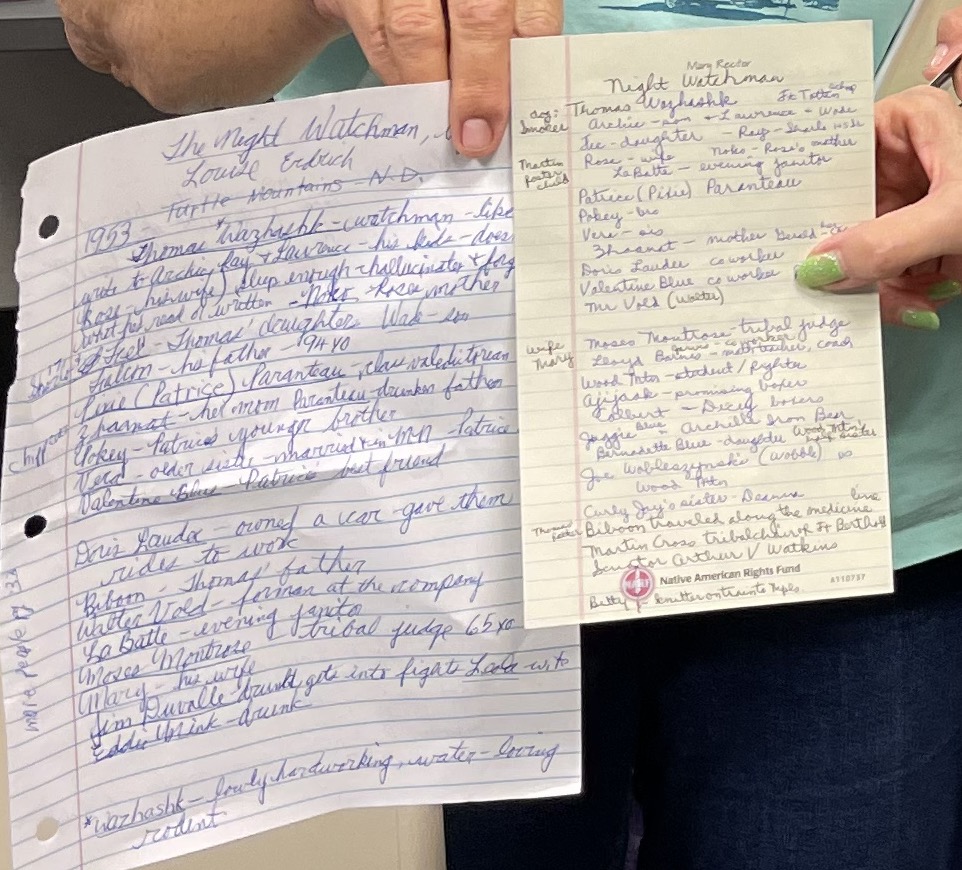
- The Night Watchman by Louise Erdrich
- Lightning Strike by William Kent Krueger
- *Buddha in the Attic by Julie Otsuka
- *Tallgrass by Sandra Dallas
[i] Web accessed 11-8-2022: https://www.kcet.org/shows/lost-la/the-lost-city-of-tropico-california
[ii] One Camp, Ten Thousand Lives; One Camp, Ten Thousand Stories. U.S. Department of the Interior. (n.d.). Manzanar National Historic Site (U.S. National Park Service). National Parks Service. Retrieved November 8, 2022, from https://www.nps.gov/manz/index.htm
[iii] https://www.madeinchicagomuseum.com/single-post/curtiss-candy-co/
[iv] https://www.naomihirahara.com/wp-content/uploads/2021/09/Hirahara-Clark-Division-Points-Map-2.pdf
[v] Yes, the Newberry Library still exists! The picture I showed was from an ebay listing for a postcard of Chicago libraries.
[vi] This is a site to buy masks, but it gives interesting information about Japanese masks, including the story about the Red Oni Who Cried. I looked this up because of the description on page 134 “Something about his [Hammer’s] facial appearance reminded me of the frightening oni demon masks on the walls of Issei homes. One version of the oni mask looked downright evil, but another, with its downturned mouth agape, seemed tortured.” https://japaneseonimasks.com/blogs/magazine/japanese-masks-18-types-story-of-every-japanese-mask
[vii] Brown, T. B. (2017, March 17). That time American women lost their citizenship because they married foreigners. NPR. Retrieved November 10, 2022, from https://www.npr.org/sections/codeswitch/2017/03/17/520517665/that-time-american-women-lost-their-citizenship-because-they-married-foreigners
[viii] Civil liberties act of 1988. Civil Liberties Act of 1988 | Densho Encyclopedia. (n.d.). Retrieved November 10, 2022, from https://encyclopedia.densho.org/Civil_Liberties_Act_of_1988/
[ix] I am not sure we understand how this worked, but it was mentioned in an online article I found and quoted here. Mark, J. (2017, January 5). Tempe and Mesa history: Arizona was ground zero in Japanese internment-camp divide. The Arizona Republic. Retrieved November 10, 2022, from https://www.azcentral.com/story/news/local/tempe-history/2017/01/05/tempe-mesa-history-arizona-ground-zero-japanese-internment-camp-divide/95957302/
 Halloween and capturing the thrill of the season. Instead, we had French Lemonade, macarons, and madeleines. Everyone liked the book, the twists and turns, and the happy ending. Our first responder was new to our book club and noted that the novel was paced like a movie, ready to join other book-to-miniseries adaptations. She would have liked the author to develop characters and situations more fully before moving on to the next turn of events. She did appreciate the various cultural references and she felt like she was in the apartment. The next responder thought it was nice to have a book without a lot of politics and philosophy, and he particularly enjoyed the many surprising twists. Perhaps there were a few too many characters. And how sad that Sophie was outed by her accent. One of us appreciated that the novel was easy to read and another liked seeing how rich people make and spend their money. He mentioned the expense of tickets to the “local” sports teams and the pricing out of locals from the Las Vegas experience in general. He also made the connection that homelessness is harder for people who fall from the top: Nick and Antoine, spoiled, wealthy children, versus scrappy Jess and resilient Ben. And lucky Ben, adopted into a wealthy family versus life-long foster child Jess.
 underwhelming and not actually solved. When I found myself falling asleep as soon as I tried to read, I started to worry about how the group would like the book – but there was hope – our next responder mentioned that it started slow but would get interesting at page 150!
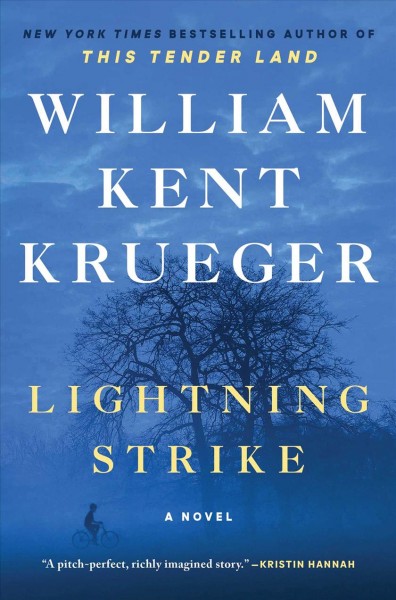 themselves. Lightning Strike starts briefly in 1989 and then flashes back to 1963. Our first responder loved the book, the multicultural themes, the father-son relationship, and the nostalgia it evoked. As a gay man, he could also identify with the anger, conflict, and discrimination between the Ojibwe and the White townspeople. His partner had listened to the audiobook and been struck by the anger the narrator portrayed, highlighting one of the benefits of listening to a book.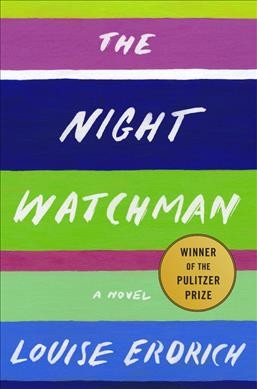
 detailed. Another member found that it started out believable, but then it became too wild, reminding her of a B-Flick horror film. Fun to read, though different. One of us was listening to the audio book and only got part way through, uncertain about whether she wanted to finish it. We should have asked her how the narration held up – did that make a difference in why she might not be interested? She hadn’t yet gotten to the really creepy sequences! Still another member had been afraid that it might have won some awards.
 by talking about misandry.
 WhitneyBookBistro