Since 2014, the Whitney Book Bistro discusses a literature classic in January[i]. As you can see in the notes, most of our selections have been by British or American authors, because we are limited by the availability of books. We are fortunate that The Library District put together a book club kit for The Alchemist. Diverse selections are essential for us to build a strong community with shared experiences through books.
Paulo Coelho wrote O Alquimista in two weeks in 1987.[ii] The first US printing was in 1993 and The Alchemist “eventually became one of the best-selling Brazilian novels ever published, and today it is one of the world’s most widely translated books.”[iii] According to PBS’s 2018 Great American Read, “the book spent more than six years on The New York Times Best Seller’s list.”[iv]
I opened the discussion by reminding us of The Alchemist’s popularity and the importance of everyone’s opinion. I struggled to enjoy this book, and I was particularly concerned that I would allow that opinion to dominate – but I also wanted very much to be persuaded to feel more favorably. Differences often make the best discussions and are the most informative for all of us, perhaps even more so when there is only one dissenting opinion. I read aloud a teacher’s justification that The Alchemist is a diverse and optimistic perspective in contrast to the “pessimistic nature of the body of works widely available and taught at the sophomore level.”[v]
Since no one spoke up quickly to be our first responder, I read aloud an email response from one of our remote readers. I will post her full text in the replies. She found the story initially to be “full of cheap platitudes and easy mystical pseudo-wisdom,” but ultimately “this is a worthwhile read, especially for those who have not yet been exposed to these ideas.” A couple of members were nodding as I read this response. One said that he found it to be an insipid self-help book with lame platitudes, reminding him of The Greatest Salesman in the World by Og Mandino (1968). Another said that she felt that at first, but as she read on, she really liked it! Still another member reminded us that this book was written over 30 years ago.
A library youth department staff member liked the book enough to attend. She had written one of the core principles on our Teen Zone board: “When you want something, all the universe conspires in helping you to achieve it” (pg. 23). She believes this idea is important because untapped talent needs to be encouraged. You don’t have to settle. Another staff member attended. They read it in high school in 2017 and their class focused on the idea that you do not need to settle for the easily achievable. Another member shared that she likes knowing that high schoolers are reading this. In high school, she had no idea what she wanted to do but, as others also agreed, too often we are told to focus on the money, on being able to support ourselves, to suppress our dreams.
One of us then wanted to know how many of us are doing now what we wanted to do in high school. Several people raised their hands. I noticed primarily our young people’s assistant and thoughtlessly commented that she was too young! She graciously accepted this challenge and said that, for her, this was an auspicious moment to read this book at this point in her life. She particularly liked the part in the book when Santiago is discussing with the Sun and the Wind and finding his answers in the quiet, listening. Another member shared that he had wanted to travel the world and considered becoming a pilot. What he really wanted was to be a flight attendant, something not available to men at the time. Is it really too late for him? His nephew is now following this dream. Many of us moved on from disappointments, sometimes for the better. One member had given up a dream to become a fashion designer because a girl in her school received all the scholarships. She later learned that girl had dropped out! And what about “Maktub” or destiny? Do we really have a choice?
Which brought us to a discussion of The Alchemist and magical realism. I read aloud one definition, but I had found several slightly different ones online and I encourage us all to look into it further. Basically, it is a primarily realistic world with elements of magic that help to highlight important, contrasting ideas. This term is most notably associated with Latin-American fiction, such as works by Gabriel García Márquez, Isabel Allende, and many others.[vi] One of us pointed out that movies, just by the fact that they are not real, are magical realism!
We discussed banned books, sexism, the 2022 World Cup in Qatar, use of alcohol (or marijuana) privately versus publicly, late night tv shows and censorship, and the origin of the phrase “son of a gun.” We also mentioned how you never want to meet your hero, and a visit to the Grand Canyon may be underwhelming.
As always, the discussion was varied and went in ways I couldn’t have imagined and have not fully covered here. Although I did not like many parts of The Alchemist, I continue to see its references in the world around me and I appreciate more than ever the importance of looking deeply into my opinions and accepting lessons and happy endings where I can find them.
Other works discussed:
- Fates and Furies (2015) by Lauren Groff
- Mrs. Harris Goes to Paris (2022) Film, based on a series of books by Paul Gallico (2010)
- One Hundred Years of Solitude (1967) by Gabriel García Márquez
- “The Ruined Man Who Became Rich Again Through a Dream” from Tales of 1001 Nights or 1001 Arabian Nights
[i] To Kill a Mockingbird, Our Town, War of the Worlds, The Secret Garden, My Antonia, Puddinhead Wilson, Frankenstein, and we actually had 24 people attend for our first classic pick, Pride and Prejudice.
[ii] Goodyear, D. (2009). The Magus: The Astonishing Appeal of Paulo Coelho. In J. W. Hunter (Ed.), Contemporary Literary Criticism (Vol. 258). Gale. (Reprinted from New Yorker, 2007, May 7, 83[11], 38) https://link-gale-com.lvccld.idm.oclc.org/apps/doc/ZBESIJ386907721/LCO?u=lvccld_main&sid=bookmark-LCO&xid=7dce5fcd
[iii] Explanation of: “The Alchemist” by Paulo Coelho. (2010). In LitFinder Contemporary Collection. Gale. https://link.gale.com/apps/doc/LTF4000000495CE/LITF?u=lvccld_main&sid=bookmark-LITF&xid=bcf1ac51
[iv] The Alchemist was listed as #70 of America’s most loved books. “THE GREAT AMERICAN READ was an eight-part series that explored and celebrated the power of reading, told through the prism of America’s 100 best-loved novels (as chosen in a national survey)*.” https://www.pbs.org/the-great-american-read/home/
[v]Lesson plan provided online for a unit written by Gene Brunak with the Portland Public School system.
https://www.pps.net/cms/lib8/OR01913224/centricity/domain/179/final_Alchemist_Sept_2010.pdf
[vi] The definition I read was from a tenth-grade lesson plan for The Alchemist. I am posting a link to the Britannica online definition: https://www.britannica.com/art/magic-realism.
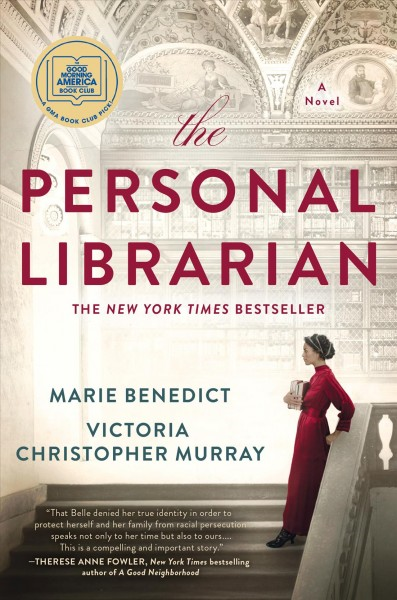

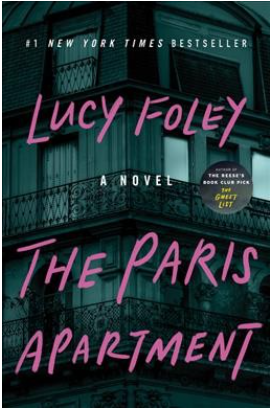 Halloween and capturing the thrill of the season. Instead, we had French Lemonade, macarons, and madeleines. Everyone liked the book, the twists and turns, and the happy ending. Our first responder was new to our book club and noted that the novel was paced like a movie, ready to join other book-to-miniseries adaptations. She would have liked the author to develop characters and situations more fully before moving on to the next turn of events. She did appreciate the various cultural references and she felt like she was in the apartment. The next responder thought it was nice to have a book without a lot of politics and philosophy, and he particularly enjoyed the many surprising twists. Perhaps there were a few too many characters. And how sad that Sophie was outed by her accent. One of us appreciated that the novel was easy to read and another liked seeing how rich people make and spend their money. He mentioned the expense of tickets to the “local” sports teams and the pricing out of locals from the Las Vegas experience in general. He also made the connection that homelessness is harder for people who fall from the top: Nick and Antoine, spoiled, wealthy children, versus scrappy Jess and resilient Ben. And lucky Ben, adopted into a wealthy family versus life-long foster child Jess.
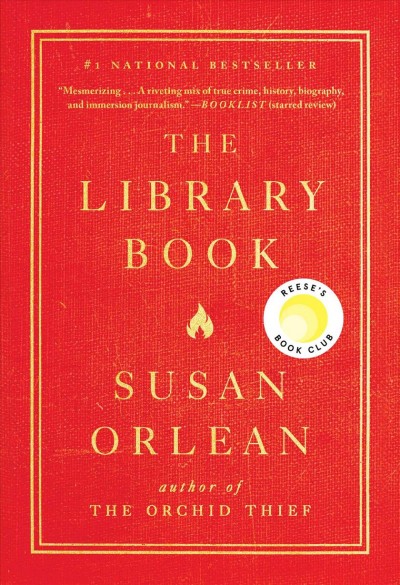 underwhelming and not actually solved. When I found myself falling asleep as soon as I tried to read, I started to worry about how the group would like the book – but there was hope – our next responder mentioned that it started slow but would get interesting at page 150!
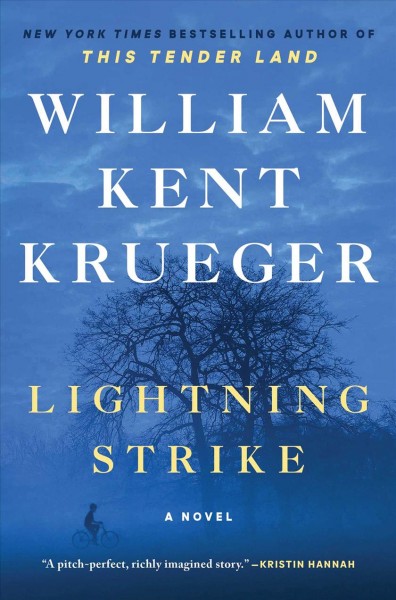 themselves. Lightning Strike starts briefly in 1989 and then flashes back to 1963. Our first responder loved the book, the multicultural themes, the father-son relationship, and the nostalgia it evoked. As a gay man, he could also identify with the anger, conflict, and discrimination between the Ojibwe and the White townspeople. His partner had listened to the audiobook and been struck by the anger the narrator portrayed, highlighting one of the benefits of listening to a book.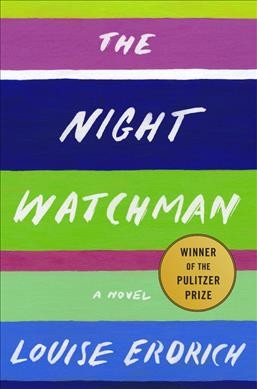
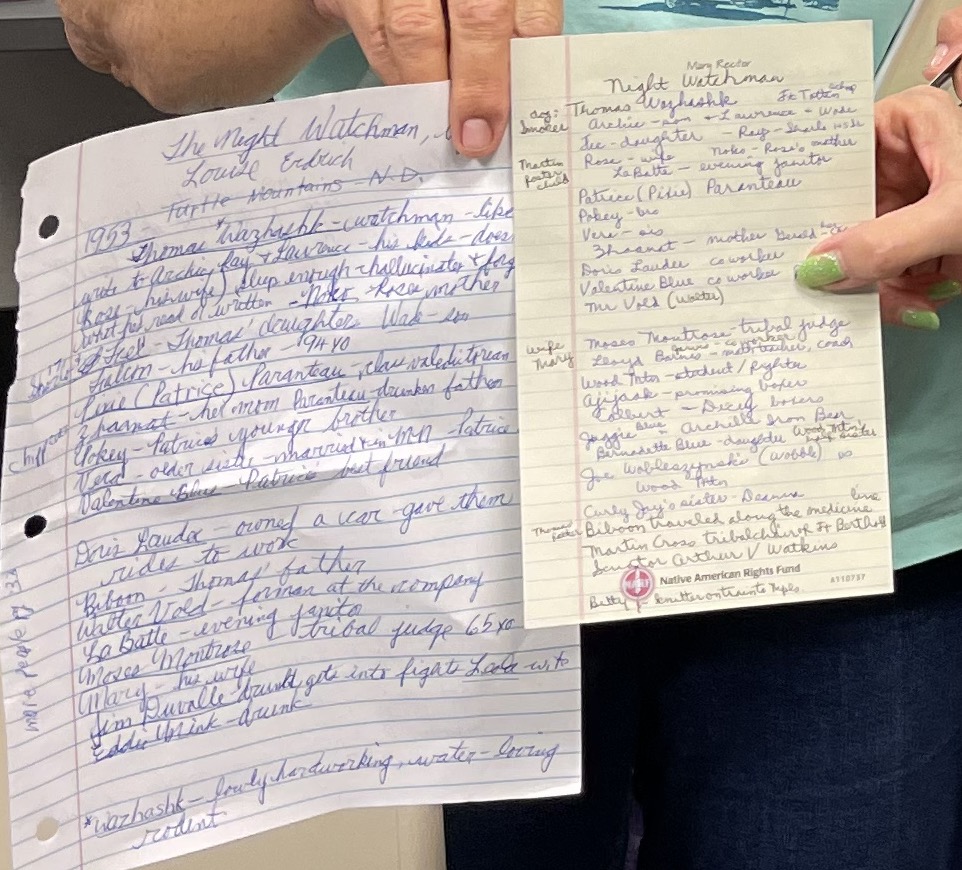
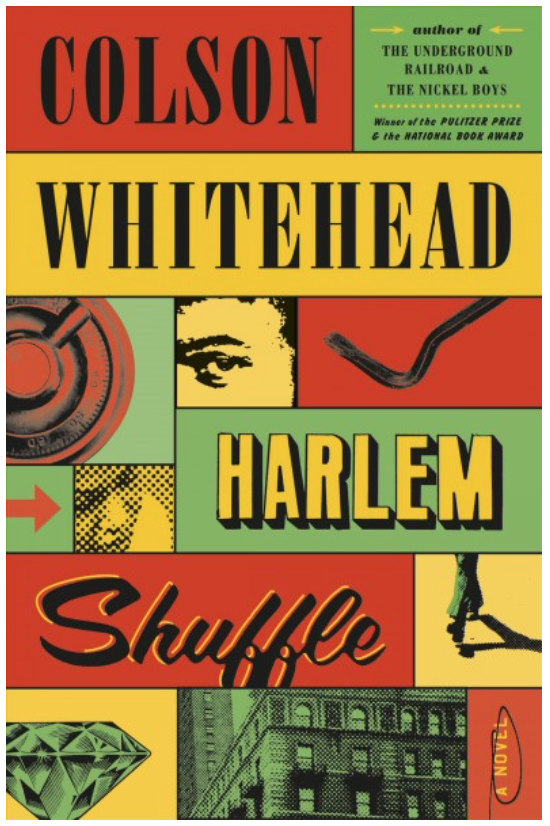
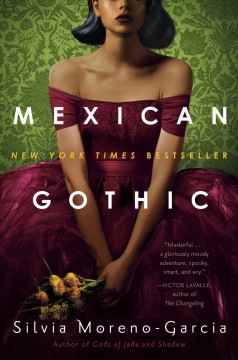 detailed. Another member found that it started out believable, but then it became too wild, reminding her of a B-Flick horror film. Fun to read, though different. One of us was listening to the audio book and only got part way through, uncertain about whether she wanted to finish it. We should have asked her how the narration held up – did that make a difference in why she might not be interested? She hadn’t yet gotten to the really creepy sequences! Still another member had been afraid that it might have won some awards.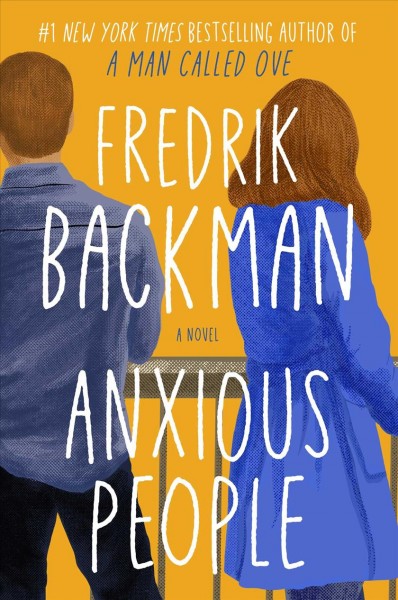
 WhitneyBookBistro