Defending Jacob Discussion Journal

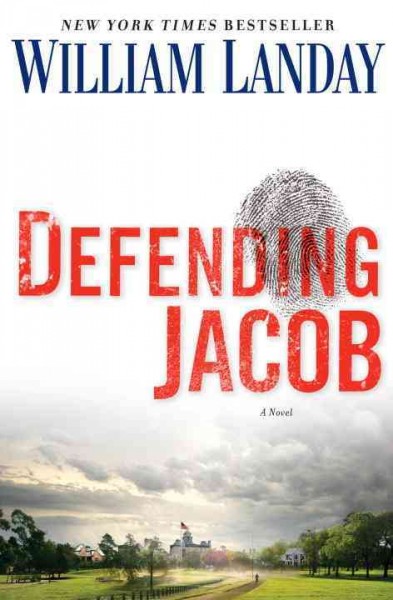
As we gathered to discuss Defending Jacob, the room was filled with chattering and DefendingJacobCoverenergy.  Several members noted that the book had been easy to read and kept them engaged. One new member said she was glad she read the book, but she couldn’t say she liked it.  Another was impressed by the realistic picture of our justice system. Yet another felt the book was full of holes and too much foreshadowing. One new member was disappointed by the ending, even angry. Perhaps, like the parents in the story, she had wanted the twist to be exoneration.

Does a murder gene exist? Which plays a larger roll in determining behavior, genetics or environment? We were mixed in our opinions. We asked: What does the author intended for us to get from his novel? Why does it matter? This is fiction, a novel, something to be read for pleasure. True. But many of us want more and our book club challenges us like a lateral thinking puzzle.

We discussed the reliability of the narrator, especially a character who had the “murder gene.” One member suggested that the Grand Jury interview sections were imagined rather than real. Another wondered about the mother—we only heard her side of the story through the narrator. Some felt that the mother’s actions in the end were admirable; others considered her insane. We had several conversations going on at once and the enthusiasm was palpable.

The biggest surprise, though, was when one member mentioned that our discussion had actually made her dislike the book! Quite the opposite of the usual response! Books, like people, are full of surprises.  Our book club keeps us guessing!  Our next book, Round House by Louise Erdrich, is a National Book Award winner.  Give it, and us, a try and join the discussion!

  • Other works discussed:
  • The Sociopath Next Door by Martha Stout
  • The Sopranos (Television Series)

Pride and Prejudice Discussion Journal

Pride and Prejudice Discussion Journal

I was surprisingly nervous going in to our discussion about Pride and Prejudice by Jane PrideAndPrejudiceFlyer2014Austen.  Her books have been so widely read – loved and hated!  Made in to movies. Adapted. Imagine Pride and Prejudice and Zombies by Seth Grahame-Smith. She was the favorite author of my English Novel professor in college.  Sir Walter Scott’s quotes make him seem smitten. Twainquotes.com shares many negative comments, ending in this excerpt from a letter written by Mark Twain in 1898, “Everytime I read ‘Pride and Prejudice’ I want to dig her up and beat her over the skull with her own shin-bone.” I just can’t get past, “Everytime I read . . .”!

Fortunately, several members had either never before read Jane Austen, or had read Pride and Prejudice in school and no long remembered it – perhaps even forgot it because it was required reading! Many of us asked, why is this considered great literature? Or, it was laborious to read, how in the world do high school students get through it?

I am not sure that Jane Austen’s works are considered great literature. One of the library’s Great Courses DVD sets, Classic Novels: Meeting the Challenge of Great Literature, does not include any of her books. We discussed the importance of considering the time the book was written, a period of great social change. The American Revolution. The French Revolution. Not a political book, but definitely a social one. A book of manners, behaviors, and opinions about the time during which it was written.  It is not an historical novel, but it gives us a glimpse of history. One member pointed out that we cannot be sure that the words pride and prejudice even had the same meaning to the author as they have to us!

We discussed whether or not technology, such as washing machines, has decreased the need for men to find a wife. How men can now stay home and care for the household. About arranged marriages and the role of Internet dating. About the time spent walking. And walking. And walking. To town. Through gardens and around the estate grounds. About the quiet – compared to teenagers walking in malls or meeting for coffee (and a donut!). About lust versus love. How great a role did the wealth of Mr. Darcy really play in Elizabeth’s sudden change of heart? Jane Austen was only 21 when she first wrote this story, how did that influence her characterizations? Why is Pride and Prejudice the most popular of Jane Austen’s novels?

One member asked about the name Jane.  Why did Jane Austen use it in her novel? Did she identify with that character? Although I imagine this question has been asked and researched somewhere, we were stumped. I think the consensus was that it must have been a common name. Yet, I have come back to that question again and again. Although I had always assumed that Jane Austen identified with the spunky character of Elizabeth Bennet, the one character who showed the least pride and prejudice was Jane Bennet. Names are always important. As are the questions. Thanks for joining the discussion.

  • Other Works Discussed:
  • Sense and Sensibility by Jane Austen
  • Emma by Jane Austen
  • Northanger Abbey by Jane Austen
  • Great Expectations by Charles Dickens
  • Wuthering Heights by Charlotte Bronte
  • Classic Novels: Meeting the Challenge of Great Literature (Great Courses DVD) by Arnold L. Weinstein
  • Pride and Prejudice (DVD BBC mini-series) Colin Firth
  • Multiple other film versions of Jane Austen’s works

Flight Behavior Discussion Journal

Flight Behavior by Barbara Kingsolver was well-liked by most members at the meeting, but some of us found it a bit too preachy. One of us did not quite accept the concept of relocated butterflies, even though the author stated she had well-researched the possibility. The story covered so many concepts—marriage, love, poverty, education, the media, religion, global warming, monarch butterflies—we would be hard-pressed to find a book we have read this year with which we couldn’t compare it. At the start of the meeting, we watched a short clip of cascading monarchs in their natural, Mexican-mountain habitat.  We then watched a sheep being sheared.  Both of these scenes were described by the author in such detail that we all acknowledged our admiration of  Barbara Kingsolver’s writing.

We jumped to the end of the story because of several members’ dissatisfaction with the flooding—it seemed uncertain and surreal.  A good story left unfinished. One member wondered if Dellarobia might have actually been considering suicide. Others wanted to know what followed. Another compared the flood to the destruction of the original home of the butterflies, and still another to the unpredictable future posed by global warming.

Everyone seemed to agree that the presentation of the media was accurate.  Several members shared how the media focuses on the negative, increasing fear and unhealthy stereotypes. We discussed poverty and the cost of smoking. Could Dellarobia have really quit so completely? Was abortion never mention or considered because of the location, the religion, or something else?  Do Americans distrust science? How are we supposed to know what to believe? Members shared personal stories that underscore the power of the book in helping us generate discussion.

Most members have read Barbara Kingsolver’s work before and especially recommend The Poisonwood Bible. So many books . . .

  • Other works discussed:
  • Winter’s Bone by Daniel Woodrell
  • Philomena (Film currently in theaters) Judi Dench
  • An Inconvenient Truth by Al Gore
  • Inequality for All (Film released this fall) Robert Reich

Destiny of the Republic Discussion Journal

From George Washington to Barrack Obama, forty-four men have served as president of the United States. Some names we recognize as founding fathers, others because DestinyOfTheRepublicCoverwe associate them with wars, the Great Depression, our hometowns, current events. None of us at the meeting knew much about President Garfield before reading Candice Millard’s book, Destiny of the Republic: a Tale of Madness, Medicine, and the Murder of a President. I barely remembered that he had been assassinated, let alone that he served less than six months before being shot and then lived for nearly three months before succumbing to an infection. We liked the book, found it easy to read and were impressed by President Garfield’s character and constitution. Although I found the depiction of President Garfield almost too saintly, we accepted the book’s accuracy because it has been well-reviewed and includes copious notes.

We started the discussion with an absent member’s suggestion that medicine hasn’t really changed much – hospital workers still often don’t wash their hands enough and many don’t get flu shots. Although some of us felt that we are so much more advanced now that we couldn’t agree, we also couldn’t help but think of the recent re-used needle scandal that convicted Dr. Dipak Desai; and of the mother and newborns that died of undiagnosed tuberculosis this last month. Our incredulity that Doctor Bliss’ authority could go unchallenged was tempered by our discussion – not only is truth stranger than fiction, but it is always easier to see the truth in hindsight. I was reminded of the member who told us about penicillin toothpaste.

We briefly discussed the changes in the approachability of the president, the politics of patronage, the change in Chester Arthur, the love story between Garfield and his wife, and the insanity of his assassin. We did not actually use the entire hour for the discussion. The book had little that was controversial but much that was new to us, and the discussion was thoughtful and considered, as is the written review another absent member gave me to share, and I will post it as a comment below. Destiny of the Republic is a book about President James Garfield, but also about the country, moving from war toward a new millennium. I was particularly moved by individual contributions – Julia Sand, who wrote to vice president Arthur and inspired him to rise to the challenge of the presidency, and all the individuals who lined the tracks of Garfield’s train as he traveled to the sea, finally pushing the train up the last hill to his cottage. Individual contributions and shared community experiences make a difference!

  • Other works discussed:
  • Devil in the White City by Erik Larson
  • Jerry Silverman’s Folk Song Encyclopedia v. 1 (includes a song about Charles Guiteau)
  • American President (PBS Series – DVD)

The Absolutely True Diary of a Part-time Indian Discussion Journal

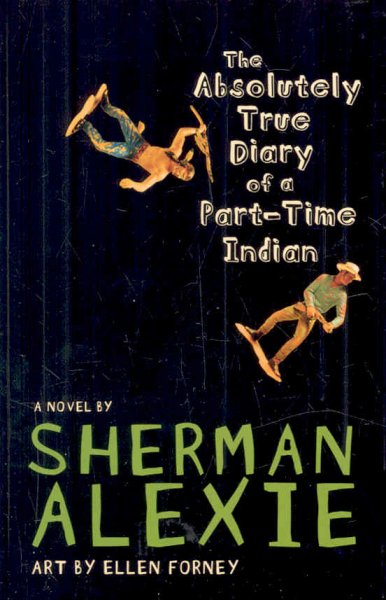
We started the discussion about Sherman Alexie’s The Absolutely True Diary of a Part-AbsolutelyTrueDiaryBookCoverTime Indian by listening to a few passages from the audiobook, read by the author. One member had recommended the sing-song, story-telling rendition, which is particularly effective in bringing the narration to life. I then mentioned the book as a winner of the 2007 National Book Award for Young Adult fiction, which prompted the questions: What makes a novel young-adult versus adult? Illustrations? Style? Audience? Economics? Geography (mentioned by a member after the meeting)?

When I finally got around to asking if anyone wanted to share first impressions, the room was silent. This was the first time in 18 months that no one spoke up! Slowly, we began discussing the young-adult focus, friendship, poverty, and personal experiences. One member wondered how many of us had ever thought of Indian reservations as the Rez before. Human greed, current events, books and movies — as usual, I found new and interesting perspectives throughout. Clearly most, probably all, members enjoyed the book — but the discussion was challenging. We were just hitting our stride as it was time to go. One member brought up the author’s strong emphasis on the destructive prevalence of alcoholism. Someone mentioned the changing perceptions of names, lyrics, and slurs. Another mentioned that he has read much about Native Americans, but that he learned more about life on Indian reservations from this book than from any other.

The Absolutely True Diary of a Part-time Indian is an engaging and powerful novel – as straightforward as its title – filled with humor, tragedy, hyperbole, and truth. I would definitely categorize the book as young adult; but, like The Curious Incident of the Dog in the Nighttime, or To Kill a Mockingbird, it should be read by adults. Although I wouldn’t want to lose anything shared, I wish we could have kept discussing! But we can always do so, here, or on our own, with family and friends. The thing about a good book is that it can – and should – be passed around and brought up again and again and again.

So, if you were unable to attend the meeting or would like to add your thoughts about the book, please comment here and continue the discussion!

  • Other works mentioned:
  • Zelig (DVD) Woody Allen, 1983
  • Follow the Rabbit Proof Fence by Doris Pilkington, 1996
  • Rabbit Proof Fence (DVD) 2002
  • Curious Incident of the Dog in the Nighttime by Mark Haddon, 2003
  • To Kill a Mockingbird by Harper Lee, 1960
  • The Buddha in the Attic by Julie Otsuka, 2011

This Is How You Lose Her September Discussion Journal

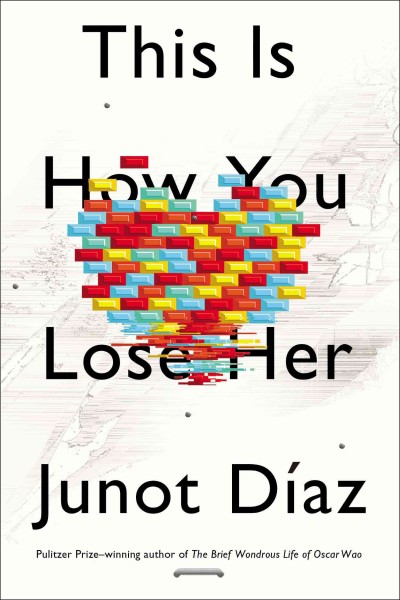
ThisIsHowCoverThis month we discussed a collection of short stories by Pulitzer-prize winning author Junot Diaz.  Members’ reactions were mixed and passionate! At least three members had been unable to read much of the book, put off by the vulgarity of the language and sexual references. One member read the book twice, wondering why I would choose a book like this for a group with older members. Many asked –  where is the warmth, the humor, the glossary? Is this really what the author wanted us to learn about Dominican men, Dominican women?

Like the author, one member was brought to the U.S by his parents at the age of seven, and the familiarity of the immigrant experience and the use of Spanish-language throughout, appealed to him. The book’s setting, the serial infidelity, the machismo, are foreign to the majority of us; but is this generational, geographical, or simply experiential? One member pointed out that the change in Las Vegas in the last 30 years is startling – from the formality of dress that used to be seen attending shows to the increased nakedness of many young women going “clubbing.” Previous book club selections, like Winter’s Bone, In One Person, The Buddha in the Attic, Wench, also depicted raw, unfamiliar realities. What makes one appealing and another not?

The collection is framed by two stories of great love lost. The first story is particularly coarse and jarring at the start, and I imagine it has turned away many readers. Without a plot or mystery to solve, gentler stories, like “Otravida, Otravez,” told from the viewpoint of a woman, and “Invierno,” the main character’s retelling of his first experiences in the U.S., can be lost. I know that the author’s choice of order for the stories is important, but had I read the collection before selecting it, I would have recommended that members read those two first – not because they are the best stories, but because they could help provide an understanding to enable the reader to sympathize with the main characters.

One member asked those of us who liked the book to explain why, specifically; so I read a few quotes I had quickly written down.  The extracted statements don’t carry quite the same weight, because their power is often in the beauty of simplicity juxtaposed with the coarseness of reality – “When Magda was still my girl, when I didn’t have to be careful about almost anything.” (p.3) Or for “Nilda,” who was his brother’s girl, “She couldn’t see me or she would have known that I thought she was beautiful.” (p.38) Describing “Alma” with “arms that are so skinny they belong on an after school special.” (p.46) And the female narrator in “Otravida, Otravez,” “I never see the sick; they visit me through the stains and marks they leave on the sheets, the alphabet of the sick and dying.” (p.55) Or, “He is excited but he is also scared. This is something I know, a place I’ve been.” (p.69)

I chose This is How You Lose Her in recognition of Hispanic-American Heritage Month. Our group spoke a bit about how often we lump all Spanish speakers together, as if they are all from Mexico; about often unrecognized black Latin America. Opening our eyes to a different experience, even if only through literature, extends our understanding and tolerance. Like another member mentioned, however, I am not sure if I could recommend this book, without the discussion, even though it is one of my favorites so far.

Next month, in recognition of Native-American Heritage Month, we will be discussing a young-adult novel by Sherman Alexie, The Absolutely True Diary of a Part-Time Indian. Alert: This book has some vulgar language, references to masturbation, alcoholism, death and violence. It also has illustrations and humor. Give it a chance and join our discussion.

  • Other works mentioned:
  • *Winter’s Bone by Daniel Woodrell
  • *Wench by Dolen Perkins-Valdez
  • *Netherland by Joseph O’Neil
  • *The Buddha in the Attic by Julie Otsuka
  • *In One Person by John Irving
  • A Better Life (DVD) 2011
  • Under the Same Moon (DVD) 2008 Spanish Language Film
  • Black in Latin America (DVD) 2011

*All previous Whitney Book Bistro selections
Unlikely Pilgrimage of Harold Fry Discussion Journal August 13, 2013

To most of the book club members, the pilgrimage of Harold Fry seemed unlikely indeed – but believable. With a mix of incredulity and inspiration, we discuTheUnlikelyPilgrimageCoverssed the impetus that could motivate someone, after years of stagnation, to pass one mailbox after another and start on a journey of 87 days, over 627 miles and a lifetime of memories.

We discussed the meaning of extraordinary and the perspectives, negative and positive, that make the difference between extra and ordinary. In this story, we know so little about Queenie; but we know that she had an extraordinary impact on Harold and Maureen.  Did she know it? With reflection, both Harold and his wife realize that their memories have been compromised by pain and loss. How many of us have mistaken our own lives for ordinary, or worse? What will inspire us to look back, and forward, finally unburdened?

One member noted how often spouses separate after the loss of a child. Others commented on the importance of strong communication and devotion. Why didn’t Harold and Maureen divorce? Sometimes stagnation is easier than action. What exactly are yachting shoes and why would Harold insist on keeping them despite blisters and injury – symbolism or penance? We decided on both. Several members commented that Harold and Maureen would not need counseling because they had created their own.  Maureen’s action in placing each one of her outfits together with one of Harold’s, his coat sleeve in her pocket or over her shoulder, was touching and incredible therapy.

What about the joiners? Our group dismissed them with distaste. This was Harold’s journey and although we could see the reality and relevance in that part of the story, only the dog seemed worthy of our notice. Many of us mourned Harold’s loss of the dog and one member voiced how sad it was that Harold had not allowed his son to get a dog.

The hour discussion flew by. We discussed much more than covered here and less than we could have.  We had a great turn out (11), including two new members, and I hope everyone enjoyed the book and the discussion as much as I did!

  •  Other works discussed:
  • Zen and the Art of Motorcycle Maintenance  (1974) by Robert M. Pirsig
  • The Way ( 2010)  Emilio Estevez, director, and Martin Sheen (DVD)

Still Life Discussion Journal – July 2013

It’s summer, the desert, and hot. Record-breaking hot. The kind of heat that keeps the car from ever cooling down and has fueled fires for weeks now. And yet five members came out for our discussion last week!

StillLifeBookCoverWe read a lighter book in June, the first in Louise Penny’s popular Inspector Gamache series, Still Life.  Published in 2005, the book received starred reviews from Publishers’ Weekly and Booklist, won several mystery awards, and has been adapted into a television movie still to be released this year (Canadian). Nearly a year ago, the Las Vegas Review Journal’s Jane Ann Morrison even wrote about her trip to Canada and interview with Louise Penny.

The discussion was straightforward. We laughed a lot. No one at the meeting seemed interested in reading more in the series, but we were all intrigued by the description of Jane’s art and gave credit to the author for Ruth Zardo’s poetry. One member considered the book too preachy and another didn’t find the mystery and solution believable. I found the writing awkward and wonder if this is a language difference. At the end of the meeting, we listened to an on-line French pronunciation guide provided by the author on her website. We all agreed that we would love to go to Canada! And several members shared their experiences.      

Still Life is a first novel and the author had the daunting task of setting up a cozy town, Three Pines, as well as characters who could grow over more mysteries. Part of the appeal of a cozy mystery is attachment to the setting and characters. Sometimes, I worry about the need to have something significant to discuss in a book or movie. But our meetings remind me that what’s significant is the shared experience: the recommendation, the condemnation, perhaps the horror, and definitely the laughter.

  • Other works mentioned:
  • W. H. Auden
  • Agatha Christie
  • Lord Peter Wimsey series by Dorothy L. Sayers

In One Person Discussion Journal June 2013

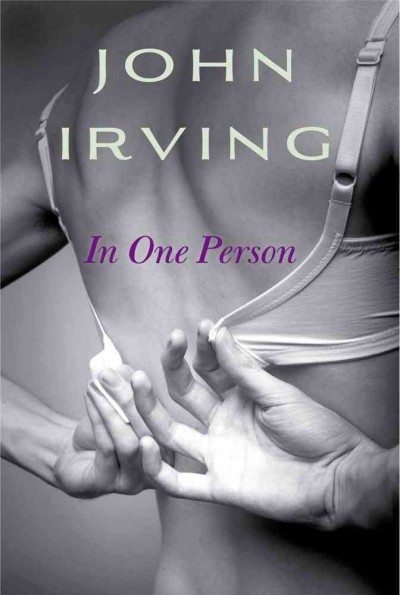
When I first started thinking about In One Person for our book club, I was actively trying to find a book about homosexuality or gay rights. It is a subject often in the neInOnePersonws, in our legislatures, and in our neighborhoods, if not in our minds. I have found John Irving’s A Prayer for Owen Meany on several must-read lists, and the movies I have seen based on his books are sensitive, insightful, and entertaining. I read several reviews, and even the bad reviews focused primarily on how the book did not live up to expectations, or how so many eccentric people could live in one place. I was still uncertain about my ability to moderate a discussion about such a potentially volatile subject, but when I asked the book club about my considerations and concerns, one member was strongly outspoken about the importance of dealing with the discomfort!

So last month, we read In One Person by John Irving. The narrator is a man nearing 70 who is recalling his life and experiences as a bisexual growing up and onward in a small New England town, from the 1940s, through the AIDS epidemic in the 1980s, into the new century. Six of us attended the meeting, and the discussion was not only manageable, it was inspiring. We agreed that the book was repetitious and long. As one member remarked, how many times do we need to hear that the narrator liked small breasts? Several members were moved by the author’s descriptions of the AIDS hospital scenes. Who would have thought that people could not be left alone with a body in the hospital because some would take a syringe of blood from an infected loved one and inject themselves? One member was impressed by how well the author captured the teen angst of a young man confused by the world around him.

We remembered how confused we were when young, about secrets kept by our families, about the world we were growing into. One member shared how a family member’s coming out as homosexual had affected her family. We mentioned the case of a prison inmate suing to have the government pay for his sex change operation or the parents of a young, biologically-male child, suing to allow her to use the girl’s bathroom. We tried to understand homophobia and one member was particularly incredulous about why people need to make laws to control homosexuality. Which of course leads back to previous meetings and our incredulity about the Japanese-American internment, slavery, and whatever may still be to come.

Two of us had not finished the book. I had stopped reading about a third of the way through because I was overwhelmed by the repetitive sexual detail – I had hoped for a bit more subtlety. Reading on a kindle makes skimming particularly difficult because you can easily move forward too fast and never find your way back!  I tried reading backwards, which allowed me to understand much of the plot, but makes me an unreliable reviewer. After our discussion, though, I would like to try reading the book again. I don’t think that anyone in our group really liked In One Person as a whole, but we are all glad to have read and discussed it.

For those of you who missed the meeting, or to add some details I missed – and I am sure there are many – please comment or send me an email.

  • Other works discussed:
  • Middlesex by Jeffrey Eugenides
  • Fifty Shades of Grey by E.L. James
  • Brokeback Mountain by Annie Proulx
  • Many classics mentioned by the narrator in the book

The Buddha in the Attic May 2013 Discussion Journal

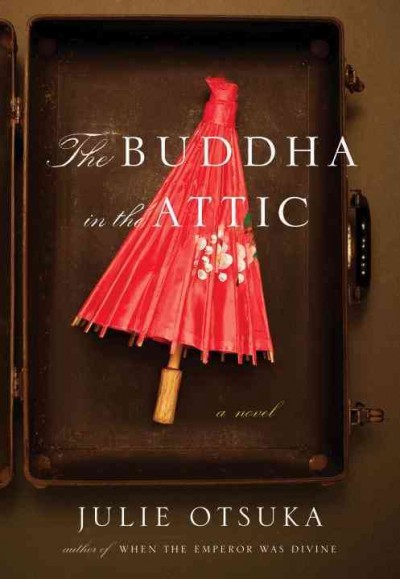
BuddhaInTheAtticBookCoverAs I read The Buddha in the Attic, by Julie Otsuka, I was awed by the first person plural narrative voice. I thought about how, when I write these notes on our meetings, I often use the collective We to share our experience. Even though individuals make the statements, the group absorbs them, refutes them, nods, smiles, scowls, laughs, even remembers. It is really very powerful, which is why I am drawn to record the meetings. For future members. For the Us.  But to continue that voice for 138 pages . . .

Most of us agreed that the book was repetitious. Some of us skimmed as we moved along in a chapter. One of us didn’t feel as connected to the characters as individuals and was not as moved by it as she might have been if it had shared the detail of an individual experience. Another felt as if he were reading a non-fiction book. Which of course can be dangerous if the book is not well researched and accurate.  Is that my statement or the group’s? It’s tricky!

We discussed the book in snippets, much like it’s written. We looked up the reference to the laughing Buddha, hidden in the attic when the Japanese leave for the internment camps, hidden away like they were during the war. We read the discussion questions and realized that we didn’t remember specific enough details to answer many of them. “Women are weak but mothers are strong.” Some of the Japanese women were mothers before they came to America. Are the Americans the most savage tribe?  One member pointed out that the buying up of the Japanese-Americans’ goods was reminiscent of the Jewish holocaust. And the “I am Chinese” buttons similar to the Jewish armband. Is this human? American? Considering Muslims and our fears today, have we learned anything from these experiences?

One member said that she hadn’t liked the collective We voice at first, but when she got to the end, she realized how powerful it was that the We disappeared and was eventually forgotten by the We left behind. Which of course brings up stories from those of us left behind. Some of us admitted knowing nothing about the internment until hearing about it in school. Many had known only of the fear — fear of war, fear of the Japanese.  One of us had worked for a Japanese woman whose property had been held for her by an “Irish” friend. Another member remembered Snow Falling on Cedars, by David Guterson, in which a son refused to honor his father’s promise to a Japanese family.

The Buddha in the Attic seemed sometimes like a long poem, with anaphora and alliteration a choice not just repetition. The We is more common in poems. Some of us found the beauty and the story enough, as if the details of experience were carried by the feelings evoked, with some individual facts and images impressed on our consciousness. Others still would have liked more detail, which is also important, if it keeps us searching for answers and ever learning.

At the end of the meeting, we discussed whether authors really intend all we find and discuss in a book.  Who writes these discussion questions? How important are they? I believe that our discussions are exercises for the brain, and sometimes, when I am searching really hard for an answer, I am convinced that I can feel my brain hurt with the strain, just as if I am exercising any other muscle. Many of the members agreed. Though not every one.

Other Works discussed:

  • “A Rose for Emily” by William Faulkner (famous for its first person plural narrative)
  • Anthem by Ayn Rand (first person plural narrative representing collectivism)
  • Snow Falling on Cedars by David Guterson
  • Tallgrass by Sandra Dallas (our November 2012 selection)
  • “1917” by Mary Swan (acknowledged by Julie Otsuka as inspiring her first chapter — the story is written in a very similar style)