Valentine’s Day in Las Vegas this year produced wind, snow pellets, lots of candy, and a fantastic discussion of The Dutch House by Ann Patchett. Some of us loved the book, no one seemed to hate it, and we all agreed that it was easy to read—a few times we even had competing conversations and cheerful chatter. We met in the teen zone and were joined by two new members.
I started the discussion by introducing Ann Patchett’s variety of well-renowned books, an article she wrote about her three fathers in The New Yorker[i] and inclusion in Time Magazine’s 2012 list of “The World’s 100 Most Influential People.”[ii] Apparently, her novel Commonwealth is relatively autobiographical and dedicated to her stepfather. I have not read any other Ann Patchett books, but knowing more about her experiences from my research gave me extra appreciation of her skill and authority in The Dutch House.
Our first responder was drawn to our group specifically because she read The Dutch House this last summer and loved it. She had a little trouble with the time hopping, but she became an Ann Patchett groupie and has been looking to find someone with whom to discuss the book. She recommended an article in Time Magazine[iii], which I believe answers some of our most pressing questions–straight from the author’s mouth!
Another first-time member said that this was not his “wheelhouse,” but after a while, he found himself wondering what would come next. One of us shared that she liked the way the book flowed, serpentine-like, allowing her to read in bits between other books. It made her think about her own family relationships. Another of us, as a woman of faith, was particularly disturbed by Elna’s abandoning her own children—even to do good work with the poor and the church. Someone asked if perhaps Elna had a mental health issue? Did she lose her faith? Was the father especially cold and distant, or a particularly good provider for his family? Throughout our discussion we had to remember that this was a different time-period. There was, and still is, a double standard for women. We did not answer all of the questions we posed. What would it be like to go from bars on the windows in Brooklyn to living in The Dutch House? Wasn’t Celeste pretentious? Was the author pretentious naming books we may never have read? How could Danny not become a doctor?
Because we were meeting on Valentine’s Day, I asked what role love played in the novel. First response: Andrea loved the house! Considering how she grabs Danny near the end, mistaking him for Cyril, she loved her husband, too. And that the father “was always looking at the space just over Maeve’s head” (pg. 39), did not necessarily mean he didn’t love her, but that she looked too much like Elna, whom he probably also loved. Danny is an unreliable narrator – both because we see only the things he knows and remembers, and because memory is unreliable. The author states this explicitly: “We overlay the present onto the past. We look back through the lens of what we know now, so we’re not seeing it as the people we were, we’re seeing it as the people we are, and that means the past has been radically altered” (pg. 45).
Our member who recommended we read this book said that he likes Ann Patchett because she always has twists and surprises. He thought that the narrator was selfish and unforgiving. Someone said that was because Danny grew up with learned resentment, so we also discussed how we take good things for granted and dwell on the negative. Early in the novel, Danny says, “The truth is I have plenty of memories of her [Andrea] being perfectly decent. I just choose to dwell on the ones in which she wasn’t” (pg. 73).
The end of the hour discussion was upon us. I feel as if I have left out so much–both that we discussed and that I wish we had discussed! If you are unable to follow the links to the articles in the notes and would like paper copies, see me in the library! Keep the discussion going!
- Other works/people discussed:
- Bel Canto by Ann Patchett (2001) novel (2018) film
- The Spoils of Poynton by Henry James (1896) I read a review[iv] that highlights the Patchett-James connection: “The Spoils of Poynton, [Patchett] cleverly appropriating that book’s use of a coveted house and its treasures as an index to human character.”
- Actor/Activist Ofelia Medina – a woman who was supported by her spouse in both her career and activism.
[i] Patchett, Ann. “My Three Fathers: My Problems Were Never Ones of Scarcity. I Suffered from Abundance.” The New Yorker, 28 Sept. 2020, https://www.newyorker.com/magazine/2020/10/05/my-three-fathers.
[ii] Gilbert, Elizabeth. “Ann Patchett – the World’s 100 Most Influential People: 2012.” Time, Time Inc., 18 Apr. 2012, https://content.time.com/time/specials/packages/article/0,28804,2111975_2111976_2112138,00.html.
[iii] Luscombe, B. (2019, September 26). Why Ann Patchett had to totally rewrite ‘the Dutch House.’ Time. Retrieved February 16, 2023, from https://time.com/5686818/ann-patchett-the-dutch-house-interview/
[iv] Lowry, Elizabeth. “The Dutch House by Ann Patchett Review – an Irresistible Modern Fairytale.” The Guardian, Guardian News and Media, 25 Sept. 2019, https://www.theguardian.com/books/2019/sep/25/dutch-house-ann-patchett-review.


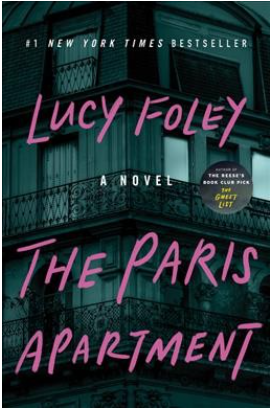 Halloween and capturing the thrill of the season. Instead, we had French Lemonade, macarons, and madeleines. Everyone liked the book, the twists and turns, and the happy ending. Our first responder was new to our book club and noted that the novel was paced like a movie, ready to join other book-to-miniseries adaptations. She would have liked the author to develop characters and situations more fully before moving on to the next turn of events. She did appreciate the various cultural references and she felt like she was in the apartment. The next responder thought it was nice to have a book without a lot of politics and philosophy, and he particularly enjoyed the many surprising twists. Perhaps there were a few too many characters. And how sad that Sophie was outed by her accent. One of us appreciated that the novel was easy to read and another liked seeing how rich people make and spend their money. He mentioned the expense of tickets to the “local” sports teams and the pricing out of locals from the Las Vegas experience in general. He also made the connection that homelessness is harder for people who fall from the top: Nick and Antoine, spoiled, wealthy children, versus scrappy Jess and resilient Ben. And lucky Ben, adopted into a wealthy family versus life-long foster child Jess.
 underwhelming and not actually solved. When I found myself falling asleep as soon as I tried to read, I started to worry about how the group would like the book – but there was hope – our next responder mentioned that it started slow but would get interesting at page 150!
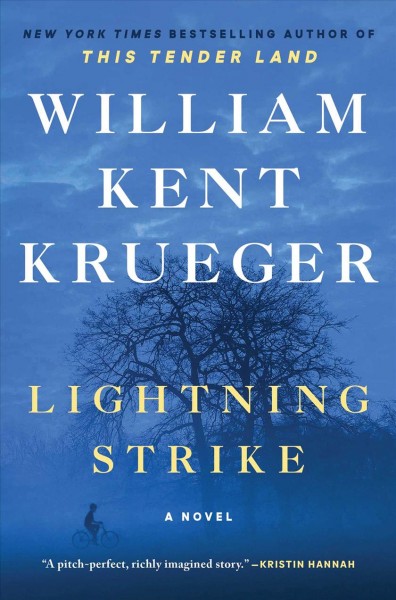 themselves. Lightning Strike starts briefly in 1989 and then flashes back to 1963. Our first responder loved the book, the multicultural themes, the father-son relationship, and the nostalgia it evoked. As a gay man, he could also identify with the anger, conflict, and discrimination between the Ojibwe and the White townspeople. His partner had listened to the audiobook and been struck by the anger the narrator portrayed, highlighting one of the benefits of listening to a book.
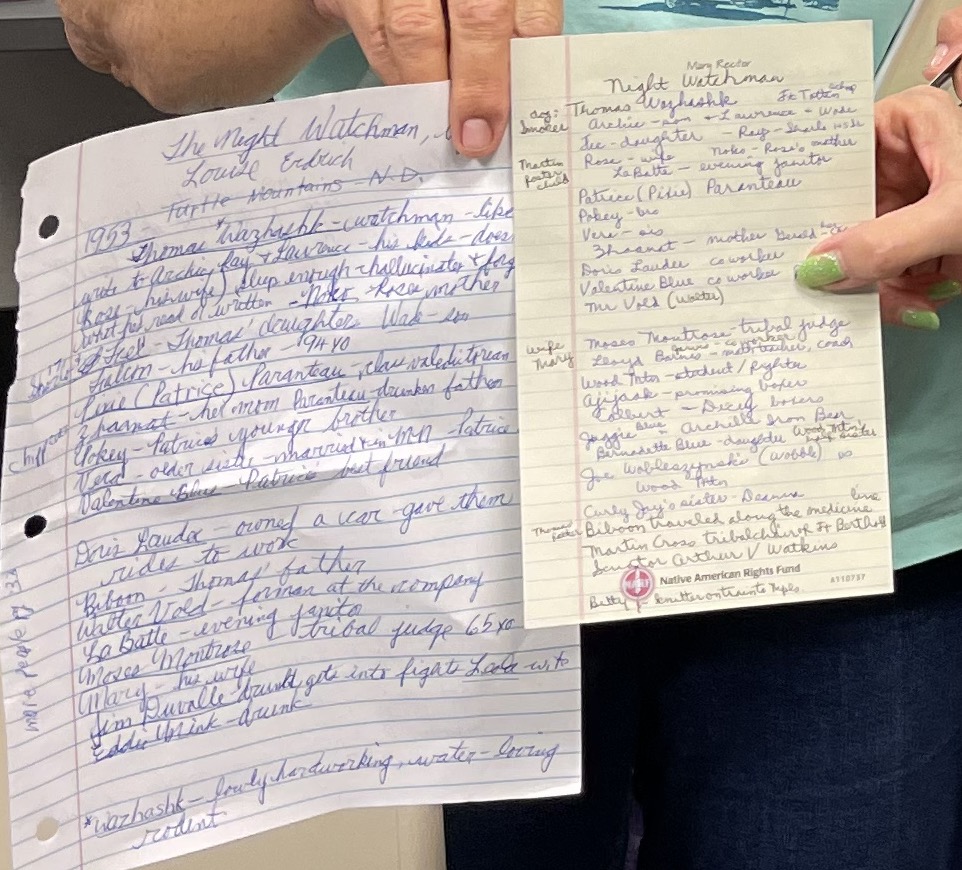
 detailed. Another member found that it started out believable, but then it became too wild, reminding her of a B-Flick horror film. Fun to read, though different. One of us was listening to the audio book and only got part way through, uncertain about whether she wanted to finish it. We should have asked her how the narration held up – did that make a difference in why she might not be interested? She hadn’t yet gotten to the really creepy sequences! Still another member had been afraid that it might have won some awards.
