I did not receive as many responses for Next Year in Havana as I have for some of our other selections and our discussion group included just four of us. We haven’t been so few in many a year. And all of the responses have been positive. That is not to say that we weren’t critical at times. I can be a very critical reader, especially since I am responsible for choosing the books and want them to be a magical combination of diverse, educational, and engaging enough to keep readers coming back. As usual, I learned more from our group’s response than I did from any of the reviews I read!
When I read Next Year in Havana, I was disappointed. I liked it in spots, particularly the historical view through Elisa, but the modern counterpart seemed more like a predictable romance novel when I read “a tremor slides through me” as Marisol and Luis’ hands touch. I was concerned that political views were too one-sided. I finished the book quickly and didn’t return to it.
Our first responder reminded me immediately why we read such a variety and can have such divergent responses. Visiting Cuba is on her Bucket List. I will post her response as a comment because she included salient points that made a difference. At the meeting, another member was immersed in the location and had recommended the book to a neighbor who had visited Cuba. Our connections to a locale, to each other, always make a difference and collective reading just strengthens these connections.
I was surprised how many responders were particularly glad to learn more about Cuba than just the Cuban Missile Crisis and refugees. It was a nice love story, educational, surprising to some and left several wanting more. The writing was engaging and the parallel story kept readers hooked – although one of us admitted that he would occasionally skip an alternating chapter to keep up with one character’s story.
One member was particularly moved by a passage on page 160 that talked about loss – the kind of loss that creeps up on you:
“You lose your favorite pair of shoes, but there is still another, and the baby needs to be fed, . . . and this goes on for a long time until you realize you’re down to your last pair and they have holes in them, . . . and when you’re finally able to replace them, there’s an overwhelming sense of relief, and you forget that you once had twenty pairs, that once you lived like kings, and now you serve on bended knee, fighting for every inch.”
We still had a lot of questions. Why didn’t Elisa tell her granddaughter about her romance with Pablo? Why did the Cuban government fear Luis? What was Pablo’s family like? Who was visiting Cuba when U.S. Americans could not? How did life for peasants, especially those in the country, change? How awful it would be to live where there was no hope for improvement, no dreams other than revolution and war. Doesn’t Cuba have an exemplary educational and medical system? Don’t they have a strong artistic and sports community? How lucky are we to have so much information available to us if we want to search it out?
Since the Pandemic started, just one year ago, we have lived in a new library world of social distance, electronic books, and virtual meetings elsewhere, but not for the Whitney Book Bistro. Several people, not just book club members, have shared with me that their ability to focus has changed. Books don’t hold their attention, the mind wanders. Some read articles, or laugh that “fluff” reigns; others may actually have greater focus on what matters to them most, whatever that is. In the first chapter of our selection, Elisa says that “the entire airport holds its collective breath” as they prepare to leave Cuba, and I imagine many of us are holding ours, not just wondering whether our vaccinations will make a difference but what our new lives will be like in a country we have never left, but from which over half a million others are permanently gone.
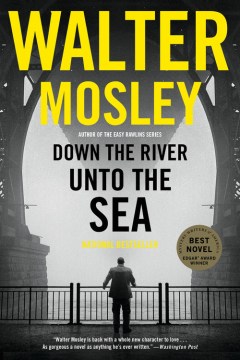 this has been challenging. One member explicitly stated that he would have finished Down the River Unto the Sea, despite his lack of interest, if we had been meeting in person. Our library book club is particularly important for motivating us to get outside our usual book box, expanding our horizons in addition to creating shared experiences and a broader, diverse community.
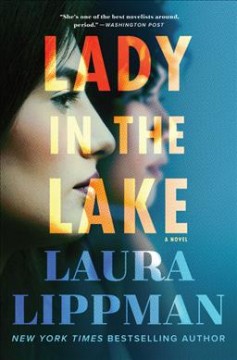 group or individually). I did not make a traditional journal this month and am sorry that I did not post this sooner. I cannot emphasize enough how important are our varied responses and experiences! Thanks!
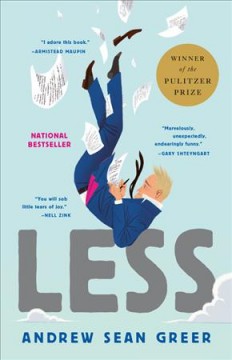
 since The Rosie Project. Our next found it engaging enough for her to want to get to the end, but it was too descriptive, the unrealistic battles of our heroine going on too long. Another found it far-fetched but humorous. A new member was disappointed by the ending, feeling it had been rushed. Another thought it was an unusual book and mystery. He also thought some scenes were too descriptive, but he didn’t think Rose was old at 68 and found her roof-top escapade to be possible if not probable. Still another thought it started off slow but she ended up liking it enough to try out one of the author’s park ranger mysteries.
 WhitneyBookBistro