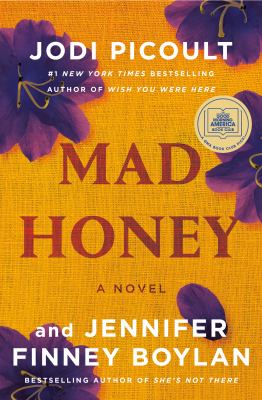
I didn’t research Jodi Picoult before we met to discuss Mad Honey, which was a collaboration with Jennifer Finney Boylan. I knew Picoult was popular, with intriguing storylines that seem heart-wrenching and topical – offering great book-club discussion possibilities. She has written over 30 novels, including By Any Other Name (2024), which posits that a real-life poet, Emilia Bassano, contributed substantially to Shakespeare’s plays. After Picoult became commercially successful, her husband became a stay-at-home dad and she doesn’t believe in writer’s block, considering it a luxury and procrastination.[i] That alone would make for an interesting discussion.
We had no difficulty keeping the discussion going. Several people pointed out that there were too many emotionally-charged storylines – domestic abuse, court-room drama, transgender issues, even bees (when you consider that honeybees are dying out). Almost everyone was particularly appreciative of the detail about transgender surgery. One of us knew trans women in his church back the 1970s and 1980’s who could not orgasm. He was amazed that we have come so far. Many of us found the mystery to be satisfying, but there were a few who found exposing a killer too neat and unrealistic. We were universally horrified, if not surprised, at the idea that truth doesn’t matter in court. And most of us loved the bees, although with so many other issues, at least one of us found the bee facts unnecessary. We were mixed in whether we liked Lily’s backward timeline. We found it intriguing but sometimes confusing.
Our first responder especially enjoyed the tight bond between parent and child – and this resonated with many of us. One of us felt that Olivia’s doubt of Asher would be hard, if not impossible, to repair completely. We admired Ava’s staunch love and support for her child, allowing her to transition fully from Liam to Lily. For one of us the abusive, homophobic and transphobic parts of the book were triggering. Several of us found the mystery satisfying, with Dirk as a likely suspect. We appreciated that Lily was not killed because she was transgender but because she was a woman. Revealing a killer was necessary for this revelation, even though it also let Asher off the hook for his abusive behavior. Would Lily and Asher have stayed together? Some of us hoped so, but they were only in high school. We agreed that after just three months of dating, their already repeated use of the silent treatment is telling. The need for romance is strong though, with one of us wishing that Olivia had shown Ava the Lily garden Asher had created. And we questioned why Picoult’s choice to have Olivia in a romantic relationship at the end won out over Finney-Boylan’s choice for Ava. We could have kept picking at threads like that, but few books can hold up to that kind of dissection!
In between, we discussed personal experiences with transgender children, grandchildren, and friends. Most of us had no idea there were so many terms for gender or thought about how gender-based musical instrument choices can be. One of us wondered if we had heard of mixing potassium and water versus the usual oil and water – creating an explosion! She also brought to our attention the author’s use of foreshadowing when Lily describes losing her balance and imagines tumbling down the stairs. Or when Lily plays Saint-Saëns’ The Swan[ii] for Asher. We considered societal expectations and whether manners are helpful or hurtful? How do you tell if honey is toxic, like mad honey? One of us is glad that people are able to express themselves, to have transgender surgery, but he is still against transgender women playing sports. We have discussed this before when we read Billie Jean King’s memoir. Our member mentioned Rene Richards as the first historical transgender athlete.[iii] Others also mentioned peer pressure and gender dysphoria.This book made us think about difficult issues, even if it didn’t give us answers.
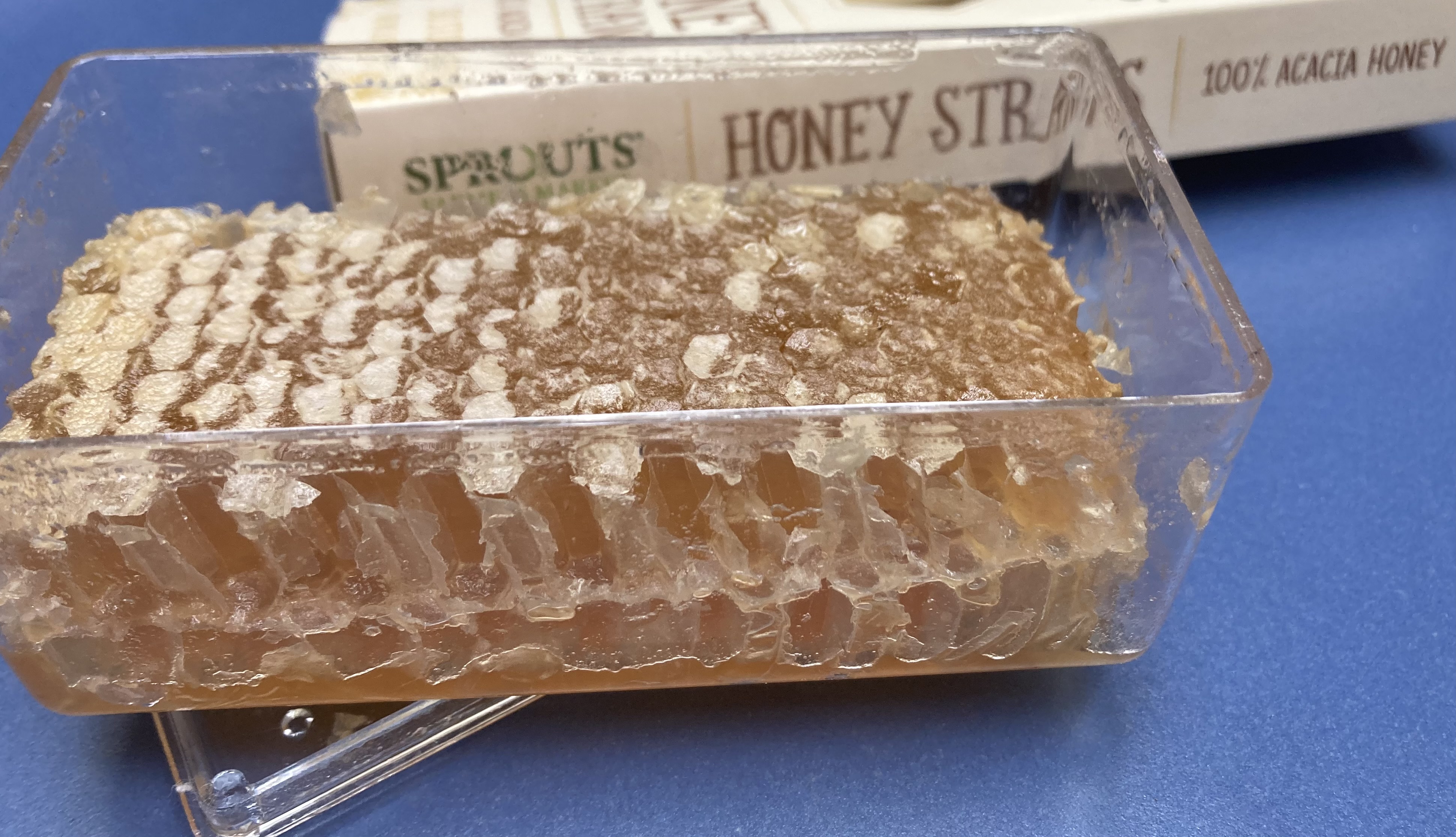
We discussed them as best we could in an hour. As I started to open the packages of actual honeycomb honey I wanted us to try, I could hear the discussion continuing. What does unconditional love mean? How complicit are we in our loved ones’ behavior if we don’t speak out? I often wonder about how easy it is for some of us to voice our opinions and frustrations. How hard it can be to be articulate and politically correct. How limited our safe outlets. How many of us don’t speak out – even in our own homes.
I hope you find our book club a safe place and feel you are heard. We don’t need to agree, but we do need to be respectful and thoughtful. To learn and understand. Even though it wasn’t a favorite book, First Ladies by Marie Benedict and Victoria Christopher Murray taught me about Mary McLeod Bethune and how she turned a disgruntled neighbor into a protective ally. It starts at home. With family and friends. And at the library.
Words:
- Propolis – bee glue
- Piste – fencing boundary
- A flèche (French for “arrow”) fencing. (AI definition)
- Chyron – a graphic (logo?) placed over an image
- Dubai locs – hair-braiding style
- Asymptote – “a line that a graph approaches as it heads toward infinity or negative infinity.” (AI definition)
Other Works Discussed:
- All In: An Autobiography (2021) Billie Jean King
- This Is How It Always Is (2017) by Laurie Frankel
- Jennifer Finney-Boyland and Jodi Picoult have written a lot of books separately
[i] I recommend checking out her website Q&A, which includes intriguing information about her research into other books. https://www.jodipicoult.com/faqs.html .
[ii] https://www.youtube.com/watch?v=3qrKjywjo7Q : Just in case you want to hear it. There are certainly others, but this one is from Yo-Yo Ma.
[iii] https://www.bbc.com/news/magazine-33062241 “Tennis’s reluctant transgender pioneer” by Sara Lentati. Published 26 June 2015.


